Brazil's Election Is a Flashpoint for Latin America's Future
Brazil's presidential vote is the last big stand between hemispheric left and right — and Trump's interference claims make it a global story. The outcome will redirect alliances, commodity flows, and who protects the Amazon.
Brazil’s Vote Is a Hemispheric Pivot Point
The ballots cast across Brazil this Sunday will decide far more than who sits in the Palácio do Planalto. They will determine whether Latin America’s largest economy and most consequential democracy remains a bulwark against a continent-wide rightward surge — or becomes its final casualty.
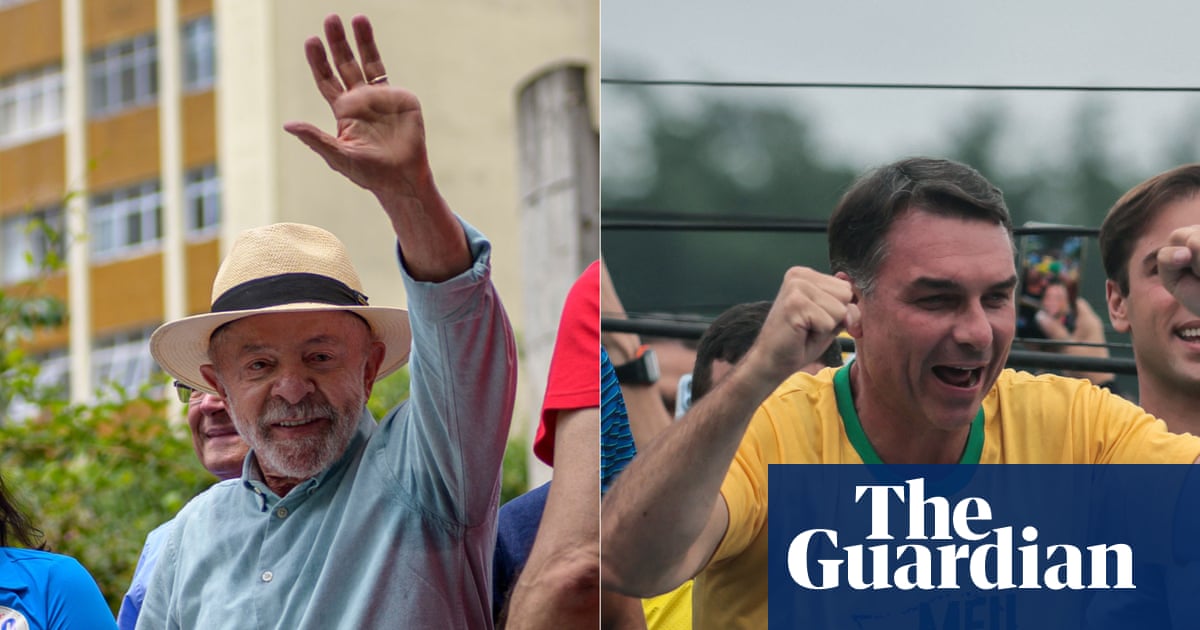
Luiz Inácio Lula da Silva, 80, is running for a fourth non-consecutive term. His opponent, Flávio Bolsonaro, 45, is the eldest son of the former president locked in a 27-year sentence after convicted of attempting a coup in 2022. Flávio Bolsonaro is also a close ally of Donald Trump and has openly pledged to align Brazil with the US-led anti-cartel coalition that has already conducted military operations across South America. These are not campaign details. They are fault lines.
The Last Left Government Standing
Brazil is now an outlier. Venezuela fell when Nicolás Maduro was captured. The region has seen wave after wave of rightwing and far-right victories — in Argentina, Chile, Colombia, and elsewhere. Lula’s Brazil stands as one of the few remaining left governments willing to publicly resist American pressure. That isolation matters. Every country that stays outside the US orbit needs a partner large enough to make resistance viable. Right now, that partner is Brazil.
If Flávio Bolsonaro wins, the geopolitical map of Latin America shifts overnight. A pro-Trump Brazilian government would isolate the remaining leftist states further, deepen Washington’s security footprint through the anti-drug coalition, and likely pull Brazil’s vast commodity export channels more firmly into the American sphere. The alternatives — courting Beijing for infrastructure deals, hedging between great powers, or maintaining a degree of strategic autonomy — all evaporate under a Bolsonaro administration.
Trump Already Inside the Race
What makes this election uniquely volatile is that the United States president is openly engaged. Lula has accused Trump of interfering on Flávio Bolsonaro’s behalf, a charge that moves the contest beyond domestic politics into the territory of foreign election meddling. Whether or not the allegations hold, their very existence changes how the world reads the outcome.
A Lula victory under these conditions will be viewed with suspicion by Washington — not because of evidence, but because of the narrative. A Bolsonaro victory will be celebrated in Republican circles and interpreted as vindication of Trump’s posture. Either way, the result will be judged through a transatlantic lens, not a regional one. That is the real story English-language coverage often misses: this is no longer just a Brazilian election. It is a proxy battle over whose rules govern the hemisphere.
The Race Is Too Close to Call
Polls released days before voting showed the race wide open. Both candidates have alternated as frontrunners in recent weeks. Lula himself dismissed the polling, saying the only count that matters is the one happening on Sunday. Flávio Bolsonaro admitted his team is counting on a transfer of votes from other rightwing candidates — a strategic gamble that could either push him over the 50 percent threshold for an outright first-round win or force a runoff on October 25.
The narrowness of the margin reflects deeper fractures. Lula faces rejection despite strong social programs and economic indicators. Corruption investigations involving his son and a former aide are still pending. An unrelated scandal involving supreme court justices has fueled anti-system sentiment that benefits the opposition. On the other side, Flávio Bolsonaro has survived his own controversies — including a recorded conversation in which he asked a corrupt banker for $26.8 million to fund a film about his father. Neither candidate enjoys unassailable credibility. Both remain competitive.
What’s at Stake Beyond Politics
The Amazon is the clearest environmental stake. Indigenous protections, forest monitoring, and enforcement mechanisms established under Lula’s administration would face immediate rollback under Flávio Bolsonaro. Amazon supporters voting for Lula are not making an abstract political choice — they are voting against the possible erasure of those safeguards. A workshop manager in Amazonas described it plainly: everything Lula has built to protect the rainforest would be threatened if his son’s party returned to power.
The economic stakes are equally concrete. Brazil is a commodity superpower — iron ore, soy, oil, poultry. A Bolsonaro-aligned Brazil would likely deepen trade ties with the United States while distancing itself from Chinese investment corridors. A Lula victory preserves the possibility of balancing between Washington and Beijing, a strategy that has allowed Brazil to extract better terms from both. Global markets will watch this closely. Commodity prices respond to political risk, and a contentious outcome — especially one that triggers a runoff or legal challenges — introduces uncertainty that traders hate.
Why the World Should Care
Latin America has been moving right for years. Brazil’s election is the question of whether that trend has a ceiling or a floor. If Lula holds on, the region retains a anchor of strategic autonomy and a counterweight to unilateral American pressure. If Flávio Bolsonaro wins, the balance tips decisively toward a hemispheric order shaped from Washington.
The interference claims add a layer that makes this a story for every capital, not just Brasilia. When a sitting US president is accused of trying to influence another country’s election, the precedent matters beyond the ballot count. It matters for norms, for international law, and for how the rest of the world responds when its own sovereignty is questioned.
Whatever happens Sunday — whether in the first round or a runoff — the result will echo through South American capitals, commodity markets, and diplomatic corridors for years. This is why the world is watching. Not because Brazil is peripheral. Because it is everything.