Cape Canaveral Falls Silent: SpaceX's Starship Pivot Rewrites Space Economics
SpaceX is pulling the plug on Falcon 9 Starlink launches from Florida, sending Starbase, Texas into overdrive and leaving competitors scrambling. The move signals the end of an era for Cape Canaveral and the beginning of a brutal cost war in orbital delivery.
The Quiet Before the Storm
Cape Canaveral is about to go quiet.
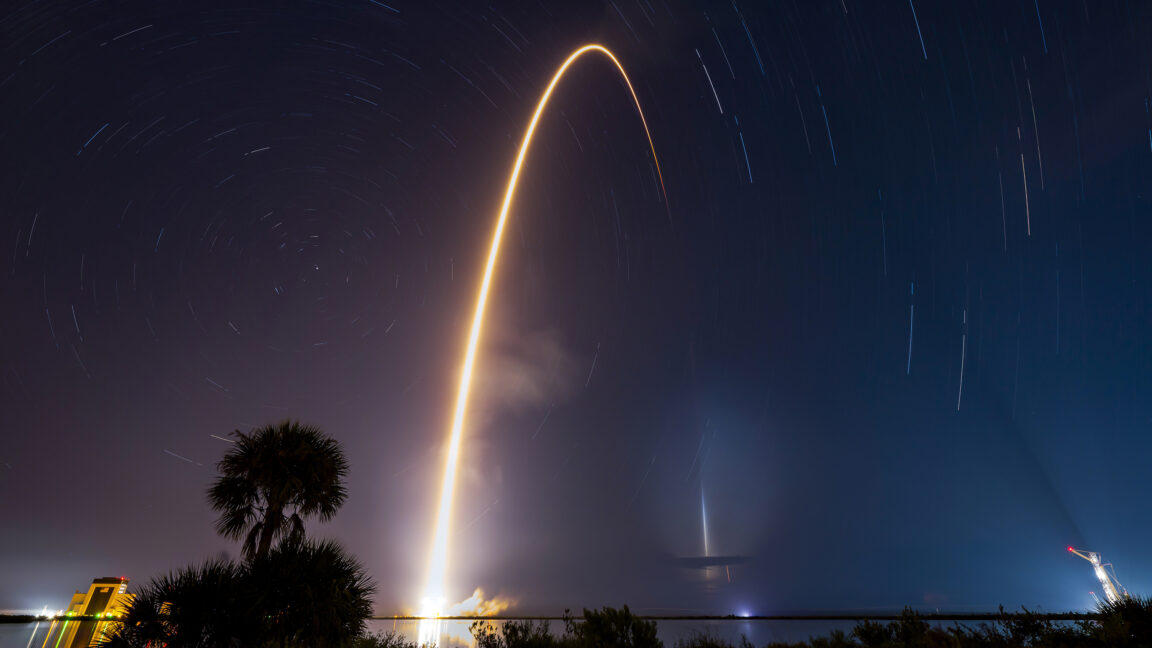
On Tuesday, a Falcon 9 rocket streaked northeast from Space Launch Complex-40, marking the 37th flight of its first stage booster—a new record for reusability. Skywatchers along the East Coast caught a glimpse of the rocket shortly after sunrise, unaware they were witnessing one of the last Starlink missions to launch from Florida on this legendary workhorse.
Within weeks, SpaceX will stop using Falcon 9 to deploy its Starlink constellation from the historic spaceport. The next Falcon 9 mission from Florida will carry NASA’s Nancy Grace Roman Space Telescope on August 30. Then a crewed Dragon flight to the ISS in September. After that? Everything commercial from Florida shifts to customer payloads only. The Starlink factories of the sky will move—literally and operationally—to Starbase, Texas.
This isn’t just a change of venue. It’s the opening move in a strategy that could reshape the economics of orbital access for everyone.
Why Starbase Matters More Than You Think
SpaceX has spent years building Starship at Starbase, a facility in Boca Chica, Texas, that was once mocked as a moonshot in the middle of nowhere. Now it’s becoming the backbone of the company’s most ambitious business line.
Starship is designed to carry up to 60 Starlink Version 3 satellites per launch—large, heavy, powerful beasts that dwarf the V2 satellites now flying on Falcon 9. The economics are staggering. A single Starship flight could replace dozens of Falcon 9 launches, driving the cost per satellite toward single-digit thousands of dollars rather than the current six-figure range.
The next test flight, designated Flight 14, is expected to launch as early as next month from Starbase. It will carry the first batch of Starlink V3s into low-Earth orbit. If that goes right, it validates the entire architecture: a fully reusable super-heavy lifter, a new class of satellite, and a launch cadence that makes Falcon 9 look like a bicycle compared to a freight train.
But here’s the catch: Starship from Kennedy Space Center isn’t happening anytime soon.
SpaceX originally planned to begin launching Starship and Super Heavy boosters from Launch Complex 39A by the end of 2026. That’s almost certainly off. Site preparations are far from complete, and there’s no indication the company is moving Starships from Texas to Florida in any meaningful way yet. A more realistic debut from KSC is mid-2027—and that’s optimistic.
So while Starbase ramps up, Cape Canaveral will sit largely idle for commercial Starlink missions for another year or more. The world’s busiest spaceport will have the busiest quiet period in its history.
The Economic Earthquake
Let’s be clear about what’s happening here: SpaceX is consolidating its highest-volume, most profitable launch operation into a vehicle that doesn’t yet fly commercially. That’s not recklessness. It’s a bet that the economics of Starship will make everything else irrelevant.
Falcon 9 has been the workhorse of the commercial space industry. It’s reliable, it’s proven, and it’s been good enough. But “good enough” doesn’t win price wars. Starship is designed to undercut every competitor on cost-per-kilogram to orbit by an order of magnitude.
The timing is brutal for rivals. If Starship enters full commercial service by 2028 or 2029, companies like United Launch Alliance, Arianespace, and even emerging players like Rocket Lab will face a fundamental question: how do you compete with a rocket that can deliver 100 tons to orbit for a fraction of what it costs today?
The answer is that you probably can’t—not on pure economics. The gap is simply too wide. Some customers will stick with proven systems for critical missions. But for bulk constellation deployments, Starship will be the only rational choice.
Who Loses When Falcon 9 Steps Aside
The immediate losers are predictable: ULA, which operates the Atlas V and Vulcan rockets from Cape Canaveral and Vandenberg, will feel the pressure. Amazon’s Project Kuiper, which has been banking on repeated Falcon 9 launches for its constellation, now faces uncertainty. The company has contracts with SpaceX but may need to diversify its launch providers if Starship delays continue.
European launcher Arianespace is in an even tougher spot. Its Ariane 6, long delayed and expensive, was supposed to compete in the commercial market. Now it’s staring down a vehicle that could undercut its prices by 90 percent or more.
Even SpaceX’s own customer base has concerns. Dontchev, SpaceX’s vice president of launch operations, praised the Falcon 9 team for making it “the most reliable launch vehicle in history.” That’s a backhanded acknowledgment: reliability hasn’t been the issue. The issue is what comes next.
By mid-2028, SpaceX plans to phase out Falcon 9 for commercial missions entirely in favor of Starship. That’s a long runway, but it’s long enough for things to go wrong. Starship has had high-profile failures. Site preparation at KSC is behind schedule. Regulatory hurdles remain. If any of those stall, customers who counted on Starship’s economics will find themselves stranded.
The Bigger Picture: Space Is Becoming a Volume Game
The underlying story here isn’t about one rocket or one launch site. It’s about scale.
Starlink isn’t just a satellite internet provider. It’s a test bed for a new kind of space economy—one where the cost of getting mass to orbit determines who can participate. Falcon 9 made satellite internet viable. Starship is supposed to make it trivial.
The numbers tell the story. Falcon 9 has launched roughly 260 Starlink missions from Florida. Each one carried a handful of satellites. Starship will carry 60 per flight. That’s not incremental improvement. That’s a different universe of economics.
For the rest of the industry, the lesson is stark: competition on performance is one thing. Competition on price is another. And SpaceX is about to change the price floor so dramatically that the market may not recover in its current form.
What Happens Next
The next 18 months will be defining. Watch for three things.
First, whether Starship Flight 14 successfully deploys Starlink V3 satellites from Starbase. That’s the proof point. Without it, the whole strategy is theoretical.
Second, whether SpaceX can meet its mid-2027 target for Starship launches from KSC. Delays here would extend the Falcon 9 transition period and give competitors a breathing room that won’t come again.
Third, how customers respond. Amazon’s Kuiper program is the canary in the coal mine. If it pivots away from SpaceX or accepts higher costs, the signal to the industry will be clear: Starship’s timeline is uncertain, and the market may not wait.
Cape Canaveral’s quiet period is temporary. But the economic shift it represents is permanent. The age of affordable, high-volume orbital access is coming—and it’s not coming from Florida.