China's Flood Cover-Up in Tibet Exposes Soft Power Limits
While Nepal transparently tracked flood deaths, Beijing restricted access and controlled the narrative. The contrast reveals how China's information warfare undermines its own soft power ambitions in the region.
The Numbers Tell Two Different Stories
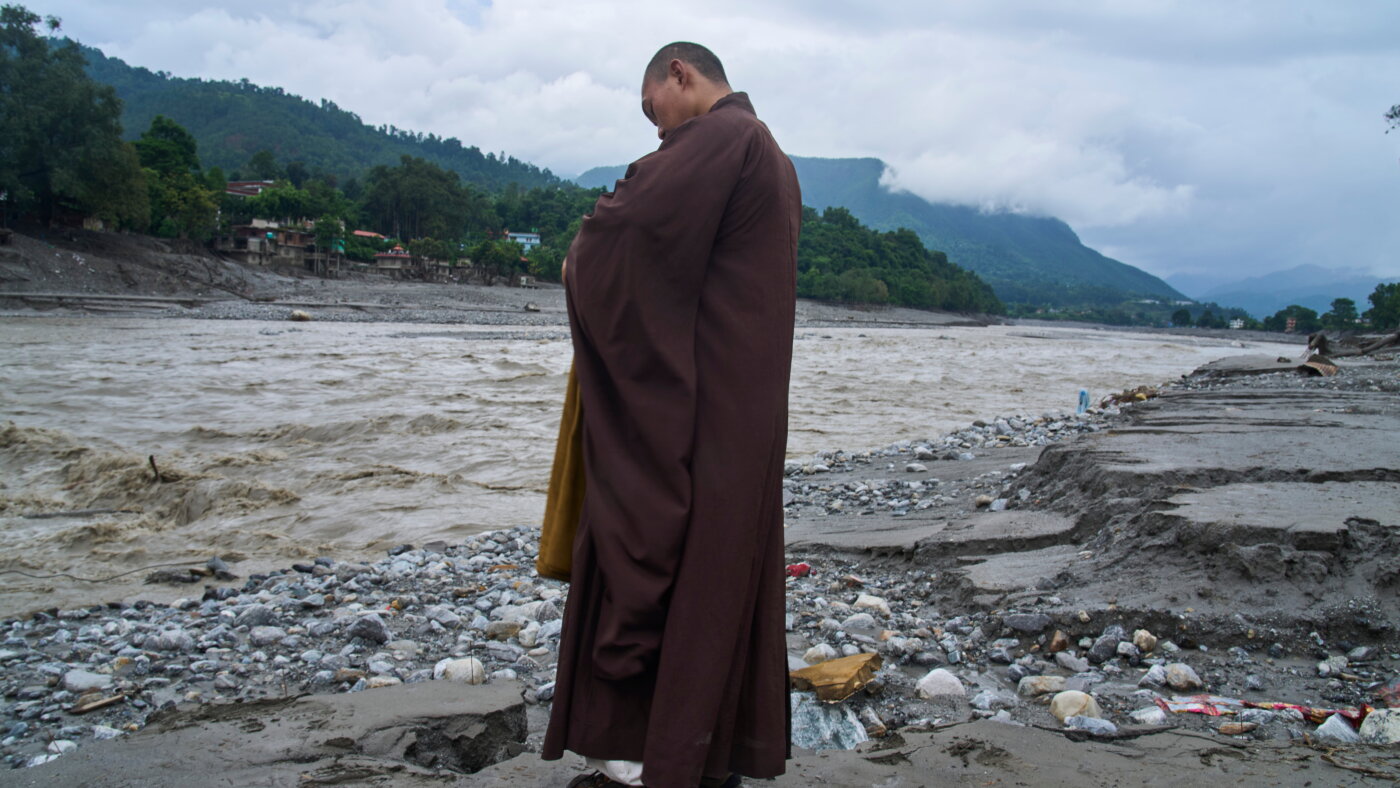
On August 26, flash floods tore through the Nepal-Tibet border region, carving through mountain villages and infrastructure alike. In Kathmandu, authorities moved quickly and publicly: police, the disaster management authority, and the tourism board published lists of missing foreigners within hours — names, ages, nationalities. The process was imperfect, but it was visible. Five days passed before Beijing confirmed that 261 foreign nationals from 23 countries were unaccounted for in Tibet’s Gyirong County.
Twelve days later, Nepal has reported over 1,300 dead and nearly 5,000 missing. China reports 40 dead and more than 500 missing. The gap is staggering — and the reason why matters more than the raw discrepancy.
The two death tolls do not simply reflect different counting methods. They reflect fundamentally different relationships between government and governed, between information and power.
A Barrier Built From Information
Ryan Fioresi, who tracks Tibet affairs at the International Campaign for Tibet, did not mince words about what happened in Gyirong County: at least 300 homes were destroyed, and the real death toll is likely “much higher” than official figures. Tibetan residents in affected areas were moved to tightly controlled holding areas where communications were severely restricted. Satellite phone service was disrupted. Mobile networks went dark in several villages. This isn’t disaster management. It’s information containment.
Meanwhile, Nepal’s institutions — police, disaster authority, tourism board — posted regular social media updates. International aid agencies operated freely. Journalists, including NPR’s team, spoke with rescue pilots and verified casualties on the ground. The information ecosystem around Nepal’s disaster was messy, contested, and above all open.
China’s foreign ministry called these discrepancies “smear and disinformation.” Spokesperson Guo Jiakun insisted Beijing had been “open, transparent and timely.” The timeline suggests otherwise.
The Scaffolding of Control
This is not a lapse. It is architecture.
David Bandurski, who monitors Chinese news censorship through the China Media Project, described the current system as having tightened to “unprecedented” levels over the last decade. Xinhua and CCTV hold total information dominance in disaster zones. Their mandate is to “guide public opinion” — not to report it. The distinction matters.
The evidence is in the coverage itself. State media embedded journalists with rescue teams, hiking overnight through rain at high altitude, producing stories focused on logistics, leadership responsiveness, and heroic operations. Victims and villagers received comparatively minimal coverage. The narrative arc was already written before reporters arrived: the Party is present, the Party is acting, the Party is victorious over nature.
Commercial outlets that once pushed harder have been reined in. Rose Luqiu, a journalism professor at Hong Kong Baptist University, noted that papers like the Beijing News and Southern Weekly attempted some independent reporting by interviewing tourists — carefully avoiding direct victims entirely, who might speak freely about losses the state had not yet tallied. The Southern Metropolis Daily, known for investigative work, ran only one front-page story on the floods, and it was a Xinhua reprint. Bandurski contrasted this with the 2008 Sichuan earthquake, when hundreds of journalists went to the disaster zone despite an explicit ban from the central propaganda department. That was the last time Chinese commercial media operated with anything approaching independence during a major crisis.
The erosion has been steady. Each subsequent disaster — the 2010 Yushu earthquake, the 2021 Zhengzhou flooding — saw tighter controls and narrower lanes for permissible reporting.
The Cost of Narrative Control
China positions itself as a regional stabilizer. It funds infrastructure across South Asia. It projects the image of a responsible great power, the patron of development, the alternative to Western interventionism. Information control during disasters directly undercuts that posture.
When foreign journalists finally gained limited access to Tibet — after more than a week of repeated requests — they were confined to carefully arranged visits. A small number of outlets were allowed in. NPR was not granted access. The routes were predetermined. The people journalists met were selected. What they saw was choreography, not journalism.
The visual evidence that did circulate online — videos of flooding, debris, desperate rescue efforts — was actively deleted. Chinese police penalized ten people for spreading what officials called misinformation. The message is consistent and repeated: the state owns the story.
This matters beyond Tibet. Nepal’s tragedy has drawn international attention precisely because authorities there allowed visibility into the suffering. The contrast between Kathmandu’s transparency and Beijing’s opacity is visible to anyone watching. It shapes how regional audiences, international donors, and geopolitical observers evaluate Chinese claims to leadership.
Second-Order Effects: Trust, Diplomacy, and the Global South
The implications extend beyond immediate credibility. China’s Belt and Road Initiative depends heavily on perceived reliability — the idea that Beijing delivers on its promises, whether roads, ports, or disaster response. When a major crisis hits near a BRI partner, the way China handles information becomes a proxy test for the entire project.
Nepal is both a test case and a warning. Kathmandu’s willingness to publish names, to let journalists interview survivors, to admit uncertainty — these are not weaknesses. They are signals to international partners that Nepal is governable, accountable, and legible. Beijing’s silence signals the opposite: that the Chinese government fears its own population more than it fears chaos.
Regional donors and humanitarian agencies take note. The World Bank, the Asian Development Bank, and even bilateral partners reassess how much visibility they can expect from Chinese-administered territories. The information blackout in Gyirong is not unique — it follows a pattern seen in Xinjiang, in Hong Kong, in pandemic early-warning suppression — but its geographic proximity to Nepal makes it especially resonant. South Asian governments are watching how their own populations respond to disasters under different systems.
There is also a demographic dimension. The foreign nationals caught in the floods came from 23 countries — India, the United States, Japan, South Korea, European nations, Australia. Each government now has a casualty list it cannot independently verify. Diplomatic friction follows. Consular processes slow. Families demand answers that Beijing will not provide.
What Comes Next
The death tolls will change. Independent verification from Gyirong County remains impossible. Human rights organizations and journalists will continue pressing for access. China will continue restricting it.
What is already visible is a pattern repeated across multiple crises: Beijing chooses control over credibility, narrative cohesion over factual completeness. The short-term benefit is a sanitized story. The long-term cost is trust — both domestically and internationally. Every unverified number erodes the regime’s claim to competence. Every deleted video plants a seed of skepticism that no amount of positive propaganda can fully cover.
Nepal’s relative transparency during this disaster does not make it a model. Its own response has been criticized — underfunded, understaffed, politically fragmented. But the contrast with Tibet’s information blackout is stark enough to matter. Transparency and competence are not the same thing, but their absence together is damning.
China’s soft power calculations assume that infrastructure and investment translate into influence. They do not account for the reputational damage of silence. When disaster strikes, the world watches how governments respond. China’s answer — delete the videos, restrict the journalists, control the count — is visible to everyone. It just happens to be visible in the wrong way.
The floods recede. The bodies keep surfacing. The numbers Beijing releases look less like a tally and more like a negotiation — with history, with the world, and ultimately with its own people. And in that negotiation, the silence from Gyirong speaks louder than any press briefing ever could.