Houthi strikes on Saudi oil reshape energy maps and shipping costs
Houthi missiles hitting Saudi oil facilities as Brent near $100 sends shockwaves through global energy supply chains. With Hormuz already disrupted and Bab al-Mandeb now at risk, Asian importers face unprecedented vulnerability.
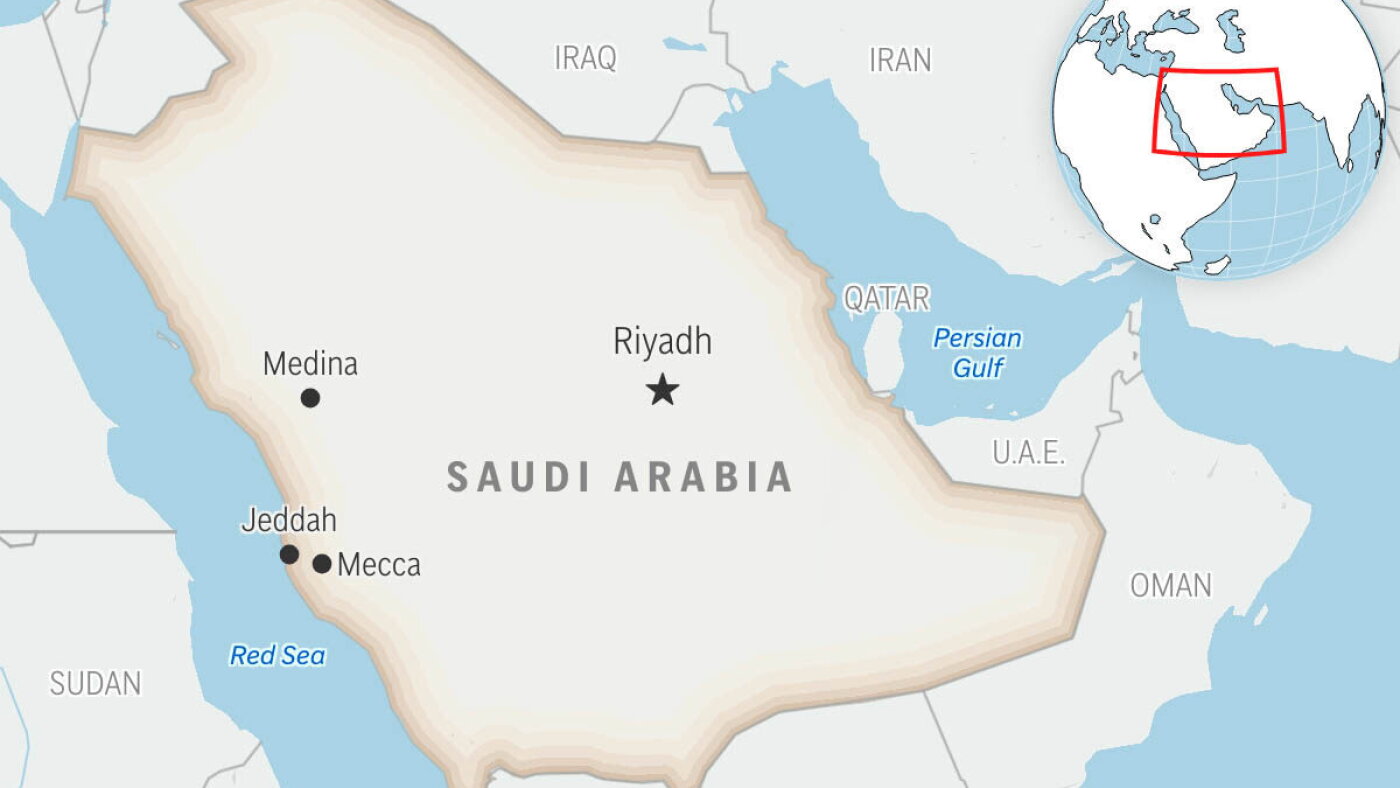
The Double Chokepoint Problem
A single night of Houthi strikes across four Saudi cities has exposed a structural vulnerability in global energy markets that few analysts were willing to say out loud: the world now faces two simultaneous chokepoint crises, and both are in the same neighborhood.
The attacks Tuesday wounded 73 people and ignited fires at oil facilities and utilities in Saudi Arabia’s southern region, according to Saudi authorities. The Houthis claimed responsibility, saying they fired dozens of ballistic missiles and drones at the Jazan City for Primary and Downstream Industries complex — a major logistics hub on the Red Sea coast — as well as Aramco facilities in Najran and Abha, and King Khalid Air Base in Khamis Mushait. Operations at the facilities were temporarily suspended. Firefighters were battling the blaze into the morning.
What matters more than the immediate damage is the geography. Jazan sits on the Red Sea, roughly parallel with the Bab al-Mandeb strait — the narrow passage through which an estimated 5 million barrels of oil per day pass on their way from the Persian Gulf to global markets via the Suez Canal or around Africa. Meanwhile, the Iran war has nearly halted shipments through the Strait of Hormuz, the route that moved about one-fifth of the world’s oil before hostilities escalated.
You now have two arteries of global oil flow under concurrent threat. That is not a normal market condition. That is a structural break.
Brent at $100 Is No Longer a Forecast
Brent crude hovering near $100 a barrel was already pricing in regional instability. What it was not pricing in was the simultaneity of threats. Insurance economists call this a correlation risk — two normally independent exposures moving in tandem, which makes the tail scenario far more likely than any single-model prediction.
Shipping insurance premiums through the Red Sea have already spiked to levels not seen since the early days of the Ukraine war’s disruption of Black Sea routes. The Houthi strikes on Saudi territory push this further. Commercial vessels transiting the Bab al-Mandeb now face a calibrated risk: Houthi missiles can reach southward into Saudi infrastructure and northward into Yemeni government positions, but they can also target commercial shipping in the strait itself. The calculus for charterers and hull-and-machinery underwriters is no longer about seasonal war-risk adjustments. It is about whether the route remains viable at any price.
The International Tanker Owners Pollution Federation and similar bodies track these patterns. When the premium crosses certain thresholds, vessels simply reroute around the Cape of Good Hope, adding 10 to 14 days to Middle East-to-Asia shipments. That is not hypothetical. It happened in 2023 and 2024. It will happen again, and more frequently, if this pattern holds.
Who Loses First
The answer is Asia. Japan, South Korea, and India together import over 15 million barrels per day from the Middle East, the vast majority of it transiting either the Strait of Hormuz or the Bab al-Mandeb. When both routes face disruption, there is no alternative corridor with meaningful capacity. The Overland Pipeline from the Persian Gulf to the Mediterranean is a fraction of what these nations consume in a week. Rail and road through the Arabian Peninsula are not commercially viable at scale.
China is slightly less exposed because it imports a growing share of its oil from Russia and Central Asia, but even Beijing still sends the lion’s share of its Middle Eastern crude through the same two chokepoints. A sustained dual disruption would force emergency procurement from West Africa, the Gulf of Mexico, or Norway — all of which have limited spare capacity and longer lead times.
Saudi Arabia itself is a partial outlier in this calculus. The kingdom has vast domestic refining capacity and can prioritize its own fuel security. But the Jazan refinery alone processes 400,000 barrels per day, and its temporary suspension on Tuesday is a signal, not just an operational inconvenience. Any facility hit by ballistic missiles and drones is operating under a new risk regime, and investment in hardening or relocating such infrastructure does not happen overnight.
OPEC’s Dilemma
The kingdom’s Energy Ministry confirmed the attacks but offered no timeline for when operations would resume. That silence is itself a message. In prior crises, Riyadh has sometimes used production flexibility as a geopolitical tool — the 2019 Abqaiq attack, for instance, followed by rapid OPEC coordination. But the context has changed fundamentally.
With Hormuz nearly closed, any additional supply disruption in Saudi Arabia compresses the global buffer to a sliver. The question for OPEC+ is whether to ramp production to offset the loss or to hold steady and let prices reflect the scarcity. Either choice carries political cost. Ramping production signals weakness and invites further Houthi targeting. Holding steady cedes market share to non-OPEC producers — the United States, Brazil, Guyana — at a time when Saudi Arabia’s economic transformation agenda depends on maintaining revenue credibility.
The Houthis are effectively holding a veto over a significant portion of global oil supply, not because they produce oil, but because they control the terrain adjacent to the routes that move it. That is a novel form of leverage, and it is one that Riyadh and its partners have so far been unable to neutralize.
What Comes Next
The Saudi coalition spokesperson, Maj. Gen. Turki al-Malki, called the attacks a “flagrant violation of the kingdom’s sovereignty” and vowed retaliation. The Houthis’ military spokesman, Brig. Gen. Yahya Saree, framed them as defensive retaliation for Saudi strikes on Yemeni territory. The cycle is self-reinforcing: each side’s escalation justifies the other’s, and the infrastructure in between bears the cost.
What is less certain is whether the international community responds with the seriousness this moment warrants. The Bab al-Mandeb is not the Suez Canal in 1956, when the world acted swiftly. It is a strait that sits at the intersection of a civil war, a proxy conflict, and a broader regional instability that includes Iran’s direct involvement. The United States has a naval presence in the region, but its strategic focus is divided. European energy buyers, freed from Russian dependence, may lack the same urgency. And the Asian importers — the ones most dependent on these routes — are geographically distant and politically heterogeneous.
The 18,500 people displaced in Yemen’s Taiz and Hodeida provinces this week are a human measure of this crisis. But the economic measure may be larger. If this pattern of dual chokepoint disruption becomes episodic rather than exceptional, then the global energy system is entering a new era — one where the assumption of free flow through the Middle East’s maritime corridors is no longer a baseline but a variable to be stress-tested continuously.
The fires in Jazan, Najran, Abha, and Khamis Mushait will be extinguished. The repairs will be made. But the assumptions that underpin energy security in the 2020s have been fundamentally altered, and the market will price that in long after the smoke clears.