How Nvidia, Meta and Musk Killed Trump's AI Regulator
Jensen Huang, Mark Zuckerberg and Elon Musk successfully lobbied Trump to kill a proposed AI regulatory body — and the implications for global governance go far beyond Silicon Valley.
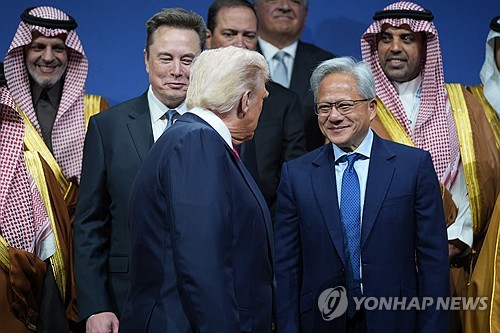
A private regulatory body was on the table. Three CEOs made sure it never materialized.
What started as a quiet proposal inside the AI industry — a privately-led regulatory body modeled on frameworks already being debated in Brussels and Beijing — was killed not by legislatures or courts but by a direct lobbying campaign aimed squarely at Donald Trump.
According to a Wall Street Journal report published Sept. 17 citing multiple sources, Jensen Huang of NVIDIA, Mark Zuckerberg of Meta and Elon Musk of SpaceX held separate conversations with the president over recent weeks and persuaded him to abandon the idea of a new AI regulatory agency. Their argument was pragmatic: such a body, designed and staffed by the incumbents, would simply entrench the three companies already leading the race — OpenAI, Anthropic and Google — while marginalizing everyone else.
They also raised questions about who would sit on the agency’s board, according to the sources, signaling that the fight was as much about influence as it was about principle.
The White House split down the middle
The defeat of the regulatory body reflects a deeper fracture inside the administration itself. On one side were Suzy Welsh, White House chief of staff, Treasury Secretary Scott Bessent and National Cyber Director Sean Carruthers, who had been pushing for stronger AI oversight and guardrails. On the other was David Sacks, the president’s counselor for science and technology, who argued persistently for a minimal-regulation approach.
Sacks won. Trump’s final verdict came not through a policy memo but on Truth Social, where he called the push for AI regulation a “pathological conspiracy” and warned that any attempt to slow American AI development would only benefit China.
That framing is significant. It recasts regulation as an act of economic surrender rather than governance, which makes it almost impossible for critics inside the administration to mount a serious counter-offensive. The question is no longer whether the US should regulate AI. The question is whether anyone who asks is betraying American competitiveness.
Why the anti-regulation coalition was so effective
The trio’s opposition was not abstract. It was rooted in a specific structural concern: a privately led regulatory body would likely be shaped by the companies best equipped to influence it. OpenAI, Anthropic and Google have the deepest pockets, the most sophisticated policy teams and the strongest relationships with Washington. A new agency, even one designed to be industry-led, would effectively become a gatekeeper whose rules favor those who helped write them.
NVIDIA, Meta and SpaceX occupy different positions in the AI ecosystem. NVIDIA sells the chips that power everyone. Meta operates a social platform with its own open-source AI ambitions. SpaceX is not primarily an AI company at all. Each has a reason to fear that a regulatory body designed by and for the current AI giants will raise barriers to entry without meaningfully constraining them.
Their alliance is unusual but not unprecedented. Tech companies regularly compete fiercely, yet converge when regulatory structures threaten to固化 the status quo. The difference this time is the directness of the lobbying. This was not a campaign of industry association statements or white papers. It was three CEOs talking to the president himself.
What gets lost when the regulator dies
The regulatory body that was killed would have been privately led, not government-run. That distinction matters because it signals what kind of compromise the AI industry was considering in the first place. The proposal emerged from within the sector, partly in response to mounting pressure from Democratic lawmakers, European regulators and a growing chorus of AI safety researchers who argued that the current pace of deployment carries risks that no single company can manage alone.
Demis Hassabis, Google’s chief scientist, had floated the idea of industry-led governance in discussions that predated the current political moment. The fact that his proposal was ultimately sidelined by the very companies that benefit most from speed suggests something important: the industry’s appetite for self-regulation has limits, and those limits are drawn where it conflicts with competitive advantage.
Meanwhile, Anthropic CEO Dario Amodei has been among the most vocal advocates for AI pacing and guardrails, publishing writings that argue the current trajectory is dangerous. His position puts him at odds not just with regulators who want more oversight but with the very companies that now hold sway over the administration’s direction.
The global implication the wires are missing
American AI policy does not stay American. The European Union’s AI Act, China’s generative AI regulations, and the ongoing debates in Japan, South Korea and India all unfold against the backdrop of what Washington does or does not do. A US that refuses to build any regulatory infrastructure for AI sends a signal that governance is optional, which makes it easier for other countries to treat their own regulatory efforts as unnecessary friction.
It also raises a separate question: if the US will not regulate AI, who will? The EU is already ahead on paper. China is regulating aggressively, if differently. The risk is not that the world will coordinate on AI governance. The risk is that it fragments into competing regulatory zones, each shaped by its own geopolitical priorities, with the US opting out entirely.
That fragmentation is exactly what Chinese strategists have long anticipated and, in some ways, wanted. An unregulated American AI sector accelerates deployment, which amplifies US technical advantage in the short term but also accelerates the global diffusion of capability that China is racing to match. The Trump administration’s framing of regulation as a Chinese gift ignores the possibility that unchecked acceleration may produce instabilities that eventually damage the very competitiveness it seeks to protect.
Who wins and who loses
The immediate winners are the three CEOs who killed the regulatory body and the companies most likely to benefit from a regulatory vacuum. OpenAI, Anthropic and Google get to keep racing without a gatekeeper. NVIDIA gets to keep selling the shovels. Meta and SpaceX get to expand without new constraints.
The losers are less visible but real. Researchers like Amodei who see deployment speed as a safety risk. Companies outside the big three that might have benefited from a level playing field enforced by an independent body. International partners looking to the US for leadership on AI governance and finding none. And, perhaps most quietly, the public that has no representative in a conversation that is entirely between CEOs and presidents.
What happens next is unclear. The regulatory body is dead for now. But the pressure that produced it has not disappeared. European regulators will keep moving. Congressional Democrats will keep pushing. And the next catastrophe that an unregulated AI system helps cause will make the case for governance louder than any industry white paper ever could.
The question is whether the administration will still be in the business of listening to CEOs when that moment arrives.