How Korea's Steel Rivals Flanked US Tariffs in One Bold Move
Hyundai Steel and POSCO are building a $6 billion joint steel plant in Louisiana to bypass US auto tariffs. The move completes Hyundai's vertical integration in North America and forces Ford and GM to negotiate with former rivals now operating as partners.
A rival partnership no one saw coming
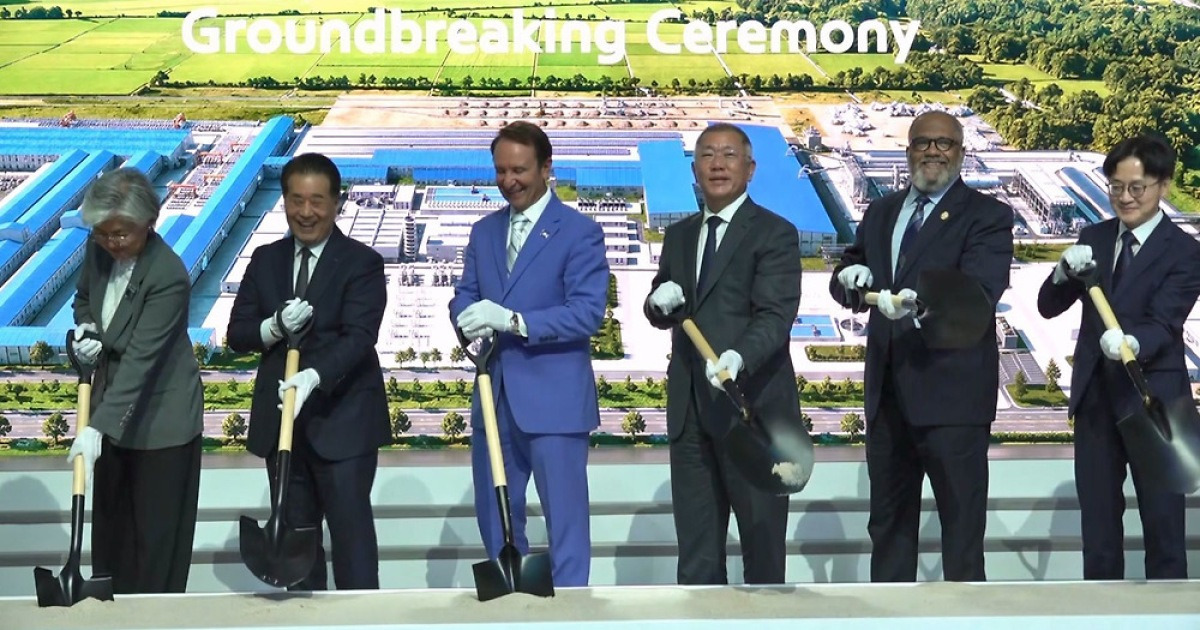
Hyundai Steel and POSCO — the first and second largest steelmakers in South Korea, competitors for decades across every market from automotive sheet to construction rebar — broke ground together on September 4 in Donaldsonville, Louisiana. The plant will begin construction in the fourth quarter and start producing 2.7 million tons of automotive steel sheets annually by 2029. POSCO is contributing a 20 percent stake to a project worth roughly 8 trillion won, or about $6 billion at current exchange rates.
On paper this looks like a business arrangement. In practice it is a tactical bypass of the very trade barriers Washington has been constructing since 2018. By manufacturing inside the United States, the two Korean companies sidestep the tariffs that have made imported steel expensive and politically toxic. More importantly, they position themselves to profit from a rule the US auto industry has been warned about: starting July next year, vehicles containing less than 70 percent North American-sourced steel will lose preferential tariff treatment.
The joint venture effectively turns a regulatory wall into a revenue stream. It also marks the first time two Korean steel majors have co-invested in a greenfield facility on American soil, a structural shift that goes beyond any single plant.
Why this timing matters
The US rule was designed to incentivize local sourcing and penalize reliance on foreign steel. It was also designed to pressure automakers into reshoring production. What it did not anticipate was a Korean steel partnership operating inside the very borders the rule tries to protect.
Hyundai Motor Group now controls every step of its steel supply chain in North America — from raw material procurement to finished automotive sheet. That vertical integration was already the company’s endgame before the Louisiana announcement. What changed is the speed. Rather than wait for the tariff environment to settle, Hyundai moved to lock in supply ahead of the July deadline, with POSCO’s capital and engineering capability filling the gap.
For the US automakers, this is a problem with two faces. Ford and General Motors still rely on imported steel for portions of their North American output. Under the new rule, those portions become expensive — or disqualifying. They cannot easily replace Korean-sourced steel with domestic supply because the domestic supply is exactly what Hyundai and POSCO are now building. The irony is structural: the tariff was meant to shield American manufacturers from foreign competition, but it is accelerating a scenario in which those same manufacturers must buy from foreign firms operating on American territory.
Second-order effects rippling through the supply chain
The consequences extend well beyond steel pricing. Upstream, the Donaldsonville plant will draw significant natural gas and electricity demand from Louisiana’s industrial corridor, tightening regional energy contracts and potentially lifting local utility costs. The site sits near existing petrochemical infrastructure, which means feedstock logistics — iron ore, coking coal, scrap — will be optimized around Gulf Coast shipping rather than Pacific routes.
Downstream, the 2.7 million ton capacity is calibrated to Hyundai Motor Group’s North American plant output in Alabama and Kentucky, but any surplus will flow into the open market. That creates a new pricing benchmark for automotive-grade sheet in the Southeast, a region that has historically depended on shipments from Gary, Indiana, or imported coil from Japan and Korea. The geographic shift alone alters freight economics for every body shop and stamping plant within a five-hundred-mile radius.
There are labor implications as well. The project is expected to create roughly 800 construction jobs and 400 permanent positions, according to state estimates. In a period of tight manufacturing labor markets, recruiting skilled welders, electricians, and metallurgists in rural Louisiana will require competition with other energy-sector employers. Wage pressure in the region is likely, which could slow ramp-up if labor costs exceed projections.
Environmentally, the plant faces scrutiny under Louisiana’s increasingly strict air permitting process. Steel production is carbon-intensive, and the Donaldsonville site sits within an area already burdened by petrochemical emissions. Hyundai and POSCO have signaled intent to incorporate electric arc furnace technology and hydrogen-assisted direct reduced iron, but those claims require verification before investors and regulators treat them as material. The carbon intensity of the final product will determine whether the steel qualifies for any future low-carbon content incentives under US trade policy.
Who wins, who loses
Hyundai Steel wins the most immediately. It gains a tariff-free foothold in the single largest automotive market in the world, with committed offtake from its parent group’s vehicle plants in Alabama and elsewhere. The Louisiana facility produces high-value automotive-grade sheet, not commodity rebar. Margin protection is built in. The company also gains bargaining leverage it never had before: Hyundai can now threaten to sell surplus capacity to Ford or GM, turning a cost center into a profit center on its own supply chain.
POSCO wins a strategic hedge. Twenty percent ownership in a US-based plant gives it exposure to the North American market without the full capital burden. It also strengthens the company’s bargaining position with US automakers who will need alternative suppliers as Chinese and European steel faces renewed scrutiny. POSCO’s presence in the joint venture signals to Washington that not all foreign investment is adversarial, a distinction that matters as trade policy continues to harden.
Ford and GM lose negotiating leverage in ways that will compound over time. Their options for North American automotive steel are shrinking precisely when the tariff rule forces them to expand it. They may find themselves bidding for capacity from the very companies that compete against their own vehicle divisions. The dependency is mutual but asymmetrical — Hyundai needs the American market, but GM and Ford need Hyundai’s steel more urgently than Hyundai needs their orders.
Other foreign steelmakers face the same squeeze. Japanese firms like Nippon Steel and JFE, which have also operated in the US, will need to defend their market share against a Korean alliance that now counts a major American state as home base. The competitive dynamic shifts from “who can ship here cheapest” to “who already built here.” That advantage is cumulative: once a mill is running, the sunk costs create switching friction for buyers who had counted on import options.
What happens next
Construction is scheduled to start this quarter. First production is targeted for 2029. That means there is a roughly two-year window in which the tariff rule takes effect before the plant is online. Automakers with weak North American steel sourcing — or no domestic partnership at all — will face genuine cost pressure during that gap. Contracts signed in the next 18 months will set the terms for the rest of the decade, and those terms will heavily favor the side with secured supply.
There are also unanswered questions. The 70 percent threshold applies to steel content, not just sourcing. Whether aluminum, castings, and other metal components factor into the calculation is not yet clear. The final rule text and any interpretive guidance from the Treasury Department or USTR will determine how narrowly or broadly the advantage applies. Companies are already lobbying for favorable definitions — a sign that the rule’s language, not just its existence, is the battlefield.
The partnership itself is unusual in its scale and structure. POSCO’s 20 percent stake is small enough to make the arrangement palatable to US regulators concerned about foreign control, but large enough to give the company real influence over technology transfer and output allocation. If the model proves viable — and early signals from industry conferences suggest it will — expect similar structures in other sectors where tariff barriers are rising and local production is the only credible response. We are likely to see this template replicated in battery materials, refined chemicals, and possibly semiconductors.
The Louisiana plant is not just a steel mill. It is a signal that the era of importing your way into tariff-protected markets is over, and that the companies fastest to localize will be the ones writing the new rules. For Washington, the harder question is whether a tariff policy designed to bring manufacturing home is now reinforcing the very competitive advantages it sought to neutralize.