Hyundai and T-Money Break Kakao's Robotaxi Monopoly in Seoul
Seoul has awarded robotaxi operating rights to three companies—ending Kakao's two-year monopoly and opening the door for automakers and transit firms to compete directly in the city's autonomous ride-hailing market.
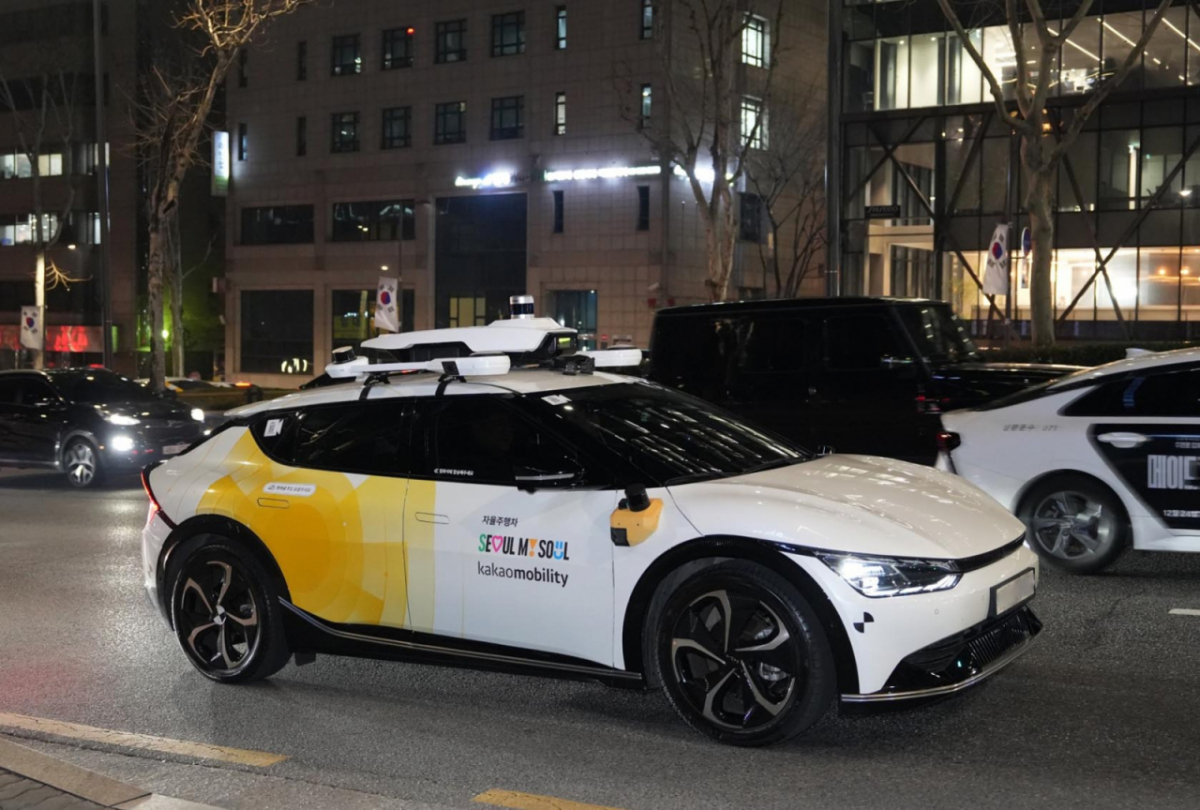
Seoul’s Robotaxi Map Just Got Messier—and That’s the Point
For two years, if you wanted a self-driving ride in Seoul, you opened one app: KakaoT. The city handed Kakao Mobility exclusive operating rights in its first 2024 robotaxi tender, and the tech giant treated the streets of Gangnam like its private test track.
That era ended Monday. Seoul selected three operators for its next two-year licensing cycle—Kakao Mobility, Hyundai Motor, and T-Money Mobility—ending the monopoly and setting up a three-way platform fight over the same fleet of autonomous vehicles.
The shift is smaller in scope than it sounds, but the signal is unambiguous: Seoul is no longer betting on a single champion. And the companies that won this round include players most English-language readers would not expect to be in this race at all.
How the Rules Changed—and Why Hyundai Got In
Seoul didn’t just open the door this time; it rewrote the rules. The city announced in advance that any applicant scoring 85 points or higher would qualify, enabling multiple winners. In 2024, the bar was effectively set at one.
Hyundai’s entry is the most consequential. This marks the first time a traditional automaker will operate a robotaxi platform directly in Seoul, rather than merely supplying the hardware underneath someone else’s app. The company is expected to deploy its Shuttle platform—an AI-driven demand-response dispatch system it has been running across 82 regions in South Korea—to the capital.
Hyundai did not stumble into this. It tried before and failed. Its selection now means the company will compete for the same rides as Kakao using the same pools of self-driving vehicles, differentiated only by which interface a rider chooses.
T-Money Mobility’s inclusion is equally notable. T-Money is the household name for Seoul’s transit card—tap-and-go coverage on subways, buses, and convenience stores. T-Money Mobility is its subsidiary built to extend that brand into mobility services. The company brings something Kakao doesn’t: physical tap-point distribution across the city’s transit infrastructure, and a user base that already thinks of T-Money as “the app for getting around Seoul.”
The Losers Tell as Much a Story as the Winners
Two high-profile bidders were eliminated, and both exclusions are worth tracking.
SovCar, the car-sharing platform, had positioned itself aggressively in the autonomous space. In May 2026, it announced a 15 billion won joint venture with Krafton—the gaming giant behind Steam’s global presence—to form Apex Mobility. The partnership was read in Korea as a credible challenge to Kakao’s dominance, combining SovCar’s fleet operations with Krafton’s technology capital. It didn’t make the cut.
Uber, the global ride-hailing heavyweight, also failed to qualify. That is less surprising but not trivial. Uber’s withdrawal from several Asian markets after the DiDi acquisition leaves Korea as one of the few remaining large markets where the brand still holds relevance. Its exclusion from Seoul’s robotaxi tender confirms that the city is prioritizing domestic operators with local infrastructure over global platform play.
For Japanese readers particularly familiar with Uber’s trajectory in Asia, this is a reminder: Korea’s autonomous mobility market is being shaped by Korean infrastructure, not global defaults.
What This Means for the Robotaxi Market in Practice
Three apps pulling from the same vehicle pool creates a familiar dynamic: price competition on the platform side, operational consolidation on the vehicle side. The marginal cost of adding a fourth dispatch channel to an existing autonomous fleet is low. The marginal benefit to the consumer—more choices, potentially lower fares—is real but incremental.
What is not incremental is the strategic message. Seoul has rejected the “single operator” model that other cities have flirted with. The city is explicitly choosing fragmentation over concentration, betting that competition between platforms will drive innovation faster than a Kakao-only regime would.
Seoul is also expanding the service area. The late-night robotaxi service in Gangnam, which began with just seven vehicles in May, is being scaled to 19. Step-by-step geographic expansion is the city’s stated plan. The current three-operator setup will be evaluated at the end of the two-year term, meaning the configuration is not locked in permanently.
The Japan Connection: What Tokyo and Waymo Should Watch
South Korea’s approach to robotaxi licensing diverges from patterns seen in other advanced markets. Tokyo has moved cautiously, limiting early operations to designated zones with tight municipal oversight. San Francisco granted Waymo near-exclusive de facto dominance through a combination of permitting speed and regulatory tolerance.
Seoul is doing neither. It is creating a multi-operator environment while retaining the right to re-evaluate at the end of each cycle. That middle path is unusual and may attract attention from cities that want competition without ceding control to a single foreign platform.
For Japanese autonomous vehicle players—Sony Group’s Sony Mobility, Nissan, or any firm eyeing a Korean entry—the Seoul tender confirms that hardware alone does not win. You need a dispatch platform, you need a consumer brand, and in Hyundai’s case, you need the patience to apply twice.
What Happens Next
The three selected operators will sign agreements with Seoul shortly and begin linking their platforms. Service launches are expected by year-end 2026, with the Gangnam late-night route serving as the initial proving ground.
Kakao’s first-mover advantage is real—it has two years of operational data, rider habits, and brand association on its side. But neither Hyundai’s manufacturing-scale resources nor T-Money’s transit-card ubiquity should be underestimated in a market where the differentiation between apps is thin and the vehicles are identical.
The real question is whether three platforms competing for the same fleet drives down prices enough to accelerate adoption, or whether the complexity of coordination with three operators slows expansion. Seoul’s answer will come in the next tender cycle—and whether it awards exclusivity again or doubles down on fragmentation will determine the shape of Korea’s autonomous mobility market for years to come.