Iran's Hormuz Exclusion Zone Is a Test of Global Shipping Will
Iran's plan to declare an exclusion zone near the Strait of Hormuz marks a dramatic escalation from targeted strikes to broad maritime coercion. The move threatens energy flows to Asia and exposes the limits of U.S. naval deterrence.
The Exclusion Zone Changes Everything
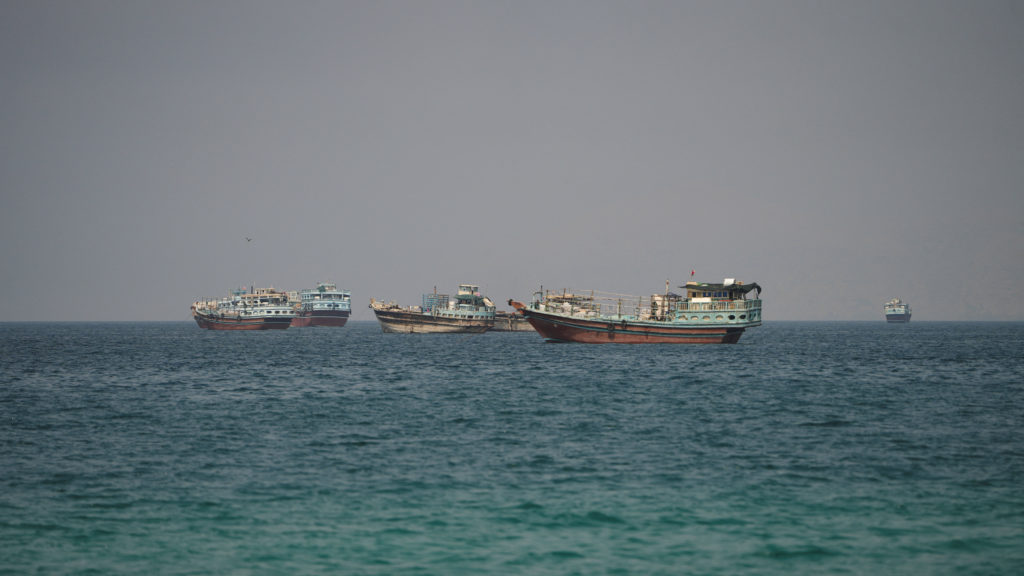
Iran has moved from hitting specific ships to declaring an entire stretch of water off-limits. On Sunday, Mohsen Rezaei, the new head of Iran’s Supreme National Security Council, announced Tehran would establish an exclusion zone stretching from the line of the U.S. naval blockade toward the Strait of Hormuz and into the Persian Gulf. Any vessel identified transiting the strait would face sanctions. The details were sparse. The implication was not.
This is not business as usual for Iranian maritime strategy. Until now, Tehran has targeted individual commercial ships — usually those linked to Israel or the United States — as calibrated acts of leverage. An exclusion zone is different. It asserts sovereignty over international waters and threatens every ship that uses them. That is a direct challenge to the principle of freedom of navigation and a bet that the world will absorb the economic pain rather than risk war.
Who Is Actually Shipping Through?
The numbers tell a story of competing narratives. U.S. Energy Secretary Chris Wright claimed on Sunday that 9 million barrels of oil per day flow through the strait, arguing that pre-conflict levels are mostly intact. TankerTrackers.com and other independent sources suggest that figure exceeds actual traffic over the past 28 days. Wright himself acknowledged the flow is at two-thirds or more of prewar levels — which means roughly one-third of normal throughput is already disrupted by the blockade, redirected routes, and insurance uncertainties.
Iran claims it continues to sell between 1 and 1.5 million barrels daily, circumventing the U.S. blockade through clandestine networks built over decades. If true, that is a significant revenue stream under direct threat from the new zone declaration.
The discrepancy matters because it reveals how much of the current flow depends on U.S. naval escorts rather than organic commercial confidence. Remove the warships, and the numbers drop faster than Washington admits.
The Blockade and Its Gaps
The U.S. blockade of Iranian ports, enforced by over 20 warships, has redirected 92 commercial vessels and disabled three. That is tangible pressure. But the blockade line itself — the geographic boundary Rezaei referenced — remains undefined. Iran does not know exactly where Washington draws it. Neither do shippers. That ambiguity is what makes the exclusion zone declaration so dangerous: it creates overlapping claims on the same water, and ambiguity breeds incidents.
The U.S. strike on three Iranian oil tankers last week — retaliation for ballistic missile launches at American warships — marked a shift. Previous Iranian attacks at sea targeted commercial shipping. This was a direct military engagement. The threshold for escalation has already been crossed once. The exclusion zone is the next step.
Why Tokyo and Seoul Should Be Watching
Japan and South Korea import the vast majority of their oil through the Strait of Hormuz. Any disruption to those flows hits their economies with immediacy and severity that Washington has insulated itself from. The Trump administration has called the conflict “small potatoes” and “very intermittent,” language that reveals more about political distance than maritime reality.
Asian allies have historically relied on the U.S. Fifth Fleet to guarantee passage. Rezaei’s declaration tests whether that guarantee holds when Iran frames transits as acts of hostility. If insurance markets price Hormuz risk higher — and they will — Asian purchasers face steeper costs regardless of whether a single tanker is actually hit.
South Korea and Japan also face a secondary question: whether the U.S. blockade expands to target third-country vessels doing business with Iran. The Trump administration has already targeted foreign financial institutions handling Iranian money. Shipping companies and flag states that continue serving Iranian clients could face similar pressure. The exclusion zone announcement may be the opening shot in a broader campaign to choke Iran’s remaining trade routes — and collateral damage to allied shipping is a real possibility.
The Mediators Are Done
Rezaei did not mince words about the collapsed negotiations. The memorandum of understanding signed in mid-June fell apart within days as each side accused the other of violations. Iran’s former mediators — Pakistan, Qatar, Oman — have lost credibility in Tehran’s eyes.
“We are now pursuing diplomacy with guarantees,” Rezaei said. That is code for abandoning multilateral mediation in favor of enforceable commitments, likely backed by military deterrence rather than good faith. It also signals that Iran sees no path to negotiated relief from the blockade and is instead consolidating its coercive position.
What Comes Next
The exclusion zone has not yet been formally declared. Rezaei said it would come in “coming days and weeks.” That window is significant. It gives shippers time to adjust — or to test whether the zone is merely rhetoric. A single commercial vessel proceeding through the disputed area would force a decision: does Iran enforce its claim, and at what cost?
Washington has signaled it expects other countries to eventually support the Navy’s escort efforts. If European, Japanese, or South Korean vessels join the convoy system, the exclusion zone becomes a multilateral challenge rather than a bilateral one. If they refuse, the zone gains de facto legitimacy as a barrier that even allies will not cross without protection.
The conflict that began on February 28 with U.S. and Israeli strikes has now entered a phase where Iran is reshaping the rules of the waterway itself. The exclusion zone is not the endgame. It is a probe — of American resolve, of Asian vulnerability, and of the global shipping system’s ability to absorb a power that has decided to make the Strait of Hormuz a contested space again.