Iran Has Turned the Strait of Hormuz Into a Live Wire
Iran's warning that no oil will pass through the Strait of Hormuz if countries side with Washington is not posturing — it is the operational logic of a sanctions regime Tehran sees as existential. European refiners and Asian shipping insurers are about to find out.
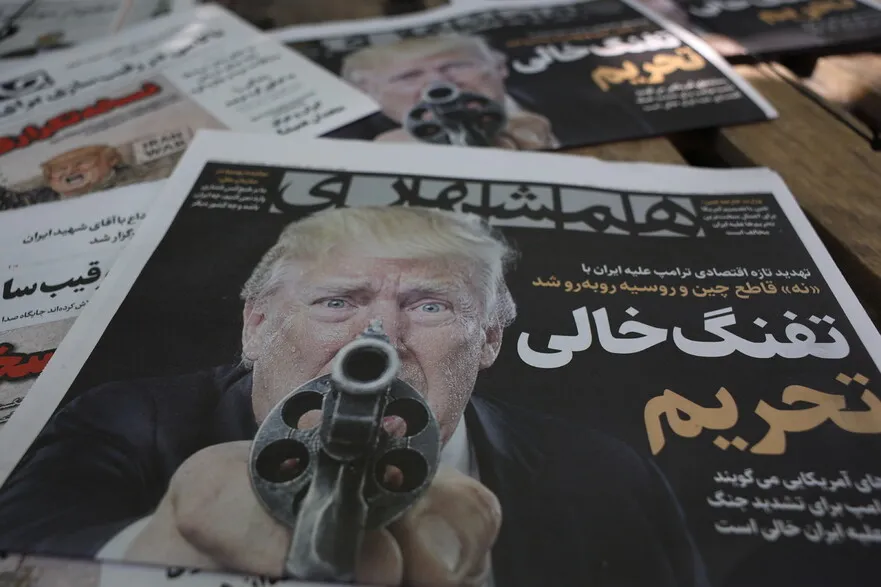
The Threat Is Not a Bluff
When Mostafa Rezaei appeared on Iranian state television on May 22, he did not couch Iran’s response to anticipated US sanctions in vague language. He said any country that joins Washington’s economic war against Iran would be treated as a hostile actor, and he added the detail that matters most: no drop of oil would leave the Strait of Hormuz. Other export routes would be targeted too. Iran does not want a wider war, he said, but it will hurt the interests of those who choose America’s side.
The timing is what makes this read differently from Iran’s usual rhetorical drills. Donald Trump had already declared an unprecedented economic war against Tehran on May 19 and scheduled Treasury Secretary Scott Bessent to unveil the specifics on May 24. Rezaei’s warning was a direct answer to that schedule — an attempt to raise the price of compliance before the next round of sanctions even landed.
Who Iran Is Trying to Scare
The audience is not Washington. It is Baghdad, Kuwait, the UAE, Saudi Arabia, and the insurers and shipping companies that move oil through the Gulf every day. Rezaei’s language — that Iran will侵害 the interests of any country that participates — is calibrated for capitals that sit on Iran’s borders and share the strait’s fate. Iran knows it cannot blockade the strait without also choking its own remaining oil exports. But it also knows that a closure or even a credible threat of closure would hit those neighbors first and hardest.
The message to the United States is encoded differently. Trump has called the Strait of Hormuz American territory on multiple occasions since May 14, posted a map marking the waterway as new US land on May 18, and told a South Carolina crowd on May 21 that Iran wants a deal so badly he is not even sure America does. Rezaei’s warning was, in effect, a reply to that rhetoric: you can claim the strait, but we control the chokepoint.
The Signal Behind the Numbers
About 20 percent of global oil consumption and roughly a third of seaborne crude passes through the Strait of Hormuz. That means any credible disruption does not stay regional. Even a partial blockade or sustained threat would send spot rates soaring, insurance premiums into unpricing territory, and refining margins across Europe and Asia into volatility that no futures curve absorbs quietly.
European refiners are the quiet first responders here. Many already hedge Hormuz risk through long-term contracts and diversified supply, but they remain exposed to the spike that comes when traders realize the strait is not just under threat — it is being weaponized as policy. Asian insurers face an even sharper problem. War-risk premiums for the Gulf are already elevated; a formal Iranian declaration that the strait is a target would force a reinsurance event that some carriers simply cannot capacity through without pulling out of the region entirely.
The Split Inside Tehran
The harder part of Rezaei’s statement was what came after: Iran does not want to expand the war. That qualifier matters because it reveals a regime that is signaling escalation but also leaving room to back down without looking defeated. Within days, President Masoud Pezeshkian told doctors on May 21 that ending the war now, while Iran still holds leverage and the world recognizes its strength, would be the better path. He framed the conflict as one the world already sees Iran winning, pointing to US criticism after attacks on schools, hospitals, and infrastructure.
Parliament speaker Mohammad Bagher Ghalibaf offered a concrete policy proposal alongside the hawkish rhetoric: Iran and Iraq should settle trade in their own currencies to cut dollar dependence. That is not a military signal. It is an institutional hedge against the very sanctions Bessent is preparing to amplify. The coexistence of Pezeshkian’s pause-and-secure stance and Rezaei’s blockade threat tells you everything about where Tehran sits — preparing for the worst while keeping an exit ramp visible.
What the US Side Is Planning
Bessent told CNBC on May 20 that the United States would impose the strongest sanctions in Iran’s history, explicitly aiming to collapse the regime. The details were due the next day, May 24. Trump has warned that third countries funding Iran will face enormous economic costs and has pressured allies to cut ties. That framework turns every Iranian threat into a test of allied compliance — and every compliance decision into a potential trigger for the very escalation Tehran is warning about.
The loop is self-reinforcing: Washington pressures partners to isolate Iran, Iran threatens to make isolation expensive for anyone who participates, and the cost of choosing sides rises for everyone in between. That is the dynamic Rezaei is trying to freeze in place before Bessent’s press conference resets the market’s assumptions.
What Happens Next
The immediate risk is not a full blockade. It is the weaponization of uncertainty. Markets price threats only when they look actionable, and Iran has now made the strait actionable by tying it directly to sanction participation. If Bessent’s announcements on May 24 go further than expected, the next escalation is likely to be selective — a incident near the strait, a vessel flagged as Iranian seized, insurance firms pulling out of Gulf war-risk ratings, or a public Iranian statement that a particular neighbor has crossed the line.
For European refiners, the next two weeks will test whether their hedging holds when the spot curve moves. For Asian insurers, the test is whether they can maintain coverage at all once the threat crosses from rhetorical to operational. For Washington, the test is whether pressing allies to join the sanctions campaign keeps them aligned or pushes them toward the kind of currency hedging Ghalibaf already proposed — a quiet erosion of the dollar’s leverage that sanctions were supposed to reinforce.
Iran has not moved a single vessel out of the strait. It has moved the conversation. That is often the more dangerous starting point.