The Iran War Didn't End the Way Anyone Predicted. That's the Point.
Six months after Operation Epic Fury, the United States faces a war it never expected to fight—and a Middle East that has already moved on without it. The Strait of Hormuz is contested, the Abraham Accords are fraying, and Turkey is rewriting the rules. What happens next will define Washington's role for decades.
The War That Wasn’t Supposed to Happen
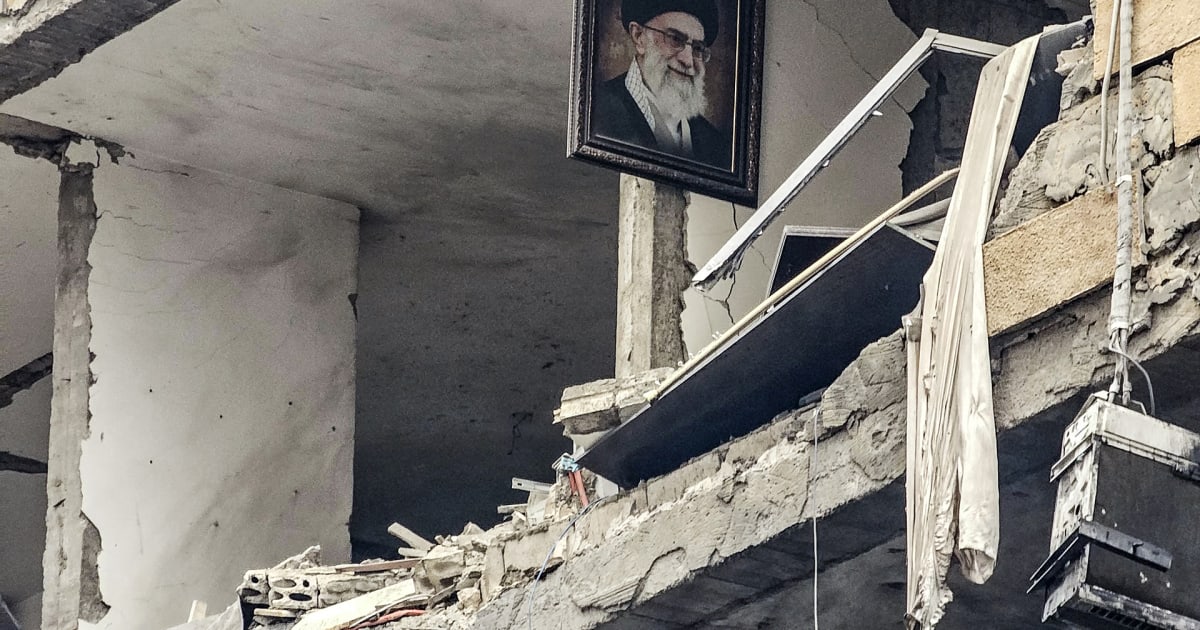
On February 28, 2026, the United States and Israel launched Operation Epic Fury—a campaign Donald Trump expected to conclude in four to six weeks. It did not. Six months later, the war has become something neither Washington nor Tel Aviv anticipated: a grinding stalemate over a country that refuses to collapse, through a strait that no longer operates freely, against an adversary whose propaganda machine has quietly won the information war.
The public record is clear: Supreme Leader Ali Khamenei is dead. Iran’s nuclear infrastructure has been struck. A Pakistan-mediated ceasefire and memorandum of understanding in June halted large-scale fighting, though both sides continue trading accusations and occasional strikes over alleged violations. The war has not ended. It has simply stopped looking like a war.
That ambiguity is where the real story lives.
What Looks Like Stalemate Is Strategic Defeat
Steven Cook’s assessment at CFR cuts to the core of it. Freedom of navigation through the Strait of Hormuz is now significantly compromised. US partners along the western Persian Gulf—Bahrain, Kuwait, the UAE—remain vulnerable to Iranian attack. And the incentive for Tehran to reconstitute its nuclear program, or what survives of it, is stronger than before the war began.
This is not a situation Washington can claim as success. Whether it amounts to outright strategic defeat depends on what the United States does next. But the direction is clear: the war has expanded Iran’s reach rather than contracting it.
Trump’s bet was that economic pressure—Operation Economic Outcast—would force regime collapse or, at minimum, make Iranian leaders tractable. The math doesn’t work. Most Iranians have endured economic hardship for years. The war made it worse. The December 2025 and January 2026 protests were not stopped by prosperity; they were met with arrests and violence. Economic warfare against a population already accustomed to suffering is a gamble with uncertain returns.
The gamble has not paid off.
The Information War Iran Is Winning
While conventional operations stalled, Iran’s war on social media accelerated. Farah Pandith’s analysis describes a sophisticated, round-the-clock content operation that exploits Gen Z’s existing grievances and reframes them through Tehran’s narrative lens. Memes. Videos. Timed propaganda drops that amplify older grievances about Israel and the United States while encouraging action against soft targets—synagogues, infrastructure, businesses linked to American or Israeli interests.
The result is a dangerous content advantage. Individuals who have never met an IRGC operative, who bear no formal affiliation with Iran or its proxies, are being radicalized through phone screens into attempting assassinations and violence on US soil. The Foxtrot Network, an Iranian-backed criminal enterprise operating since 2022, has recruited teenage operatives across Europe through a violence-as-a-service model—paying them in cash, abandoning them when arrested. The Houthi-aligned Harakat Ashab al-Yamin al-Islamia claimed eighteen attacks across Europe in spring 2026. In Michigan, a Lebanese-born American carried out a vehicle-ramming and shooting at a synagogue, reportedly motivated by revenge for brothers killed by Israeli forces.
These are not coordinated operations in the traditional sense. They are decentralized, incentivized, and increasingly effective. And they will persist regardless of whether shooting stops tomorrow.
Turkey Is Playing a Longer Game
While Washington flounders, Turkey is consolidating. The Mecca Joint Defense Agreement—signed August 7, 2026, between Pakistan, Saudi Arabia, and Turkey—represents the first regional security arrangement of its kind since the Baghdad Pact in 1955. Whether it translates into operational capability remains uncertain. But the symbolism is unmistakable: the region is looking to Ankara for security guarantees, not Washington.
Henri Barkey’s observation holds: Turkey wins regardless of outcome. A US defeat boosts Ankara’s standing as an autonomous regional power. A US victory eliminates Iran—the historic rival that has long constrained Turkish ambitions—and opens economic avenues across the Persian Gulf. Either way, Erdogan’s objective of an independent Turkish role in Middle Eastern security advances.
Trump has signaled a shift in this regard. Rather than resisting Turkish autonomy, he expects Erdoğan to help constrain Iranian meddling. It is a pragmatic recalibration born of necessity. The war has forced Washington to accept a regional order it never designed.
The Abraham Accords Are Holding—For Now
Ed Husain notes that sympathy for Iran across the Arabian Peninsula has cratered. The Shiite government’s victimhood narrative no longer resonates with Sunni Arabs after six months of Iranian attacks on Gulf civilian infrastructure. The UAE has sustained more attacks than Israel. Bahrain, Kuwait, Qatar, and the UAE have moved closer to the United States, not away.
The Abraham Accords’ defense architecture is performing. The UAE’s interception success rate against Iranian drones and missiles exceeds 90 percent. The accords, designed primarily for economic integration, have become a de facto collective defense framework. That is an outcome none of the signatories fully anticipated.
But the arrangement is fragile. Iran’s attacks are not merely military—they are competitive claims about the future of the Middle East. The Gulf states are choosing the American security umbrella over Iranian domination. That choice is rational. It is also dependent on Washington maintaining a presence that the war has already strained.
The Proxy War Has Changed Shape
Hoffman’s analysis of Iran’s proxy operations reveals a critical evolution. Rather than deploying Hezbollah or IRGC Quds Force operatives directly, Tehran has shifted to cut-outs: pay-for-hire criminals recruited online, expatriates with ties to Iran and Lebanon, and teenage operatives managed through criminal networks. The sophistication of individual attacks is low. The deniability is high.
This is not the proxy warfare of 2006 or 2023. It is a distributed model—lower cost, harder to trace, more resilient to leadership decapitation. The United States has no effective counter to a threat that operates through phone screens and cryptocurrency payments rather than military command structures.
Lebanon and Syria: Cautious Openings
Elisa Ewers identifies Lebanon and Syria as the war’s most consequential secondary theaters. Both nations are attempting reconstruction after decades of Iranian influence. Lebanon’s government is asserting sovereignty for the first time since Hezbollah’s rise. Syria’s new leadership under Ahmed al-Sharaa is distancing Damascus from Tehran’s orbit. Neither transition is secure. Hezbollah is diminished but not disbanded. ISIS holdouts persist in Syria. Israeli military operations in the south complicate recovery in both countries.
The Trump administration has taken an uncharacteristically diplomatic role in both cases—mediation, international coordination, support for sovereign institutions. The results are mixed. But the direction matters: for the first time in decades, Beirut and Damascus have governments pursuing independence from Tehran rather than alignment with it.
What Comes Next
The war has not ended. It has merely stopped resembling the war Washington imagined. Six months in, the United States confronts a region that is moving faster than its strategy can track. The Strait of Hormuz remains contested. Iran’s information operations continue to recruit. Turkey is building alternatives to American security guarantees. The Gulf states are holding together but looking increasingly toward regional partners beyond Washington.
The question is not whether the war ends. It is whether the United States emerges from it with a coherent strategy or simply a set of compromises.
History will not be generous to administrations that mistake stalemate for victory.