Putins Shenzhen Gambit Leaves Ukraine on the Sidelines
Putin is reshaping the Ukraine war settlement by bringing Trump and Xi together while leaving Zelenskyy out. The implications for Europe and the peace process are enormous.
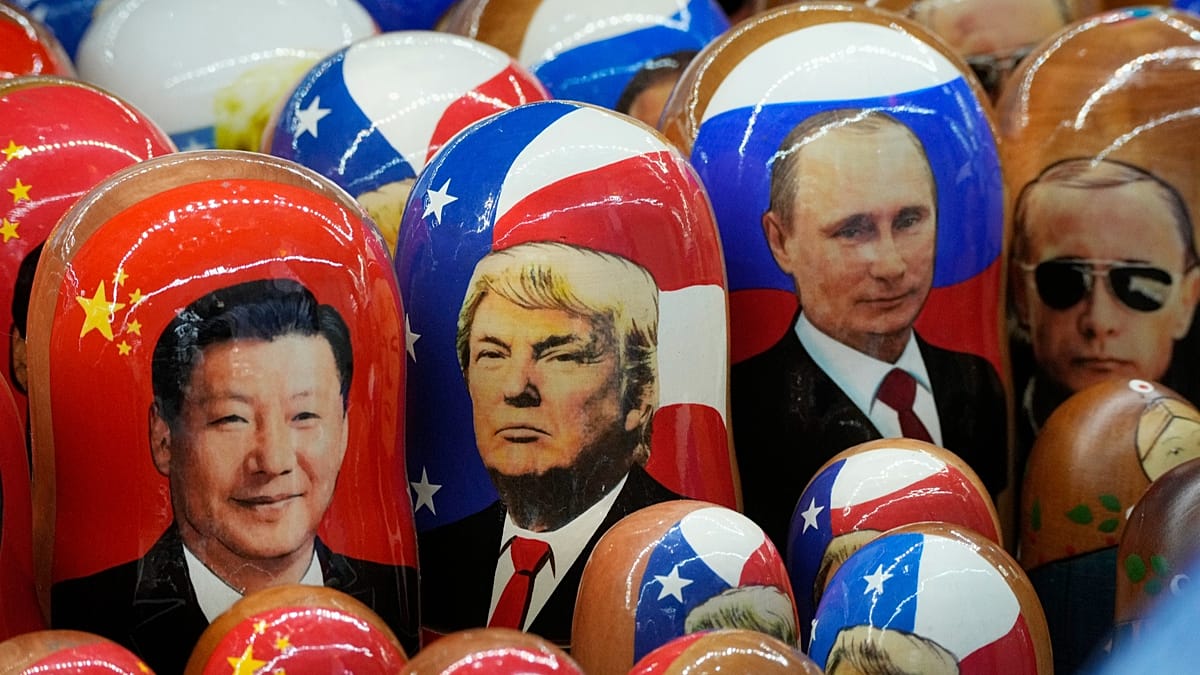
The summit plot that threatens Kyiv
Russia’s president has reportedly proposed a three-way meeting between himself, Donald Trump and Xi Jinping to negotiate an end to the full-scale invasion of Ukraine — without inviting Ukraine’s own president to the table.
According to the Wall Street Journal, the Kremlin floated the idea during a telephone conversation between Putin and Trump on 9 October. The proposed summit would take place on the sidelines of the Asia-Pacific Economic Cooperation forum in Shenzhen on 18–19 November.
Kremlin spokesman Dmitri Peskov confirmed to the paper that discussions were underway, though no formal agreement had been reached on either the meeting itself or its agenda. A senior US official told the newspaper that Trump had not yet agreed to attend but could be receptive.
Ukraine was not mentioned as a participant.
This is not a minor diplomatic snub. It is a restructuring of the entire architecture for how the war might end — one that treats Kyiv as territory to be partitioned rather than a sovereign state with a voice in its own future.
Who wins when Ukraine is left out
Andrii Sybiha, Ukraine’s foreign minister, did not mince words in his response. He wrote on X that a trilateral meeting between the leaders of Russia, China and the United States “would do only the opposite” of bringing peace. It would encourage Putin to continue the war.
“By any pragmatic or moral measure, Putin has no place at the table with presidents Trump and Xi,” Sybiha said. “He is not a global leader; he is a war criminal. And Russia is not a global power; it is a global problem.”
Sybiha argued that any serious path toward negotiations would require a ceasefire first — a demonstration of good faith before any summit could be productive. Instead, the current proposal offers Putin a crown without a cost.
The European Commission was equally blunt. A spokesperson told reporters on Monday: “If Putin would like to end this war, you can just stop this war today. And the war could be over today.”
The Commission also reaffirmed that Europe has a key role to play in any future settlement and would defend its own interests — a subtle but pointed reminder that transatlantic diplomacy is not the only game in town.
The diesel deal behind the diplomatic maneuvering
The summit proposal did not emerge in a vacuum. It came just days after Trump announced a controversial agreement allowing Russian diesel to flow freely into US and international markets.
On 16 October, Trump waived a series of new sanctions and tariffs targeting Russia and countries trading with it — measures that were scheduled to take effect just days later. The move drew sharp criticism from allies and critics alike.
Trump defended the arrangement on his Truth Social platform, arguing that Russia had refrained from providing substantial assistance to Iran in its conflict with the United States. “Russia is doing very little, if anything, to help the Islamic Republic of Iran, compared to what they could be doing, and I want to keep it that way,” he wrote.
He also praised Moscow for supplying diesel to global markets at reduced prices, framing the deal as a contribution to easing pressure on energy supplies — particularly relevant as Washington seeks to contain soaring fuel costs exacerbated by the war in Iran.
At the same time, the Trump administration has increasingly pressed Kyiv to halt its campaign against Russian oil refineries, which Ukrainian officials consider legitimate military targets because of the revenue they generate for Moscow’s war effort. Reports suggest Washington has even threatened to suspend intelligence-sharing and weapons deliveries unless Ukraine stops the strikes.
The dispute has further strained relations between Washington and Kyiv, particularly as Russia continues to bombard Ukrainian cities and critical infrastructure.
Zelenskyy’s warning about ignoring reality
Volodymyr Zelenskyy has pushed back forcefully against what he sees as a growing disconnect between Western diplomatic maneuvers and the realities on the ground.
His comments followed another overnight bombardment in which Russian forces launched 16 ballistic missiles at Kyiv and the surrounding region, alongside more than 200 drones — including jet-powered variants — across the country. According to Zelenskyy, more than ten energy facilities were damaged, leaving at least 550,000 households without electricity. A medical clinic, a school, a metro station and residential buildings were also struck.
Zelenskyy accused his Western partners of failing to provide advance warning about the incoming ballistic missiles — something he has flagged repeatedly as a pattern.
“Putin not only doesn’t want to end this war — he doesn’t even want to take any steps toward de-escalation,” Zelenskyy wrote on X. “The reality is that the war continues, and it continues solely because of Russian strikes and Russia’s desire to drag this war out.”
He stressed that Ukraine had responded positively to every ceasefire proposal put forward by its partners, while Russia had continued its attacks. When deliveries of missiles for Ukraine’s air defence are blocked while Russia is granted relief or delays in sanctions, “this is, unfortunately, a denial of reality on the part of our partners,” he said.
What this means for Europe and the world
The proposed summit carries implications that extend far beyond the immediate question of whether Trump will accept Putin’s invitation. It represents a fundamental shift in how the war might be resolved — one that privileges great-power bargaining over Ukrainian sovereignty.
If a three-way meeting between Washington, Moscow and Beijing were to take place, it would signal that the conflict is being reframed as a geopolitical contest rather than a defensive war against aggression. China’s inclusion would further legitimise Putin’s regime on the world stage, while Ukraine’s exclusion would reinforce the perception that Kyiv is a pawn rather than a player.
For Europe, the stakes are equally significant. The European Commission’s insistence that the continent has a key role in any future settlement reflects a broader anxiety: that transatlantic diplomacy could proceed without European input, leaving the continent more exposed to Russian aggression.
Trump’s approach — combining sanctions waivers, energy deals and a willingness to engage Putin directly — stands in sharp contrast to the more cautious, consensus-driven strategy that has characterised European policy. The question is whether Europe can assert influence before a settlement framework is already set in motion.
What happens next
No date has been confirmed. No agenda has been published. Trump has not agreed to attend. But the mere fact that the proposal has been floated so prominently — and that it excludes Ukraine’s president — has set off alarm bells from Kyiv to Brussels to Washington.
The next few weeks will be critical. If the summit moves forward, the world will witness a dramatic reordering of diplomatic priorities. If it stalls or fails, the war will likely intensify — and the questions about who speaks for Ukraine, who sets the terms and who pays the price will remain unanswered.
One thing is clear: the architecture of peace talks is being redrawn in real time, and Ukraine is not sitting at the table.