Japans 3% Rate Break Is a Global Wake-Up Call
Japan's 10-year bond yield just breached 3% for the first time in three decades, sending shockwaves through one of the world's largest mortgage markets. What happens next could reshape global capital flows and the Bank of Japan's path.
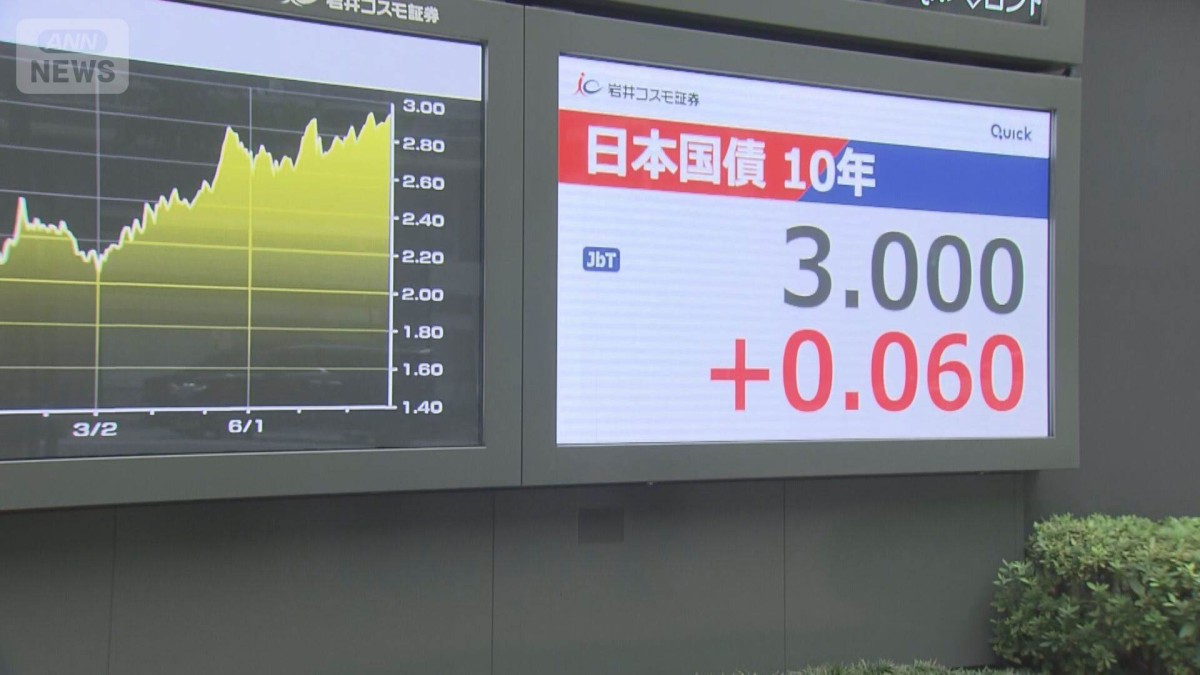
The Number That Changed Everything
Japans 10-year government bond yield touched 3% on September 1. Its last visit above that level was 1996. Thirty years is a geological age in bond markets. The shift is not a blip. It is the sound of a financial regime ending.
For decades, the world treated Japanese sovereign debt as a place to park money when uncertainty struck. Central banks, pension funds, and insurance companies accumulated trillions in JGBs precisely because yields were near zero for so long. That assumption is now under direct stress.
What drove the break? The immediate catalyst is American pressure. Treasury Secretary Bessent told CNBC that he expects the Japanese government and the Bank of Japan to take actions leading to a stronger yen. The comment reads as a veiled invitation — or threat — wrapped in diplomatic language. Markets interpreted it as encouragement for the BOJ to move faster on rate hikes. Bond traders sold. Yields climbed.
Japanese Finance Minister Katayama confirmed she met Bessent in Washington and discussed coordinated intervention. The two countries executed an unusual joint yen-buying operation in late July to slow depreciation. Katayama characterised their approach as an ongoing commitment. She stopped short of confirming any specific policy direction, noting that the BOJ Act leaves monetary policy decisions to the central bank alone.
The subtext matters more than the quote. Japan no longer controls its own rate environment in the way it did twenty years ago. The dollar still sets the tempo.
Who This Hurts First
Japanese households. They are the canary in this coal mine.
Mortgage lenders are seeing call volumes double overnight. Mortgage comparison firm Mortgage Check reported that inquiries around whether to choose variable or fixed rates surged to roughly twice normal levels last weekend. A typical question line: which is cheaper right now?
The answer depends on how many rate hikes the BOJ actually delivers.
The spread between variable and fixed rates currently sits at about 2.2 percentage points. According to Mortgage Checks director Takashi Shiozawa, if each BOJ rate increase comes in at the standard 0.25 percentage points, it would take approximately nine hikes before the advantage flips back to fixed mortgages. That is a concrete calculation anyone with a mortgage can run against their own numbers.
Flat 35, the widely used fixed-rate mortgage product backed by the Japan Housing Finance Agency, posted its highest rate since the current system launched in October 2017. The lowest rate for terms between 21 and 35 years is now 3.46%. Not cheap. Not catastrophic. But unmistakably a step up from the near-zero world that shaped borrowing behaviour for an entire generation of homeowners.
Variable-rate borrowers are not immediately crushed — yet. The spread still favours them. But that gap is closing with every rate decision. Fixed-rate borrowers locked in years ago are sitting comfortably. New borrowers face a choice that is becoming harder the longer they delay.
The Global Side of This Story
The domestic mortgage angle is important but incomplete. The real story is what a Japanese 10-year yield above 3% means for the rest of the world.
Japanese investors are among the largest foreign holders of US Treasuries, European bonds, and emerging market debt. When JGB yields approach 3%, the math behind those positions changes. Why hold a Mexican bond yielding 11% when a risk-free Japanese bond pays 3% and the yen is strengthening? The covered-interest arbitrage that has structured global capital flows for years starts to look less like a free lunch and more like a liability.
Foreign investors who loaded up on JGBs during the abenomics era will also reconsider. Yields that once felt insufficient even at 0.5% now look like opportunity at 3%. Portfolios that were static become dynamic again. That is not abstract. It translates into selling pressure on other assets and reallocation across geographies.
Insurance companies and pension funds inside Japan face a different problem. Their liabilities are long-duration and priced for a low-rate world. Asset returns need to climb just to stay even. If they sell JGBs to rebalance, they push yields higher, which pushes prices lower, which creates realised losses. The spiral is self-reinforcing and familiar to anyone who has watched European insurers struggle through the same transition.
What the BOJ Is Facing
The central bank is caught between three constraints it cannot resolve simultaneously.
First, domestic inflation needs to stabilise above target. That requires some level of rate normalisation. Second, the yen cannot appreciate fast enough to trigger a recession in an economy that still struggles with wage growth. Third, the government needs borrowing costs manageable enough to service a public debt exceeding 250% of GDP.
Any one of these is hard. All three together make every BOJ decision a balancing act on a tightrope. Bessent wants a stronger yen. Katayama wants stability. The BOJ wants control. None of those goals are mutually exclusive in theory, but in practice they pull in different directions at different speeds.
The market is pricing in faster action than the BOJ may deliver. That mismatch is where volatility lives.
What Happens Next
The most likely scenario is a slow grind higher in Japanese yields, punctuated by moments of sharp movement whenever US comments or BOJ signals create a window. A full-blown rate-hike cascade is possible but unlikely given the government debt overhang. A return to zero is impossible — the genie is out of the bottle.
For borrowers, the practical takeaway is simple: the period of near-zero borrowing costs in Japan is over. Whether you choose variable or fixed now depends on how many rate hikes you expect and whether you can afford the payment if the spread collapses.
For investors, the implication is larger. Japanese bond yields above 3% are not a temporary anomaly. They are a structural recalibration. The flow of capital that once moved quietly from Japan into higher-yielding assets abroad will slow. Some of it will reverse. Global fixed-income markets that grew accustomed to Japanese liquidity as a permanent fixture need to adjust their models.
The 3% level will not be the ceiling. It will be the new floor.
And everyone who priced their financial future on the assumption that Japans rates would stay below 1% forever needs to start over.