Japan Has the Money for Food Tax Cuts. Politics Says No.
Corporate tax revenue has collapsed by 37 trillion yen while profits surged, yet reversing even a fraction of those cuts could fully fund food tax relief. A mega sacred shrine blocks the path.
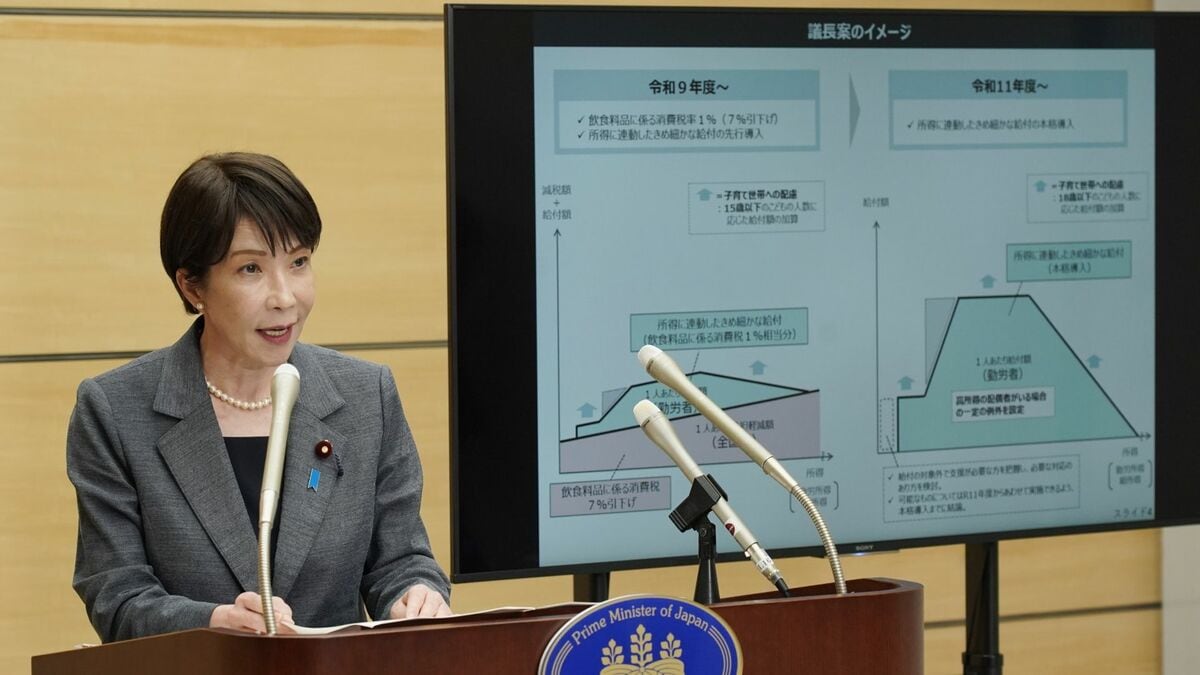
The money is there. Nobody will touch it.
Japan’s food tax debate is stuck behind a wall that has nothing to do with economics. The funding for temporarily cutting the 8 percent consumption tax on groceries already exists on paper. What’s blocking it is a political sacred shrine — the post-1990s corporate tax cuts that have become untouchable.
Prime Minister Sanae Takaichi is promoting the food tax reduction publicly but has stayed silent on where the money comes from. Former Prime Minister Fumio Kishida tried to raise the issue in 2021 when he doubled the defense spending target, briefly floated reclaiming some corporate tax revenue, and then backed down. The opposition parties made the same calculation in their 2024 and 2025 election campaigns: propose the cut, dodge the funding question.
The math is straightforward enough that even a casual reader of the figures can see the puzzle. Corporate tax revenue now sits at just 3.3 percent of GDP. If the tax cuts implemented since the 1990s had never happened, that figure would be roughly 9.3 percent. The gap between what companies actually pay and what they would owe under the old rates totals about 37 trillion yen. Food tax revenue at 8 percent generates only around 5 trillion yen annually.
Reclaiming a fraction of that 37 trillion yen would fully cover the cost of temporary food tax relief. No new borrowing. No raid on household budgets. Just a partial correction of a four-decade-long corporate tax reduction.
That is precisely why it will never happen.
Profits soared. Wages did not.
The original bargain struck by Keidanren, the Japan Business Federation, and the Ministry of Economy, Trade and Industry was simple: cut corporate taxes, and companies will pass the savings to workers and reinvest in the economy.
Four decades later, the ledger tells a different story.
Non-financial corporate profits have jumped from 4 percent of nominal GDP in 1994 to 18 percent today. Over that same period, the effective corporate tax rate fell from an average of 53 percent to roughly a third of that level. Meanwhile, nominal wages for the 36 million workers employed at 900,000 companies have been essentially flat in real terms since 1996.
Capital investment has also stalled. Factory spending, equipment, and R&D have hovered around 8 percent of GDP for most of the past 45 years — no meaningful increase after the tax cuts, no decline either. The promised transmission mechanism simply does not exist.
Instead, companies parked the untaxed profits. Corporate internal reserves reached 672 trillion yen by the April-to-June 2026 quarter, an amount roughly equal to Japan’s entire annual GDP. That is a digital vault filled with money that was never taxed and never spent on wages, investment, or productivity.
The evidence was on display inside Kishida’s own administration. In November 2021, documents distributed at his New Capitalism Realization Conference showed that among Japan’s 5,000 largest companies, annual profits nearly doubled between 2000 and 2020 while payroll to workers fell 0.4 percent and equipment investment dropped 5.3 percent. Kishida used those numbers to justify revisiting corporate tax policy. The bureaucratic and business establishment pushed back immediately.
A METI official at the time said the ministry’s top priority was blocking any reversal of corporate tax cuts. They succeeded. Kishida屈服ed.
The sacred shrine
The term “sacred shrine” here is not metaphorical fluff. It describes a real institutional barrier. METI and Keidanren treat the corporate tax reduction as a permanent settlement. Even a partial rollback — one that would generate tens of trillions of yen and require no additional debt — is politically impossible because it would signal that the post-bubble fiscal compact is negotiable.
The consequence is a structural paralysis. Japan faces persistent consumer price pressure from yen depreciation and energy costs. A temporary food tax cut would relieve households directly. The funding is available without increasing the deficit. And yet the reform stalls because the political cost of touching corporate tax policy outweighs the political gain of delivering cheaper groceries.
This is not a problem that will resolve itself through better messaging or a more persuasive prime minister. It reflects a deeper configuration of power. The companies that benefit from low corporate taxes are the same ones that fund political campaigns, sit on advisory panels, and shape ministry priorities. The workers who lost out over four decades have no comparable leverage.
Richard Katz, the Carnegie fellow and long-time observer of Japan’s political economy, has tracked this dynamic for years. His analysis of the 37 trillion yen gap between actual and theoretical corporate tax revenue is one of the clearest public accounting of the cost of this stalemate. The point is not that Japan should raise corporate taxes aggressively. It is that a modest, targeted adjustment could fund popular consumer relief without harming investment or wages — which have not risen in decades regardless.
What happens next
Takaichi will likely announce the food tax cut before the next fiscal cycle begins, with a funding mechanism left deliberately vague. The opposition will criticize the lack of detail but offer no alternative source of revenue either. Households will receive a small, temporary reprieve. Corporate tax policy will remain unchanged.
The 672 trillion yen in internal reserves will keep growing. The wage stagnation will continue. And the gap between what the government could do and what it actually does will remain one of the defining features of Japanese fiscal politics.
Japan has the money. It just lacks the political will to take it back.