Japan's Yen Gamble Could Shake Global Markets
A proposal to tap Japan's massive foreign exchange reserves for tax cuts risks triggering yen collapse and higher US borrowing costs. The real question is whether Tokyo has the political will to resist the temptation.
The Vault Next Door to Fort Knox
When New York Federal Reserve President William Williams gave a speech in 2019 about the dollar being the “fragile foundation” of the global financial system, he made a theatrical comparison: the only bank getting its gold bars stolen these days was the one in Die Hard 3. Below the New York Fed’s building, roughly 24 meters underground, sits a vault containing about 500,000 gold bars belonging to foreign governments and international institutions. It is a symbol of American financial centrality.
But Japan holds something arguably more consequential — and far less visible. Its foreign exchange reserves exceed $1 trillion, representing roughly 30 percent of GDP. That ratio dwarfs every other G7 nation: the United States sits at 0.8 percent, Germany at 7 percent, the United Kingdom at 5.3 percent, France at 7.5 percent, Italy at 10 percent, and Canada at 5 percent. Japan accumulated this buffer in what one analyst called a “rapid surge” from approximately 8 percent of GDP in the year 2000.
These reserves exist because Japan’s central bank and finance ministry have spent decades intervening in currency markets to prevent the yen from appreciating too sharply. The mechanism is straightforward: sell yen, buy dollars, accumulate dollar-denominated assets — primarily US Treasuries. The result is a structural oddity. Japan is both the world’s largest creditor nation and the most dependent on the very currency regime it helped sustain.
The Proposal That Shouldn’t Exist
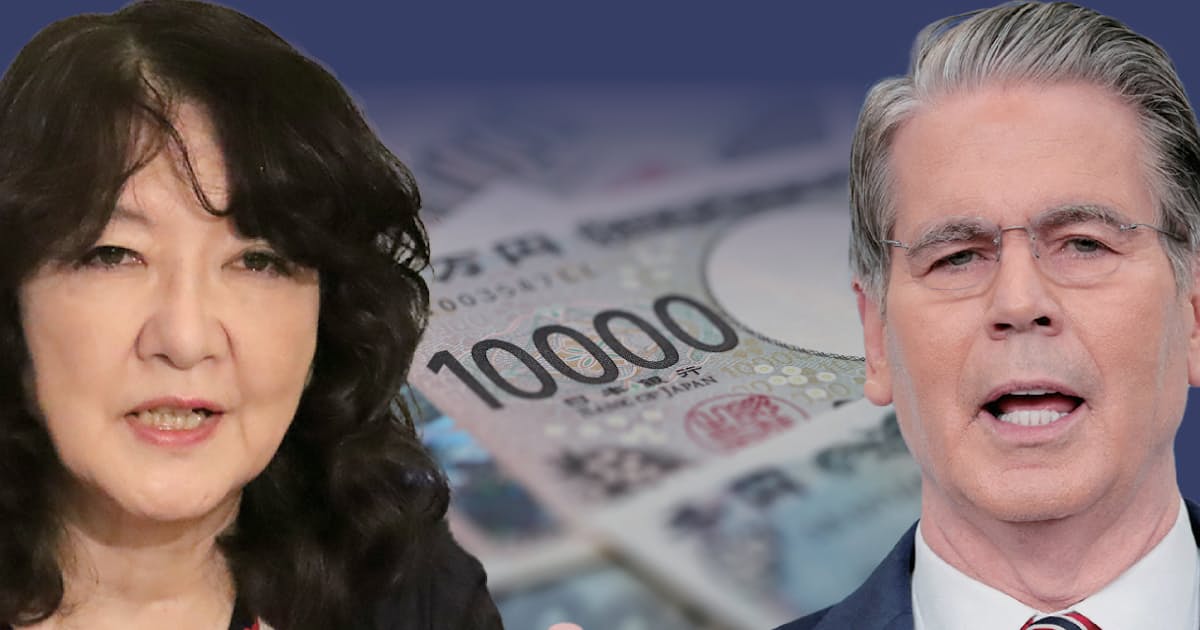
Now a politically potent idea has emerged: use portions of the Foreign Exchange Special Account (外為特会, gaiwai tokka) to fund consumption tax cuts. On its face, the logic seems almost irresistible for a Japanese government under pressure to relieve households struggling with persistent inflation and a yen that has weakened to levels not seen in decades.
The math is eye-catching. Japan’s holdings of US Treasuries are trading well below their purchase prices, creating enormous unrealized losses on paper. But the inverse scenario — a weaker yen meaning those Treasury holdings, when converted back, generate staggering gains — is equally compelling. As the Nikkei commentary noted, the appreciation gain from selling Treasuries during yen weakness could amount to “tens of trillions of yen.” That is a historical opportunity the Japanese government has never had to consider seriously until now.
Here is why the proposal is dangerous: tapping the FX Special Account for domestic fiscal purposes rather than currency defense changes the fundamental purpose of the reserves. These are not a sovereign wealth fund. They are an insurance policy against exactly the kind of yen depreciation that makes their sale profitable. Spending the insurance premium to buy political popularity is a transaction with no upside.
Who Wins, Who Loses
The immediate winners would be Japanese voters who see lower taxes. The political calculus is clear. Prime Minister Shigeru Ishiba’s administration faces mounting pressure from within the Liberal Democratic Party — particularly from figures like Satsuki Katayama, whose faction has long advocated using reserve funds for fiscal stimulus — and from opposition parties demanding action on living costs.
The losers are far more diffuse. A credible sale of US Treasuries to fund domestic spending would signal to global markets that Japan no longer treats currency stability as a first-order priority. The yen could weaken further, not from market forces but from the explicit policy choice to monetize reserves for political ends. That dynamic feeds directly into higher US borrowing costs: Japan is the largest foreign holder of US debt, and any meaningful reduction in its holdings forces the United States to offer higher yields to attract alternative buyers.
There is also a subtle but important point that English-language coverage rarely makes. The FX Special Account is not merely a financial instrument. It is, as the Nikkei commentary bluntly stated, a “bureaucratic turf war” within the Ministry of Finance. The question of who controls it — the prime minister’s office or the finance ministry establishment — is itself a proxy for whether Japan’s economic policy will be shaped by political judgment or institutional inertia.
The Gradualist Alternative
The article suggests a middle path that deserves more attention than it is likely to receive. Rather than a dramatic liquidation, a phased reduction of roughly 10 percent of US Treasury holdings would be broadly viewed as normalizing Japan’s reserve portfolio rather than weaponizing it. Such a move would actually support yen appreciation, reducing the very depreciation risk that makes the current proposal so reckless.
A gradual unwind also aligns with Washington’s stated interest in reducing the American trade deficit. Japan’s massive surplus with the United States — built partly through currency intervention — has been a persistent friction point in the bilateral relationship. A controlled decrease in Japanese Treasury holdings would send a signal that Tokyo accepts the need for adjustment, rather than doubling down on the status quo for short-term political gain.
What Happens Next
The real story is not whether the proposal will pass — it is whether anyone in power understands what is at stake. The distinction between using reserve assets for currency defense versus using them for fiscal stimulus is not merely technical. It is the difference between preserving an insurance policy and cashing in the payout before a disaster occurs.
If the Japanese government proceeds, the consequences would ripple outward immediately and indirectly. A weaker yen raises import costs globally, particularly for energy and food. Higher US Treasury yields pressure emerging market borrowers denominated in dollars. And the symbolic breach — a major economy liquidating reserves for domestic spending rather than market stability — would recalibrate how investors view Japan’s commitment to the postwar monetary order it helped build.
The vault beneath the New York Fed contains gold bars that have not moved in decades. Japan’s reserves are different. They are alive, mobile, and capable of shaping global markets in ways that few outside Tokyo fully grasp. The question is whether the people making the decision understand the difference.