The Keffe D Verdict Is Just the Beginning of a Longer Fight
Duane Davis’s conviction in Tupac’s 1996 murder marks a legal milestone, but the appeal will test how much weight a jury should give to decades-old proffer statements. The case also raises questions about cold-case prosecutions built on hearsay and self-interest.
A Verdict That Was Never the End
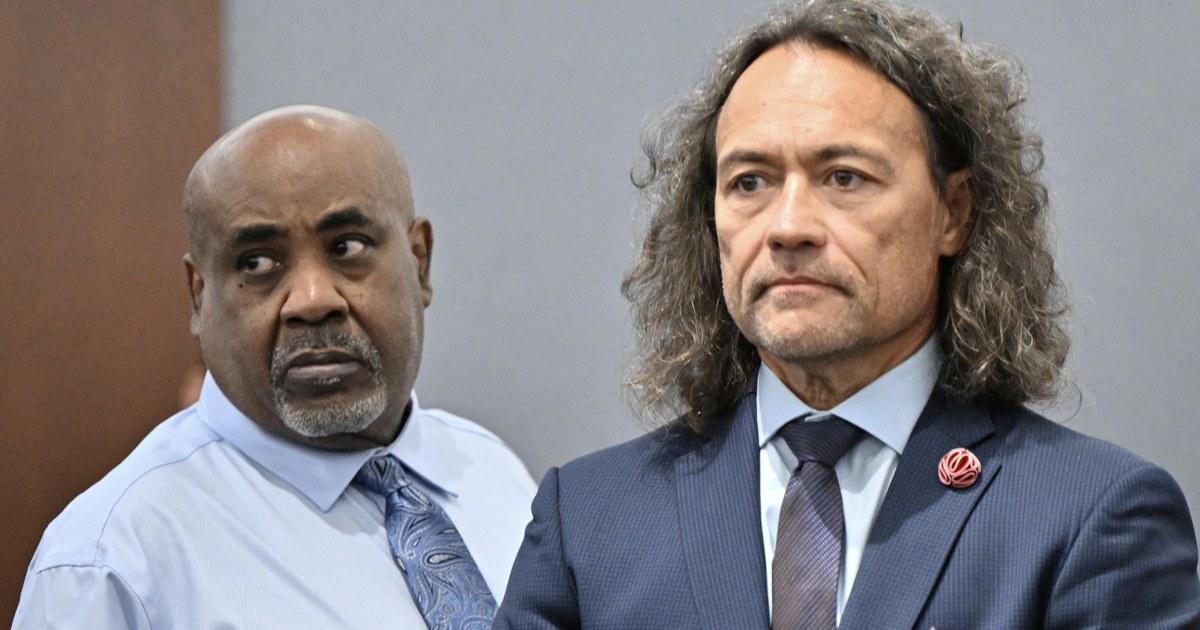
Duane Davis stood in a Las Vegas courtroom on Monday and heard the words that would close one chapter of a thirty-year mystery. A jury found him guilty of first-degree murder in the shooting death of Tupac Shakur on September 7, 1996. The deliberations took less than three hours.
Two days later, Davis’s attorney, Michael Sanft, was already talking about the next phase. He did not sound surprised.
“We were preparing for the appeal,” Sanft told NBC News. “Even Mr. Davis knew that going in.”
What makes this moment worth watching is not the verdict itself — though a conviction in a case that went more than two decades without a single charge is historically significant — but what comes after. The appeal will force a judge to decide whether a jury should have been allowed to hear statements Davis made to federal investigators under a 2008 proffer agreement. It will also force a reckoning with a broader question: what does it mean when a cold case is built primarily on the word of a man who had every reason to make things up?
The Proffer Problem
The centerpiece of Davis’s defense will be the 2008 proffer agreement. Davis entered into the deal with federal investigators who were probing the 1997 killing of Christopher Wallace, the Notorious B.I.G. Under the agreement, Davis could speak candidly about what he did or witnessed that night in 1996 without facing new charges. In return, he gave investigators detailed accounts of Shakur’s killing.
Prosecutors used those statements as the backbone of their case. They played recordings of Davis speaking to investigators. They pointed jurors to interviews he gave to journalists. They cited passages from his 2019 memoir, “Compton Street Legend.” The prosecution called twenty-four witnesses. The defense called three.
Sanft argued at trial that Davis had fabricated or embellished his accounts for money and notoriety. He said there was no physical evidence independently placing Davis at the scene of the shooting. The jury, apparently, was not convinced.
But the legal question on appeal is narrower and sharper. A proffer agreement is supposed to protect a cooperating witness. When prosecutors turn around and use that witness’s own statements as evidence against him, the line between cooperation and prosecution blurs. Sanft said the defense sought to exclude the proffer statements before trial because they were “highly prejudicial.” The judge refused. That refusal is now the ground on which the appeal will be fought.
Speed and Silence
The pace of the verdict itself caught Sanft off guard. Jurors returned their decision in roughly two and a half hours after receiving their instructions. Sanft expected a longer deliberation, perhaps overnight. His reaction suggests something important: the defense may have underestimated how much weight a jury would place on Davis’s own recorded words, even when those words came wrapped in a proffer agreement.
Davis did not testify in his own defense. Jurors heard from him through recordings, publications, and interviews. That is a strategic choice with consequences. By staying silent, Davis avoided cross-examination, but he also surrendered the chance to explain — in real time, under oath — the context behind his statements. An appellate court will never see that testimony. It will only see the record.
The Shotcaller Theory
Prosecutors portrayed Davis as a “shotcaller” in the South Side Compton Crips who helped orchestrate the attack on Shakur. The theory traced back to an incident earlier that night at the MGM Grand, where Shakur and others allegedly beat Orlando “Baby Lane” Anderson, Davis’s nephew. Prosecutors argued that Davis provided the gun and set the killing in motion, even though he was not accused of firing the shots that killed Shakur.
Under Nevada law, a person who aids or abets a murder can be held criminally responsible for the killing. That legal framework is well established, but its application here depends entirely on witness testimony and Davis’s own past statements. There was no ballistics evidence, no DNA, no video. The case rested on narrative.
A Cold Case Refrozen
For decades, Tupac’s murder remained unresolved. No one was charged. The case became a cultural artifact — a symbol of the unresolved violence that consumed hip-hop in the mid-nineties, a reminder of the East Coast–West Coast feud, a question mark hanging over one of the most consequential careers in American music.
Davis became the only person ever prosecuted in connection with Shakur’s death precisely because he talked. His public comments revived investigative interest. He is also the only person still alive who was believed to have been in the white Cadillac that pulled alongside Shakur’s BMW on the Las Vegas Strip.
The conviction means something larger than one man’s fate. It sets a precedent for how cold cases can be revived through cooperating witnesses and proffer agreements. It also raises an uncomfortable possibility: if Davis’s statements are deemed admissible on appeal, other decades-old cases may face the same standard. Witnesses who cooperated with investigators under promises of protection could find themselves on the other side of the same equation.
The Sentencing Clock
Davis, now sixty-three, faces sentencing on October 13. Sanft said the defense will seek the minimum possible sentence. He acknowledged, however, that any sentence in this range could amount to life in prison. Davis is in his mid-sixties. A life sentence is not a hypothetical at this point.
Sanft described the situation as a “long game.” He said Davis understood that the verdict was “not the end of the movie, but rather just a phase.” That language frames the conviction as a procedural step rather than a final judgment. Whether an appellate court agrees depends on how strictly it interprets the boundaries of a proffer agreement and the prejudice doctrine.
What Happens Next
If the appeal succeeds, the conviction could be overturned and Davis retried. If it fails, he will spend the rest of his life in prison. Either outcome will reshape how prosecutors approach cold cases built on proffer statements.
For Tupac’s family, the verdict brings closure of a kind, though one that may not hold. For the legal system, it raises questions about the reliability of decades-old witness statements used both as investigative tools and as prosecution evidence. For hip-hop culture, it closes a chapter that has been open since 1996, even as the legal process stretches toward an uncertain finish.
The movie is not over. The credits have not rolled. What remains is the appellate record, a sentencing hearing, and the long shadow of a case that refused to die.