Korea Faces Same Test as U.S. Over Chinese EV Siege
South Korea is drafting a domestic production tax credit modeled on America's IRA, but with a critical blind spot: Hyundai and Kia sell most of their cars overseas. China's EV juggernaut is forcing a reckoning for Seoul's industrial policy.
The IRA Came to Seoul — Sort Of
South Korea is preparing its own version of the Inflation Reduction Act. The ambition is clear: use tax credits to shield domestic manufacturing from the flood of Chinese electric vehicles now reshaping global markets. The model is unmistakably American. The execution, however, may reveal a dangerous gap between Seoul’s industrial instincts and the reality of where its cars actually sell.
The 2026 tax reform plan, unveiled last month by Deputy Prime Minister Kwon Yong-cheol, grants production tax credits for six strategic sectors: solar, wind, batteries, semiconductors, core materials, and AI robot parts. Electric vehicles are conspicuously absent. The government’s logic is straightforward enough — battery cells are already covered, and adding full EVs would strain the fiscal budget.
Domestic automakers are not convinced.
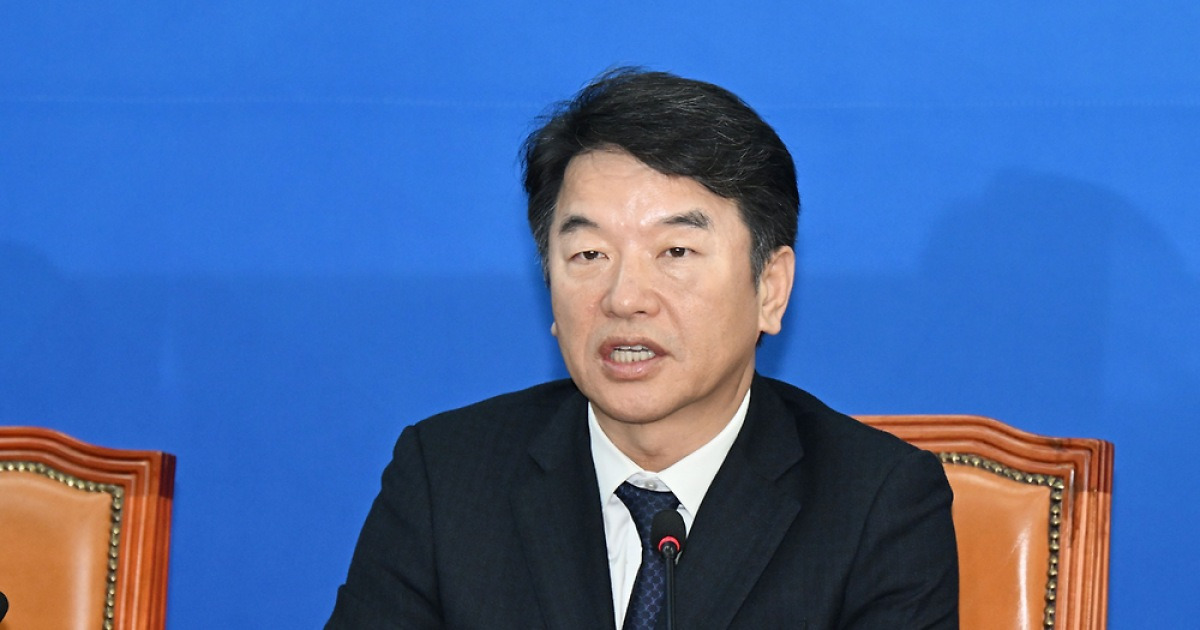
MP Moon Jin-seok of the ruling Democratic Party filed a amendment on August 28 that would add “future mobility” — a term that clearly encompasses autonomous vehicles — to the domestic production tax credit. His argument is that the global auto market is shifting from simple electrification to smart cars where autonomous driving is the differentiator. Korea lags in that race, he warned, and removing EVs from support risks handing the market to competitors who are not bound by the same developmental timeline.
The Numbers Behind the Panic
What makes this urgent for Seoul is not speculation but market data. China has reached roughly 20 percent of global auto market share, according to Kim Joon-seong, a researcher at Meritz Securities, who delivered that figure during a closed-door party briefing on August 25. He did not stop there. He said China is on track to climb further, driven by state-directed industrial policy embedded in Made in China 2049 — a blueprint that also targets dominance in physical AI and robotics.
“In one or two years,” Kim told assembled lawmakers, “there is nothing Hyundai, Kia, GM, or Volkswagen can do to change the situation.”
The room, he reported, was shaken. The idea that Hyundai could face existential threat was not abstract — it was treated as a live national security scenario.
That reaction is not simply fear of competition. It is fear of competition from a state that treats every sector as a strategic front. China’s auto industry benefits from direct subsidies, domestic supply chain dominance, and a home market that rewards scale at a pace Korea cannot match on merit alone.
The Structural Blind Spot
Here is where Korea’s IRA mimicry runs into its first structural problem.
The existing domestic production tax credit applies to products both produced and sold domestically. That distinction matters enormously for Hyundai and Kia. These companies are export-heavy. A significant share of their global sales — perhaps the majority in any given model year — leave Korean shores. A tax credit tied to domestic sales volume undercuts the very firms it is meant to protect.
A report from the National Assembly’s Finance and Economy Committee flagged this exact concern. The panel’s专业委员 noted that the domestic sales requirement should likely be removed to make the policy effective for export-oriented industries.
The government has not yet revised the rule. Its September revision of the tax reform plan remains to be seen.
The Trade Pressure Problem
There is a second obstacle, and it comes from the very country whose policy Korea is copying.
The United States enacted its IRA precisely to shield American industry from foreign competition, particularly Chinese. America’s tax credits favor domestic production and domestic battery sourcing. When South Korea passes similar credits, Washington views them through the lens of trade law.
The Finance and Economy Committee’s review report warned that production cost deductions could be interpreted as discriminatory measures against imports, creating friction with trade rules. Korea faces a difficult calculus: it must counter Chinese EV pressure, but doing so with subsidies risks American trade retaliation — or at minimum diplomatic pressure — at a time when the alliance depends on coordinated economic posture.
This is not an abstract concern. It played out directly in the IRA’s design, where the U.S. structured incentives to keep battery supply chains outside China while rewarding domestic assembly. Korea’s auto sector, heavily integrated with American partners and markets, cannot afford to be seen as building a parallel subsidy regime.
Who Wins, Who Loses
The politics inside Korea are already shaping the outcome.
The Democratic Party, which controls the legislature, is pushing hard for broader coverage. Moon Jin-seok frames the tax credit as an oxygen mask, not a handout — language that echoes the desperation of an industry facing structural decline rather than cyclical downturn. His comparison to the failed 2010s rescue of Daewoo Shipbuilding under former President Park Geun-hye underscores how qualitatively different this moment feels to policymakers.
But the opposition is not silent. Critics argue that any broad tax credit risks repeating the pattern of bailouts that benefit large conglomerates while doing little for smaller suppliers or consumers. The question is whether a targeted credit for autonomous vehicle production would escape that trap, or simply reroute public funds to the same corporate structures.
For global markets, the implications are significant. Korea is the world’s third-largest automaker and a top-three battery producer. If Seoul’s policy response successfully bridges the gap between battery dominance and autonomous driving weakness, it could alter the trajectory of the global EV race. If it stumbles — as the domestic sales requirement suggests it might — China gains time to widen its lead while Korea debates the shape of its own defense.
The final tax framework for 2027 will be settled through committee negotiations between the government’s plan and Moon’s amendment. September’s revision is the first signal. What comes after determines whether Korea builds a moat or merely polishes one.
The Bigger Picture
China’s EV wave is not merely a trade issue for Korea. It is a test of whether a middle-income economy can maintain its industrial position when its primary competitor treats the entire supply chain as a single, state-coordinated project. The IRA was America’s answer to that question. Korea is now writing its own, and the first drafts reveal both the urgency and the blind spots of a country that exports half its production while trying to subsidize half its sales.