Korea's Market Rotation Reveals a Shift in Global Tech Power
Korean institutional investors are pivoting from semiconductors into AI platforms and secondary batteries, signaling a structural shift in how global AI demand reshapes regional supply chains and battery-raw-material markets.
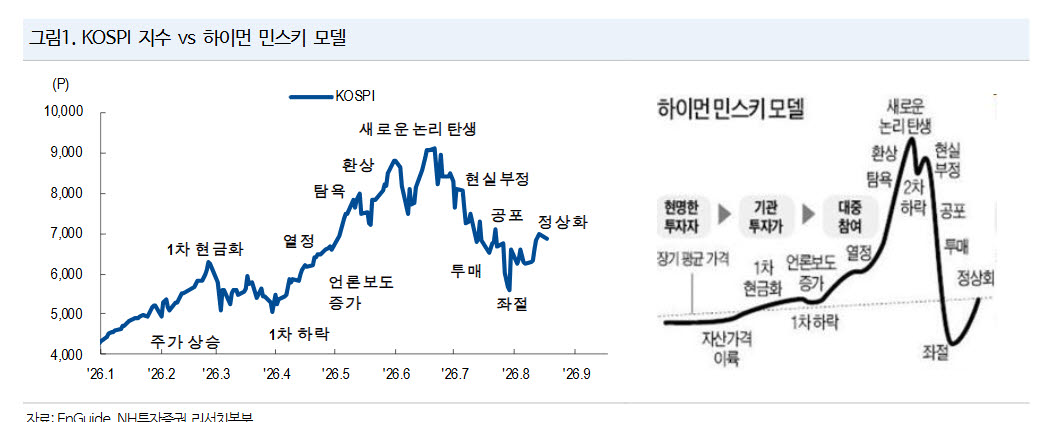
The Real Story Behind Korea’s Latest Market Rotation
Korean institutional investors are quietly making a bet that could reshape how global technology supply chains allocate capital. Instead of chasing the usual semiconductor darlings, they’re moving aggressively into AI platforms and secondary batteries.
The signal came out of NH Investment & Securities on September 7, 2026, when analyst Na Jeong-hwan flagged that AI platform and service companies alongside secondary battery makers are poised to become the market’s leading stocks. This isn’t just another sector rotation story. It’s a glimpse into where global AI demand is actually heading — and where the money in Asia’s most scrutinized equity market is starting to flow.
What Happened in July Matters More Than You Think
To understand why this pivot is happening now, you have to look back at the July crash that rattled Korean and global markets alike. The decline wasn’t driven by deteriorating fundamentals. It was a credit event. Overleveraged positions and accumulated gamma hedging created a self-reinforcing spiral of selling that pushed prices down faster than earnings could justify.
Na Jeong-hwan framed it precisely: this was never about sentiment. It was about leverage. And that leverage is now largely exhausted. Single-stock leveraged product assets under management shrank sharply after Korea raised its basic deposit requirements, while on the other side of the Pacific, dealer short-gamma positions derived from short puts have contracted as well.
The mechanical path that once turned sell-offs into steeper declines has grown thin. Markets don’t always tell you much, but they tell you something when the usual feedback loops break down.
The Semiconductor Rebound Was Misleading
After the July lows, semiconductors led the recovery with a 15 percentage-point contribution to market capitalization gains, and IT hardware surged 60.1 percent. Easy reading: tech is back.
But the analyst’s note contained a crucial qualifier. That rally reflected de-risking — the unwinding of forced selling — not genuine earnings improvement. The compression in valuation risk had already consumed much of its fuel. When you strip away the mechanical bounce, what’s left? That’s where the real question begins, and why the current rotation deserves attention.
Three Pillars, One Clear Direction
The framework for identifying sustainable leaders isn’t new. It’s built on three axes: valuation discounts, earnings turnarounds, and policy momentum. But the combination matters more than any single factor.
History provides a template. In 2020, Federal Reserve rate cuts shifted dominance from semiconductors to a group analysts abbreviate as BBIG — bio, batteries, internet, and gaming. The KOSPI gained primarily through P/E expansion, not earnings growth. Only sectors that could eventually prove their expanded valuations with actual profits survived as leaders. The rest faded.
Today, two sectors sit at the intersection of all three pillars. AI platforms and services are entering the phase where infrastructure spending must translate into demonstrable profitability. Secondary batteries are seeing their first meaningful earnings revision in years, and policy tailwinds are converging on both from unexpected directions.
The AI Infrastructure-to-Proof Transition
The AI narrative has been dominated by chip makers and data center builders. That chapter isn’t closing — it’s maturing. The market is now moving from infrastructure buildout to revenue validation, and that shift elevates platform and application companies over pure hardware plays.
A specific catalyst stands out: the Chicago Mercantile Exchange’s launch of inference futures on October 5, 2026. These derivatives give institutional investors a direct way to hedge or speculate on AI inference costs, which will likely accelerate capital commitment to infrastructure precisely because the risk profile becomes more manageable. When large players can hedge a line item, they commit larger amounts.
This is the moment where AI platform companies like SK Telecom and NHN could see their valuations re-rated if they demonstrate the ability to monetize inference demand rather than merely ride the infrastructure wave.
The Battery Story Everyone Got Wrong
The secondary battery thesis contains the kind of detail most international readers miss. The earnings recovery driving this rotation isn’t coming from electric vehicles. It’s coming from energy storage systems.
For years, the market priced battery demand around EV adoption curves. Those projections fell short. What the market ignored was the parallel explosion in grid-scale and commercial energy storage — the quiet demand driver that has now pushed 12-month forward earnings estimates for Korean battery makers into positive territory for the first time since 2023.
This distinction matters globally. ESS demand responds to different economic signals than EV demand. It’s tied to renewable energy deployment timelines, grid modernization budgets, and regulatory mandates — none of which move in lockstep with consumer car purchasing cycles. Analysts who still frame Korean battery stocks as EV proxies are misreading the revenue engine.
Policy Is Surprisingly Helpful
The policy landscape cutting in Korea’s favor isn’t obvious from Washington or Brussels headlines. But two developments are quietly favorable.
First, the European Union’s Industrial Acceleration Act includes rules of origin provisions that benefit Korean battery producers already operating cells at scale in Poland and Hungary. LG Energy Solution and Samsung SDI have those facilities. Their competitive position in the EU market just improved relative to producers without European manufacturing presence.
Second, in the United States, Democratic-leaning states including California are restoring EV support policies that had been weakening. This doesn’t change the ESS-driven thesis for batteries, but it adds a floor to demand expectations that had been drifting lower.
What Moves Next
Na Jeong-hwan’s recommendation structure is instructive. He’s not advising a wholesale exit from semiconductors. He’s suggesting they remain the core holding while expanding into AI platforms and batteries as diversification. That’s a nuanced position that acknowledges semiconductors still matter while recognizing the rotation is real and likely durable.
The specific names — LG Energy Solution, Samsung SDI, SK Telecom, and NHN — represent different parts of the same story. Two are battery giants positioning for an ESS-led demand cycle. Two are telecom and internet companies positioned to capture AI platform revenue as inference becomes commoditized and application layers mature.
For global investors, the takeaway extends beyond Korean equities. The rotation away from semiconductor-only strategies toward AI infrastructure-plus and energy storage reflects a broader truth: AI’s economic impact is distributing across the supply chain faster than the chip narrative suggests, and energy storage is becoming a distinct demand category that deserves separate modeling from electric vehicles.
The July deleveraging cleared the deck. What’s rising now may have more staying power than the semiconductor bounce that preceded it.