Korea's First Martial Law Conviction Changes Everything
Former special forces commander Kim Hyeon-tae's 12-year sentence for breaching the National Assembly during martial law marks Korea's first judicial reckoning for executive overreach — and it's sending shockwaves through the ruling party, the military, and Korea's fragile democratic settlement.
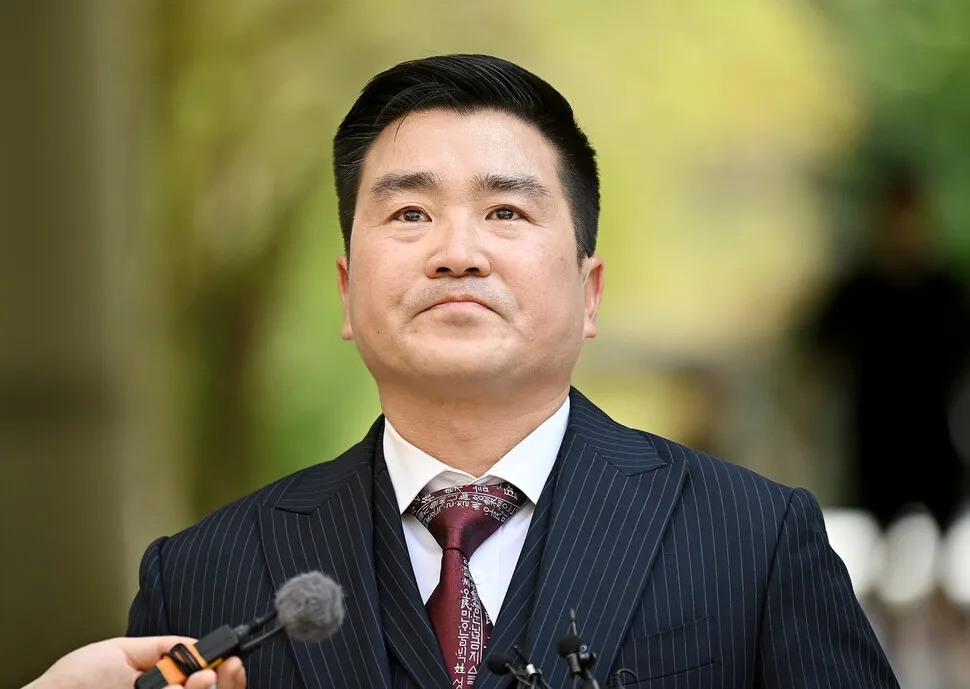
The 12-Year Sentence That Changes Everything
Kim Hyeon-tae walked into court as a former commander of the 707th Special Mission Regiment — Korea’s most elite special operations unit, the same force that executed President Park Geun-hye’s secret martial law order on December 3rd. He walked out 12 years older, a convicted felon, in what legal scholars are calling Korea’s first judicial reckoning for martial law enforcement.
The sentence wasn’t just for breaching the National Assembly. The court found that Kim and his subordinate officers had used military force to suppress what the judgment called “legitimate parliamentary dissent” on behalf of what it diplomatically termed “specific political forces.” The phrase hung in the air: the military, pulled into domestic politics by the executive branch, had been weaponized against the very institution that checks executive power.
What makes this conviction historically exceptional is timing. South Korea has survived four coups and one assassination. Park Chung-hee declared martial law in 1972. Chun Doo-hwan declared it again in 1980 and sent tanks into Gwangju. Both times, the military answered to the executive. But never before has a court convicted a serving special operations commander for carrying out a president’s unlawful martial law order. The institutional line between military enforcement and political subordination — a line Korea’s democracy has struggled to hold for decades — just got freshly drawn.
Who Won, Who Lost
The opposition parties won immediately. They had been demanding accountability for the December 3rd martial law order since day one. Former President Moon Jae-in’s camp issued a statement calling it “a necessary correction to history” and “a message that no one is above the Constitution.” The public approval numbers backed them: according to NBS polling, 63% of South Koreans supported President Lee declaring he would not run for re-election, interpreting the martial law incident as proof that the current administration lacked democratic restraint.
The ruling United Future Party lost something far more valuable than polls. They lost the argument that the martial law declaration was merely a procedural dispute over budget authority. The court’s judgment — that the military was mobilized for political ends, not constitutional ones — gutted that defense overnight. Party leadership is now scrambling to distance themselves from the 707th Regiment’s chain of command, a maneuver that reads as either political survival or genuine institutional repentance, depending on who you ask.
Kim Hyeon-tae lost everything. At 58, he’s facing a decade behind bars. The 707th Regiment, once Korea’s most respected military unit, is now the symbol of martial law enforcement in the public imagination. That stigma will outlast any single administration.
The Unintended Consequence: Military Courts Under Pressure
Here’s what nobody is talking about yet. The conviction didn’t happen in a military tribunal. It happened in a civilian court — the Seoul Central District Court — which means the precedent it sets applies to all future martial law proceedings. If the military justice system cannot prosecute its own, and civilian courts can, then the entire architecture of military discipline during emergencies just got democratized.
This is a double-edged sword. On one side, it’s exactly what Korea’s civil society has demanded: military force subject to civilian judicial review. On the other, it creates a chilling effect on military decision-making during genuine emergencies. Commanders who face personal liability for following presidential orders — even unlawful ones — may hesitate, may disobey, may create exactly the kind of institutional paralysis that weakens national defense.
The Ministry of National Defense is reportedly reviewing its emergency protocols. Sources familiar with the deliberations say officials are considering whether to formalize a “conscientious objection” pathway for officers who receive orders they believe violate the Constitution — a provision that doesn’t exist in current Korean military law. If adopted, it would be the first institutional acknowledgment that soldiers have a duty to refuse unlawful orders, a concept that existed in theory but not practice since 1987.
The Ruling Party’s Trajectory
President Lee’s approval rating has dropped to 38% since the verdict. His office has not issued a statement about the judgment. This silence is deliberate: any comment from the presidency risks either appearing to undermine the court or legitimizing the opposition’s narrative that the executive branch orchestrated martial law.
The ruling party’s strategy now depends on whether they can separate the martial law incident from the broader economic narrative. Recent polling shows 642% inflation on diabetes medication prices and rising energy costs dominate voter concern — issues where the administration has some traction. But the martial law conviction is a structural problem, not a policy problem. It can’t be spun away with economic data.
Party insiders are already discussing whether to nominate a different candidate in the next district by-election for the 707th Regiment’s home constituency. The unit’s home base in Cheongwon-gu has been a reliable ruling party stronghold for two decades. If the martial law conviction becomes a referendum on military-political entanglement, that seat is vulnerable — and vulnerable seats beget vulnerable coalitions.
What Happens Next
Three scenarios are playing out in Seoul’s legal and political circles. The first is the “limited accountability” path: Kim Hyeon-tae’s conviction stands, but appeals are expected to narrow the precedent, arguing that he followed orders from a lawful commander-in-chief. The Supreme Court will decide whether martial law enforcement constitutes a political act or a military act — a distinction that has no clear answer in Korean jurisprudence.
The second is the “expanded reckoning” path: prosecutors are reportedly reviewing whether other officers in the 707th Regiment’s chain of command should face charges. If the investigation expands beyond Kim, it could implicate mid-level commanders who simply followed orders — a category of defendant that Korean courts have historically treated leniently.
The third is the “political settlement” path: President Lee, facing a 38% approval rating and no clear path to re-election, announces he will not run. The ruling party then nominates a reform candidate who distances themselves from the martial law incident entirely. This is the scenario that would preserve the coalition while accepting the judicial verdict.
None of these outcomes resolve the deeper question the conviction raises: when the military enforces a president’s unlawful order, who is responsible? The answer, as Korea just learned, is that the courts will decide. And the decision has consequences far beyond one commander’s 12-year sentence.