Korea's #1 Economic Indicator Masks a Deeper Crisis
Korea tops the OECD's leading economic indicator for the first time in six years, fueled by a semiconductor super-cycle. But the numbers hide a stark divergence: growth without jobs.
The Number That Looks Like Triumph
Korea’s latest OECD Leading Indicator came in at 102.87 — the highest reading in over six years and the top mark among the 17 countries for which the data is published. Brazil sat at 102.63. Mexico at 102.65. Canada, 101.99. India, 101.60. The United States, 100.96. Japan, 100.30. Germany, 100.99. Most of the developed world is now above the 100 threshold that separates expansion from contraction in this particular measure.
The headline number tells one story. The trajectory tells another.
What makes this ranking quietly anomalous is not just Korea’s position at the top, but what drove it there. The OECD CLI aggregates five components: manufacturing PMI outlooks, order books, equity prices, interest rate spreads, and terms of trade. Korea’s ascent was disproportionately powered by the terms-of-trade component — a single variable that captures the ratio of export prices to import prices. When semiconductor revenues surge while energy costs remain relatively contained, the indicator climbs. The reverse is equally fast. Terms of trade are volatile by design. They reflect commodity cycles and exchange-rate movements, not structural shifts in productivity or employment capacity.
That distinction matters because the CLI is meant to signal future economic turning points, not current distributional outcomes.
The Slowdown Behind the Speed
The CLI has climbed for 19 consecutive months, since February 2024, crossing the psychological benchmark of 100 for the first time in November of last year. But the pace of that climb has been bleeding out.
In March, the indicator jumped 0.43 points — a forceful move by any standard. Each month since, the gain has narrowed. By August, it had contracted to just 0.06 points. Five straight months of diminishing returns on what was once a steep upward climb. The curve is flattening even as it remains above water.
This deceleration pattern is worth tracking because it reveals a dependency on a narrow base. When the CLI’s upward momentum relies heavily on one component — in Korea’s case, terms of trade — the gains become fragile. A modest shift in oil prices, a dip in memory-chip prices, or a depreciation of the won against the dollar would erode the terms-of-trade cushion almost immediately. The other components do not provide a sufficient counterweight. Manufacturing outlooks have been soft. Equity markets, while higher, are concentrated in a handful of semiconductor names that are themselves subject to global demand shocks.
The Semiconductor Paradox
A semiconductor super-cycle is real. The demand for high-bandwidth memory, advanced logic chips, and AI accelerators has lifted Korea’s export revenues and improved its trade balance. Samsung Electronics reported record quarterly revenue in mid-2024, driven almost entirely by memory-chip pricing power. SK Hynix followed a similar trajectory. Korea’s trade surplus widened to levels not seen since the early 2020s commodity boom.
But the employment math is unforgiving.
Semiconductor fabrication is capital-intensive, not labor-intensive. A single advanced fab requires billions in investment and employs a few thousand workers — mostly engineers and technicians, not the kind of broad-based workforce that absorbs the legions of young Koreans sitting on the sidelines. Samsung Electronics added production shifts and expanded capacity in Pyeongtaek and Hwaseong, but those facilities do not hire the volume of new graduates that Korea’s labor market demands. The country produces roughly 600,000 university graduates annually, and the semiconductor sector cannot absorb even a fraction of that stream.
The sectors that typically hire young graduates — services, tech startups, creative industries, small and medium enterprises — are not participating in this boom. SMEs in Korea face persistent constraints: access to credit, regulatory burden, and a corporate ecosystem dominated by chaebol affiliates that crowd out independent employment formation. The semiconductor windfall has not trickled into this segment in any meaningful way.
Youth unemployment in Korea sits at levels not seen since the 1997 Asian financial crisis. The leading indicator does not capture this. It does not measure who benefits from rising chip prices or who is left behind.
The Second-Order Effects
The divergence between the CLI and the labor market is producing consequences that will compound over time, even if the indicator retreats to more ordinary levels.
First, household behavior is shifting. Young Koreans with weak employment prospects are delaying marriage, childbearing, and consumption decisions at rates that reinforce Korea’s already precipitous demographic decline. The total fertility rate has fallen below 0.7 — a number that is now self-reinforcing. Each cohort of young people entering the workforce finds fewer opportunities, and each cohort that opts out reduces future labor supply and domestic demand further.
Second, regional inequality is deepening. The CLI’s semiconductor-driven gains are concentrated in the Seoul metropolitan area and the southwestern fab corridor. Provinces outside this axis — Chungcheong, Gangwon, parts of Gyeongsang — see little of the statistical upside. Local governments in these regions are already struggling with declining tax bases and aging populations. The national indicator masksthe regional unraveling.
Third, the currency dynamic is becoming a policy trap. Strong semiconductor exports support the won, which in turn dampens inflation but makes Korea’s non-semiconductor exports — autos, displays, petrochemicals — less competitive. The Bank of Korea is caught between supporting an investment climate that favors capital-intensive industries and creating conditions that would help labor-intensive exporters and SMEs find their footing.
Who Wins, Who Loses
The winners are clear: Korea’s major semiconductor exporters, their shareholders, the government’s trade figures, and the OECD statistical table where Korea now sits at number one.
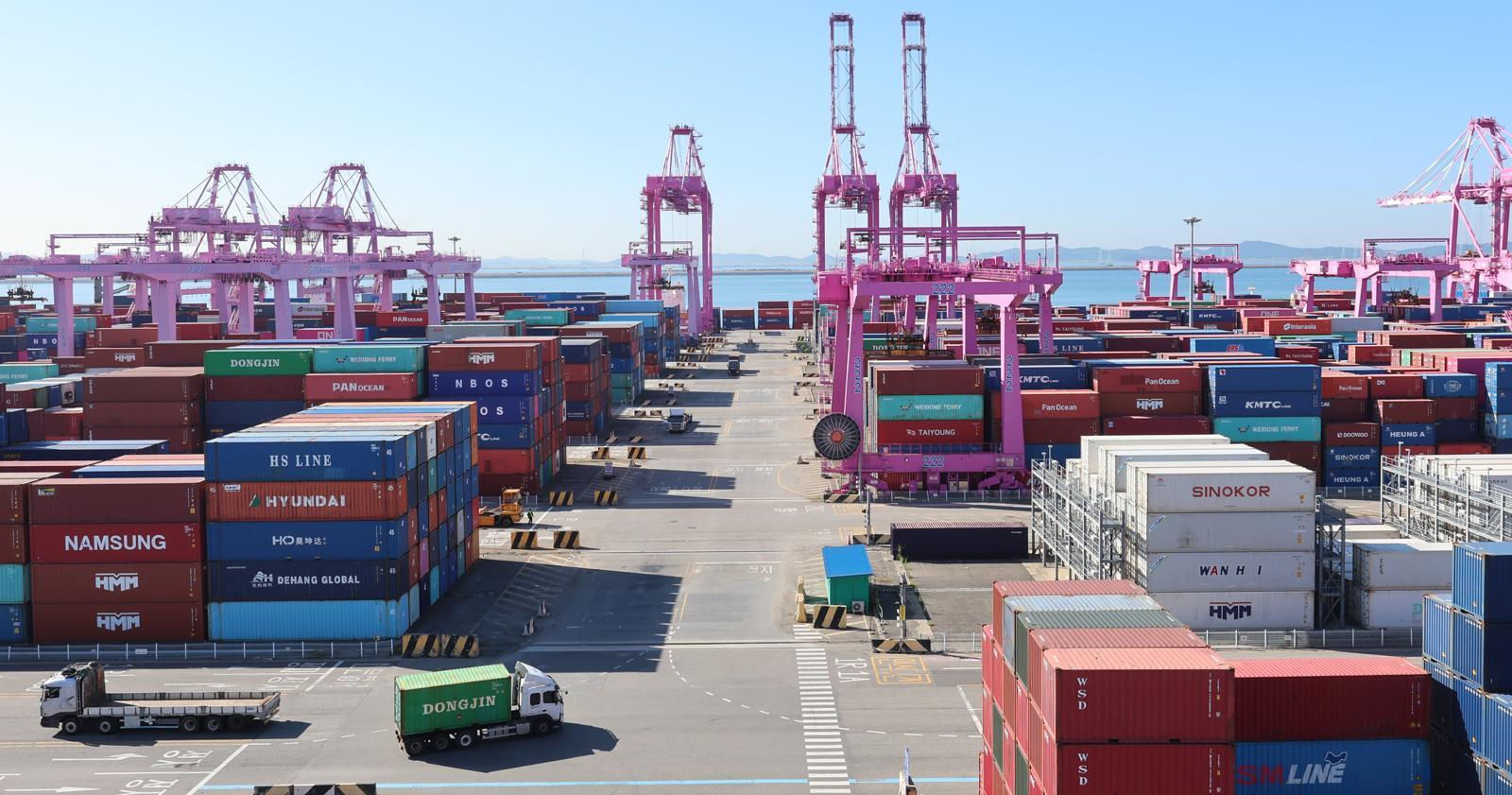
The losers are harder to place because they are invisible in aggregate data. They are the 20-somethings who cannot find work despite a GDP forecast that looks adequate on paper. They are the regional economies that do not benefit from Incheon port container traffic or Pyeongtaek fab expansion. They are the households where a parent’s manufacturing wage does not translate into a child’s opportunity.
This is the structural divergence that English-language coverage of Korea’s economy routinely misses. The global media sees a leading indicator ranking and writes about Korea’s return. It does not see the gap widening between an economy that is growing and a generation that is not.
What Happens Next
The declining monthly gains in the CLI are a warning, not a catastrophe — yet. If the Middle East conflict escalates further, oil prices could rise enough to offset the semiconductor terms-of-trade improvement and push the indicator downward. A global semiconductor cycle turn would have the same effect. Both outcomes are plausible within the next two quarters.
But the more persistent risk is not a reversal of the CLI. It is the continued mismatch between what the indicator measures and what the indicator implies about broad-based prosperity. A CLI of 102.87 with youth unemployment at 1997-crisis levels is not a signal of health. It is a signal that the economy’s growth engine is running on cylinders that most of the population cannot access.
Policy responses will matter. The government could redirect some of the semiconductor windfall toward vocational training, startup incentives, or regional development that creates employment outside the capital corridor. The Bank of Korea faces a difficult calibration — keeping rates supportive enough to sustain investment without overheating a labor market that is already strained. Structural reforms to ease SME access to credit and reduce the competitive advantage of chaebol-affiliated firms would address the root cause rather than the symptom.
For investors, the takeaway is straightforward: Korea’s macro story is semiconductor-driven, and semiconductor cycles are cyclical. The leading indicator’s five-month deceleration is the market telling you something the headline number is not. Pay attention to the gap between the top-line rank and the underlying employment data. That is where the real story lives — and where the next correction, when it comes, will begin.