Korea's Property Tax Flip-Flop Exposes the Ruling Party's Election Jitters
President Lee Jae-myung's sudden reversal on luxury home tax hikes was sold as pragmatism but reads as panic — a telling glimpse into a ruling party scrambling to neutralize a potent electoral weapon before voters punish them.
The Retreat That Wasn’t Called a Retreat
South Korea’s president is in an unusual position: he has to defend going backward as if it were going forward.
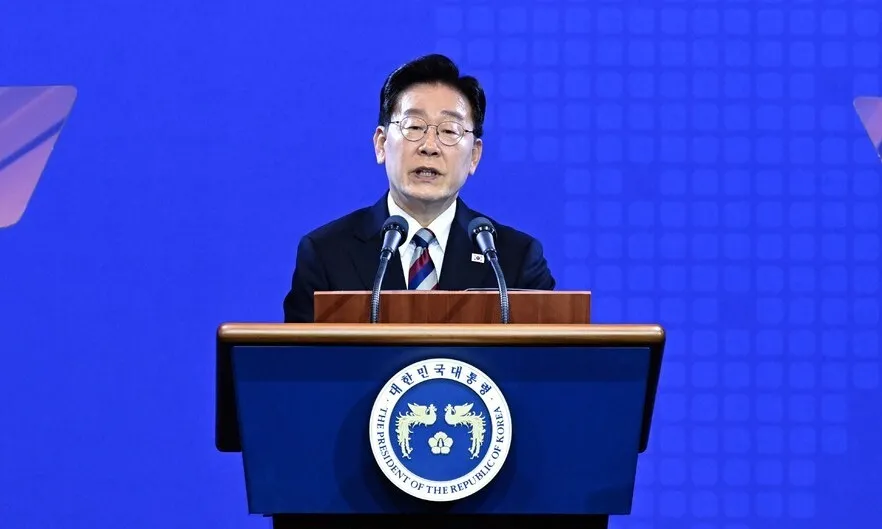
On Jan. 2, President Lee Jae-myung stood before the Americas regional session of the National Consultative Council for Peace and Unification — a body that exists more in tradition than in governing reality — and delivered what amounted to a political exculpation. The government had proposed tightening the comprehensive real estate tax on non-owner-occupied single homes, then quietly reversed course after public fury. Now Lee was asking the country to accept that reversing policy wasn’t policy reversal at all.
“If we had maintained 12 billion won and 150% from the beginning, would there have been no criticism?” he asked on X, the platform formerly known as Twitter. “Now that the main attack point has disappeared, will they find something else to nitpick?”
The rhetorical question reveals everything about the ruling party’s strategic calculations. The attack point wasn’t arbitrary — it was a property tax framework that promised to extract meaningfully more from the wealthy owners of luxury homes in Gangnam, Seoul’s ultra-affluent district, before crashing downward in value.
What Actually Changed (And Why It Matters)
The government’s original proposal, drafted with the stated principle of prioritizing owner-occupied residences, would have reduced the exemption ceiling for non-resident single-home owners from 12 billion won to 9 billion won. It would also have raised the annual comprehensive real estate tax increase cap from 150% to 200%.
Both proposals triggered immediate and visceral backlash. The ruling party, sensing electoral poison, reversed both within days. The final cabinet decision on Jan. 1 — locking in 11 tax law revision bills — kept the exemption at 12 billion won and the increase cap at 150%, while raising the base exemption for owner-occupied single homes to 14 billion won.
Lee’s framing was precise: the policy shift was not an ideological retreat but a pragmatic recalibration. “Raising the tax cap to 200% wasn’t just; keeping it at 150% wasn’t unjust either,” he said. “It was simply a policy choice where preferences crossed.”
The distinction matters because it reveals how the ruling party conceptualizes political survival. Policy is not principle — it is something to be adjusted when the political wind shifts. The president’s language suggests a governing philosophy in which consistency is optional and public opinion is the ultimate compass.
The Gangnam Factor
The policy reversal landed squarely in the context of a property market crisis that has hit Gangnam particularly hard. Residential prices in the district have experienced sharp declines, creating a political environment in which tax hikes on property owners feel not merely unpopular but economically dangerous.
The ruling party’s calculus appears to be straightforward: alienate the very voters who could swing elections in urban constituencies, or retreat and blame the opposition for manufacturing controversy. Lee chose retreat and reframed it as statesmanship.
But the implications run deeper than electoral strategy. The government had signaled, however clumsily, that it was willing to use the tax code as an instrument of redistribution — pulling revenue from speculative property holders to fund public services. That signal has now been withdrawn. The wealthy who benefited from Korea’s property boom face no new fiscal pressure; the middle-class homeowners who form the ruling party’s electoral base gain marginally more relief.
The Opposition’s Dilemma
Critics seized on the reversal as evidence of governative inconsistency. Lee’s response was characteristic: he accused them of cherry-picking. “Is it appropriate to ignore the whole and attack an extremely small part?” he asked, invoking the age of “post-truth” to suggest that his opponents were operating in bad faith.
The accusation cuts both ways. The opposition has indeed focused disproportionately on the reversal while ignoring other elements of the tax reform — changes to capital gains tax exemptions for multiple home owners, adjustments to super-luxury property taxation, provisions that would have affected high-value residential holdings. Lee’s complaint has factual basis, even if it serves his political interests.
What remains unresolved is whether the ruling party’s retreat represents wise course correction or surrender to lobby-driven policymaking. The comprehensive real estate tax was designed, in part, to address Korea’s extreme wealth concentration in real estate. Rolling it back under public pressure leaves that structural problem untouched.
What Happens Next
The ruling party now faces a familiar Korean political dilemma: govern from the center or govern from the base? The property tax reversal suggests a preference for the latter — protecting the party’s urban electoral coalition at the expense of longer-term fiscal reform.
Lee’s language about recovering “genuine politics” and competing on “who can do well” rather than who can accuse others of demagoguery rings somewhat hollow when the policy record demonstrates that the government cannot sustain any reform that attracts concentrated opposition. The message to future policymakers is clear: propose something expensive for the wealthy, watch the polling drop, and then call the retreat progress.
The property market in Gangnam and other affluent Seoul districts will continue its downward trajectory regardless of tax policy. What the reversal accomplishes is political: it removes a campaign issue from the opposition’s arsenal while preserving the ruling party’s electoral coalition. Whether it accomplishes anything economically remains an open question — and one that Korean voters will likely evaluate when the next election cycle arrives.