Korea's Record Semiconductor Export Hides the AI Chip Power Shift
South Korea shipped $46.7 billion in semiconductors last month — a staggering leap that tells you more about where AI capital is flowing than any single chip maker's earnings report.
The Number That Should Wake You Up
South Korea shipped $46.7 billion worth of semiconductors in August alone. That is not a typo. It is up 209 percent from a year ago and the single largest monthly figure in the country’s history by a wide margin. The total August export bill — $98.25 billion — ranked only third all-time, trailing June’s $102 billion and July’s $99 billion. Three months running, the top three export months have all been different. That kind of velocity is unusual at any scale. At $46.7 billion, it is almost surreal.
The Ministry of Trade, Industry and Energy credited Google and Amazon, among other hyperscalers, for sustained investment in AI infrastructure. The ministry called it the reason behind three consecutive months above $40 billion in semiconductor exports. What the press release left unsaid is that this number is not distributed evenly across the industry. It is concentrated in a handful of companies and a handful of products — a concentration that raises as many structural questions as it answers.
Memory Is Where the Money Is
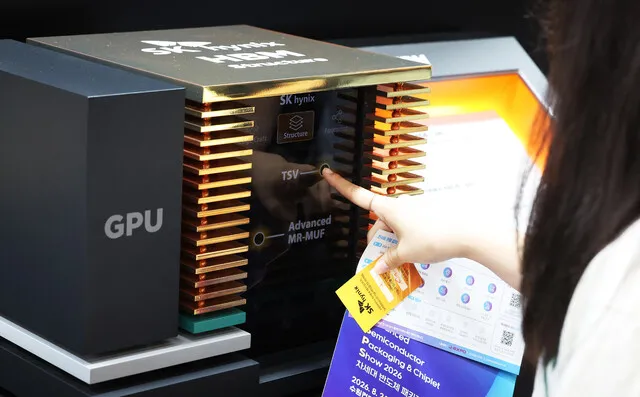
Korea’s semiconductor export boom is overwhelmingly a memory story. Samsung Electronics and SK Hynix dominate the high-bandwidth memory — HBM — market that AI training and inference workloads demand. NVIDIA’s GPUs are useless without HBM stacked on or near them. Every new data center built for generative AI is a multi-hundred-million-dollar purchase order flowing through Samsung and SK Hynix’s fabrication lines in Pyeongtaek and Hwasung.
This matters because HBM is not a commodity like DRAM or NAND flash in the traditional sense. It requires advanced packaging, custom qualification with GPU makers, and close collaboration with design teams. The qualification cycle alone — from tape-out to volume production — can take 12 to 18 months, creating a sticky supply relationship that favors incumbents. The moat is real. And South Korea holds it.
HBM pricing tells the story most clearly. HBM3E modules, the current generation tailored for next-generation GPUs, are commanding prices several times higher than standard high-performance DRAM per bit. SK Hynix has been the first to qualify its HBM3E with NVIDIA for the Blackwell platform, giving it an exclusive window that Samsung has not yet matched at volume. Supply contracts signed at those prices lock in revenue visibility for quarters, not months.
The data bears this out. Semiconductor exports rose 209 percent year-over-year in August while total exports grew 68.7 percent. Memory chips are absorbing the disproportionate share of that growth. Non-memory categories — display panels, auto parts, petrochemicals — grew, but far more modestly. The Ministry noted a 20 percent increase in non-semiconductor exports as a sign of broadening strength. That is encouraging. But do not mistake a supportive footnote for the main event.
Second-Order Effects: The Korean Economy in Focus
The export surge is already reverberating through the broader Korean economy in ways that extend well beyond factory floors. The won has strengthened meaningfully against the dollar as trade surplus figures mount, creating a double-edged dynamic: cheaper imports for consumers and exporters alike, but also a headwind for韩国製品’s price competitiveness in third markets. Bank of Korea analysts have noted the currency effect in recent policy discussions, though the central bank has so far resisted aggressive intervention.
Domestically, the boom is reshaping labor dynamics. SK Hynix and Samsung have both expanded recruitment of process engineers and equipment specialists, offering signing bonuses that have pulled talent from competing sectors and from Japanese firms active in Korea. Universities in the Honam and Gyeonggi regions have reported record enrollment in microelectronics and materials science programs — a trend that may not reverse even if the capex cycle softens.
The ripple effects reach further still. Korean equipment makers including SEMES, a Samsung subsidiary, and Hanmi Sematec have seen order books lengthen as fab expansion accelerates. But the most significant second-order effect may be geopolitical: Tokyo and Washington have both signaled interest in deepening semiconductor cooperation with Seoul, recognizing that Korea’s memory dominance is a strategic asset in the broader containment of China’s technological ascent.
Who Wins, Who Loses
Samsung and SK Hynix are the clear winners in this cycle. Both reported record quarterly revenues driven by memory pricing power and surging HBM demand. SK Hynix, in particular, has locked in a dominant position as NVIDIA’s primary HBM supplier, a relationship that gives it pricing leverage Samsung struggles to match in this segment. Samsung’s catch-up effort with its own HBM3E qualification is progressing, but the gap in NVIDIA’s supply chain remains measurable in months and market share.
Japan, by contrast, is recovering its semiconductor equipment business but has not re-emerged as a major chip producer. Taiwan’s TSMC benefits enormously from NVIDIA and custom AI chip orders but does not appear as directly in Korea’s export statistics. China continues to be squeezed by export controls and is investing heavily in domestic alternatives that remain years behind in HBM capability. Chinese memory champions Changxin Memory Technologies and Yangtze Memory Technologies Corp. have announced HBM roadmaps, but independent assessments place their production readiness still 18 to 24 months behind Korean leaders — and their access to the EUV and advanced packaging tools needed to close that gap remains severely constrained.
The United States benefits indirectly through demand for its design intellectual property and through the capital expenditure cycle of its own cloud providers. But the physical production, the export numbers, and the balance of trade payments flow through Korea.
The Numbers Behind the Headline
The August trade surplus hit $34.75 billion, up 28.3 percent from a year earlier. The first eight months of 2025 accumulated a surplus of $202.5 billion — $162.2 billion more than the same period last year. Monthly export rankings have cycled through three different leaders in the past 90 days: June at $102 billion, July at $99 billion, August at $98.25 billion. All three are in the top three historically. That is an extraordinary run.
Semiconductor exports have climbed every recorded month since February: $25.1 billion, $32.8 billion, $37.2 billion, $44.8 billion, and then $46.7 billion in August. The trajectory is steep and uninterrupted.
Imports rose 22.5 percent to $63.5 billion, reflecting the cost of raw materials and equipment needed to sustain that production pace. But exports are still far outpacing imports. The gap between the two is what fuels the surplus, and the gap is widening — not narrowing — as memory demand outpaces the cost of inputs.
What Comes Next
Minister of Industry 김정관 warned that the trade environment faces more uncertainty than at any recent point — US tariff policy, supply chain reconfiguration, and Middle East tensions were singled out. That is accurate. The surplus numbers this quarter are impressive, but they rest on a demand curve that is sensitive to capital expenditure cycles, not consumer purchasing patterns.
Hyperscaler spending on AI infrastructure is the engine. If Amazon, Google, Microsoft, Meta, or Oracle slow their build-out — and there are already whispers of capex discipline creeping in among some companies — the memory price cascade could reverse faster than anyone expects. HBM pricing has been remarkably sticky, but pricing power is not permanent power. The DRAM cycle has punished overconfidence before, and the memory business remains fundamentally cyclical despite the AI narrative.
The more structural question is whether Korea can maintain its memory dominance as China accelerates its domestic HBM programs and as TSMC and Intel pursue their own advanced packaging bets. Samsung and SK Hynix have a lead measured in years, not months. But the lead is narrowing, and every month of Chinese investment brings incremental progress that compounds.
For now, the data is spectacular. $46.7 billion in a single month. Three straight months above $40 billion. A trade surplus that keeps growing. The AI infrastructure build-out is real, and South Korea is positioned at its center. But the center is not static. The question is not whether Korea benefits from this moment — it clearly does — but whether the country can convert a surge driven by a single technology cycle into lasting industrial depth. The numbers this month are a gift. How Seoul and the chaebol manage the next twelve months will determine whether it becomes a foundation or just a high watermark.