Korea's Tax Shock Floods Gangnam With Sellers — And Buyers Stay Away
South Korea's comprehensive property tax overhaul has triggered a seller's stampede in Gangnam, with some renovation complexes seeing listings surge over 60% in three weeks. But buyers aren't rushing in — policy uncertainty is freezing transactions even as prices dip.
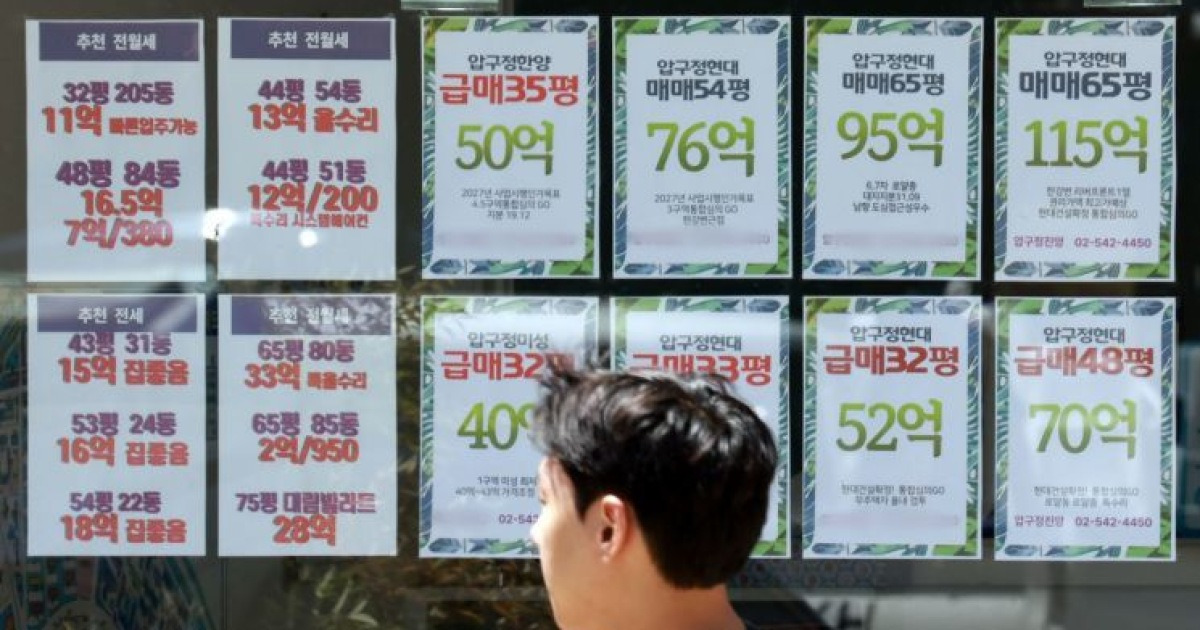
The Tax Trigger
South Korea just changed the rules for holding expensive homes — and the market is reacting fast. Since the government unveiled its comprehensive real estate tax (종부세) overhaul in early August, listings in Gangnam’s high-end renovation apartment complexes have surged more than 40%, according to data from 부동산114. In some buildings, the increase has been closer to 63 percent in under three weeks.
The policy is blunt in its intent. For a home with a market value of 400 million won or more, the annual tax burden jumps by at least 11 million won if the owner doesn’t live there. Even primary residents face an additional 3 million won or so. The government is also narrowing the holding deduction and shifting it toward an occupancy-based model — a change that specifically penalizes investors who own properties they don’t inhabit.
For older, well-located renovation projects in Gangnam, that means the math changed overnight.
Who Is Selling and Why
The sellers clustering in these buildings share a profile: multi-home owners, non-resident single-home owners, and notably, elderly residents in aging complexes where property taxes are now eating deeper into fixed incomes. A real estate agent in Gaepo-dong told Asia Economy that many residents are seniors who simply can’t absorb the higher carrying costs. “They’re putting their apartments up as urgent sales,” the agent said.
The numbers back this up. In Suseo-dong’s Shindonga Apartment, active listings jumped from 32 on August 2 to 52 by August 21 — a 62.5 percent increase in 19 days. Suseo Kkachtomaeul went from 52 to 73 listings (40.4 percent). In Gaepo-dong’s Gyeongnam Apartment, 112 units hit the market, the highest count since October 2024.
Across all of Seoul, total listings rose from roughly 61,000 to 65,000 during the same window — an addition of about 4,000 units, most of them concentrated in the upscale southern districts.
Prices Are Falling, But Nobody Is Buying
Here is where the story gets interesting — and where most English-language coverage stops short.
Yes, listings are flooding in. But transactions are not following. Gangnam’s transaction market remains subdued because buyers are sitting on their hands, waiting to see whether the tax legislation will be modified during parliamentary debate. The August 3 tax reform package and the August 13 housing supply and financial measures announcement came in rapid succession, creating what industry participants describe as a climate of policy whiplash. Under those conditions, even well-heeled buyers are cautious.
The price data reflects the hesitation. Gangnam’s transaction price index fell 0.05 percent in the third week of August, marking a second consecutive weekly decline — the first back-to-back drops in over three months. Seocho-gu, just across the river, posted an even steeper 0.09 percent decline. Meanwhile, the national apartment price index rose 0.14 percent over the same period, meaning the pressure is almost entirely localized to Seoul’s most expensive corridor.
The implication is clear: the tax reform is working as a price dampener, but only through listing pressure, not through actual sales volume. This is a freeze, not a crash. And freezes tend to thaw unpredictably.
What This Means Beyond Seoul
South Korea’s property tax overhaul is not happening in a vacuum. It is the latest move in a broader fiscal recalibration by the Yoon administration, which has been trying to balance housing affordability rhetoric with revenue generation in a slowing economy. The timing matters: the government needs the tax revenue, and it needs it now, before the legislative window closes.
But the regional dynamics are worth watching. East Asian luxury housing markets — Hong Kong, Tokyo, Singapore — have all seen capital flows shift in response to tax policy changes in recent years. A predictable pattern emerges: when holding costs rise faster than rental yields, international and domestic investors alike rotate out. Korea’s case is distinctive because the pressure is concentrated on a narrow band of existing inventory (homes above 400 million won) rather than new development, which means the correction is likely to be concentrated and sharp rather than broad and slow.
Foreign buyers, who have been largely absent from the Gangnam market since the 2022–2023 rate-hike cycle, are unlikely to step in during this window. Policy uncertainty is the one variable no amount of discounted pricing can overcome. The real question is whether the listings that are now entering the market will find buyers once the tax legislation is finalized — or whether the flood of supply will recalibrate prices downward enough to trigger a new wave of purchasing.
What Happens Next
Three scenarios are plausible.
In the first, the National Assembly softens the tax proposal before final passage. That would relieve the selling pressure and likely send Gangnam prices stabilizing within a quarter. In the second, the legislation passes as-is, and the current listing glut — now exceeding 65,000 units across Seoul — continues to weigh on prices through the remainder of the year, with additional 1–3 percent declines possible in the hardest-hit complexes. In the third, the government doubles down, pairing the tax increase with supply-side measures that unlock new construction approvals in outer districts, effectively redirecting demand away from Gangnam altogether.
The first scenario is the most likely near-term outcome, given that parliamentary review is still ongoing. But the second is the one investors should prepare for: a market where supply is ample, prices are softening, and transaction volume stays thin until clarity emerges.
For now, the Gangnam renovation complexes look like a market caught between a tax hammer and a policy pause. Sellers are moving. Buyers are watching. And the next few weeks of legislative maneuvering will determine which side blinks first.