The Kusama Economy: What Her Death Means for the Art of Experience
Yayoi Kusama built the most commercially successful art franchise of the social media age. Her infinity rooms turned avant-garde visions into timed-ticketed experiences worth billions. After her death, the question is whether the model survives the artist.
The Artist as Infrastructure
Yayoi Kusama died at 97 in a Tokyo hospital on August 14. Her studio statement emphasized that she continued painting until her final days. But the real story is not what she painted last — it is what she built over the last three decades of her life, a commercial and cultural apparatus so efficient that it outlasted her by design.
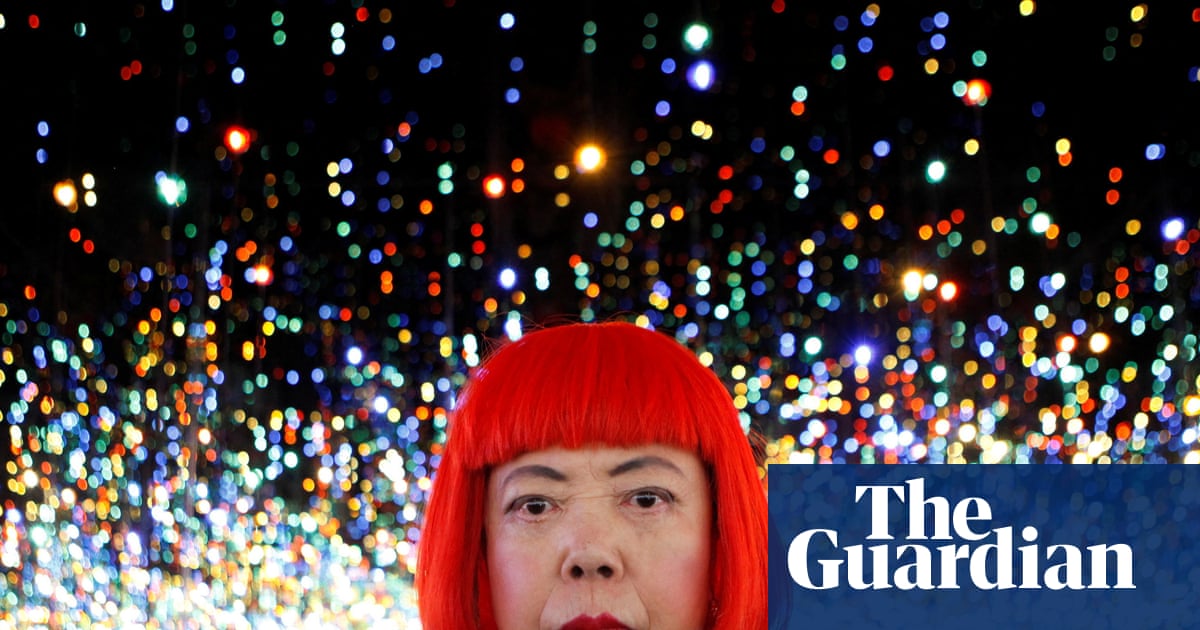
Kusama did not simply make art that went viral. She engineered the conditions for viral engagement decades before the term existed. Her infinity mirror rooms, those small dark boxes lined with LED lights and mirrored surfaces that send visitors spinning into apparent infinity, are the most replicated experience in contemporary art. They have drawn hundreds of millions of visitors worldwide and generated revenue streams that single-handedly reshaped how museums think about audience, timing, and box office.
When Kusama dies, the Kusama economy does not. That is the unsettling part.
The Birth of a Ticketed Infinity
Kusama first built an infinity room in 1965 — Infinity Mirror Room: Phalli’s Field — stuffed with hundreds of fabric-covered phallic forms arranged inside a mirrored chamber. It was a work about self-obliteration, about the dissolution of the ego into endless repetition. She conceived it from hallucinations that began in childhood, when flowers appeared to speak to her and patterns overtook her vision.
The work was radical. It was also, accidentally, the template for something far more banal: the timed-entry museum experience built around a photograph.
Half a century later, that same structure became the most profitable format in the art world. Visitors queue for hours at the Hirshhorn, the Tate Modern, the Museum Ludwig in Cologne. They are granted thirty seconds inside a mirrored room. They emerge. They post. The next person enters.
The conversion rate is staggering. Kusama exhibitions consistently sell out months in advance. The 2017 Hirshhorn show drew over 1.6 million visitors, making it the museum’s most attended exhibition ever. The Tate Modern’s 2021 run required timed tickets and stretched across two galleries. Major institutions treat Kusama shows as financial anchors — reliable draws that subsidize riskier programming.
This is not accidental. It is the result of a lifetime of strategic choices Kusama made as her mental health stabilized in the psychiatric hospital where she chose to live in 1977. She stopped fighting for acceptance from the white male art establishment that had ignored her in New York. She stopped trying to be taken seriously as a feminist provocateur whose happenings included naked performers painted in polka dots and an open letter to Richard Nixon proposing sexual intercourse in exchange for ending the Vietnam War. Instead, she leaned into what worked. She built installations that could be experienced, not just observed. She let the world discover her on its own terms.
The Merchandise Machine
The Kusama economy extends far beyond museum tickets. Her imagery — the dotted pumpkins, the swirling nets, the red bob wig she adopted as a kind of artistic uniform — has been licensed into furniture, fashion, home goods, and cosmetics at a scale that would make Andy Warhol blush.
Yayoi Kusama collaboration products are sold through department stores in Japan, pop-up shops in London and New York, and online platforms across Asia. Her polka-dotted Infinity Mirrors room has inspired everything from mattress toppers to yoga mats. The cultural saturation is total. A generation of people who have never read a word of art criticism can describe an infinity room in vivid detail because they lived it for thirty seconds while holding their phone at arm’s length.
This is the paradox at the center of the Kusama legacy: her most conceptually ambitious work — pieces about self-obliteration, the dissolution of boundaries between body and universe — became the most accessible art experience in history precisely because they were designed to be photographed. The viewer completes the work by capturing it. The infinity room demands participation, and participation today looks like a selfie.
Who Wins and Who Loses
After Kusama’s death, several dynamics will shift.
The auction market will react first. Her White No. 28 sold for $7.1 million in 2014, a record for a living female artist at the time. With her gone, works on the secondary market will carry a new premium — the scarcity premium that always follows an artist’s death. Curators and dealers will recalibrate prices within weeks. The question is whether the appetite for Kusama on paper and canvas matches the appetite for her installations. The installation market is different. It is dominated by loans from private collectors and museum holdings, not open auctions.
Museums will face a scheduling crisis. Kusama exhibitions have become events, not surveys. The Hirshhorn counted on her 2017 show to define its decade. The Tate structured its modern and contemporary galleries around her retrospective. When an artist becomes that central to a museum’s identity, their absence creates a programming vacuum. Institutions will scramble to fill the calendar with alternatives — other Japanese artists, other immersive experiences, other ticket-generators. None will replicate the Kusama effect.
The merchandising empire will continue. Kusama’s estate has already established structures for licensing and brand management. The question is whether the licensees will treat her work as a living brand or begin the slow process of archival curation. Other artists’ estates have taken very different paths after death. Some expand aggressively. Some contract carefully. The Kusama estate appears to be choosing expansion, which means more products, more collaborations, more cultural penetration — and more risk of dilution.
The Experience Economy’s Quiet Crisis
Kusama’s rise coincided with the broader cultural shift toward experience over object. Museums stopped being places to look and started being places to be. Social media accelerated the change. A painting hangs on a wall. An infinity room swallows you whole. The difference is not aesthetic — it is economic. Objects attract browsers. Experiences attract customers who pay for tickets, merchandise, and travel.
This shift has real consequences for how art is made and valued. Younger artists are now encouraged to think in terms of installations, interactions, and shareability rather than form and medium. Galleries prioritize artists who can produce event-level work. Museums budget for crowd management, security, and timed entry systems alongside conservation and curatorial staff.
Kusama did not cause this change. She rode it. But her career demonstrates something important about the relationship between personal vision and institutional incentive. The hallucinations that drove her work were deeply private, rooted in trauma and mental illness. The infinity rooms that grew from them became public spectacles. The self-obliteration she sought through art became something viewers experience temporarily, safely, and then leave behind to post online.
There is no moral judgment here. Kusama understood exactly what she was building. She chose this path deliberately, after decades of being rejected by the very institutions that would later celebrate her. Her genius was not just in the work but in recognizing that the world was ready for it — even if the world misunderstood why it mattered.
What Remains
Kusama’s studio statement said she would continue to bring hope and strength through art. That sentiment is genuine. Her life story — from an abusive childhood in Matsumoto, through the scandalous happenings of 1960s New York, to the stability of a Tokyo psychiatric hospital — is one of the most remarkable narratives in modern art. She survived ostracism, mental illness, and deliberate erasure by the art establishment to become one of the most recognized visual artists on Earth.
But the Kusama economy operates independently of biography. The infinity rooms will continue to fill. The merchandise will continue to sell. New exhibitions will open in cities that never hosted one during her lifetime. The demand for her work has outgrown the artist.
What may not survive is the tension that made her work worthwhile. Kusama’s installations were never just about beauty or Instagram moments. They were about infinity, yes, but also about terror — the terrifying dissolution of self into pattern, the anxiety of endless repetition, the relief of being small in a universe that matches your hallucinations. The current museum model strips away almost all of that. Thirty seconds in a mirrored box is not enough time to confront infinity. It is enough time to take a photo.
Kusama would likely find this outcome exactly as she expected. She always believed the art world’s recognition would come late, on its own terms, through channels she did not control. She preferred being an outsider. The fact that outsiders everywhere now queue for thirty seconds to stand inside her work is both her triumph and her tragedy — a reminder that when art becomes infrastructure, the artist who built it eventually becomes irrelevant to how it functions.
She will not mind. She has been preparing for irrelevance her entire career.