Lee Chang-dong's Long Absence Makes His Return Cinematic Event
After eight years away from filmmaking, Lee Chang-dong's possible love arrives as Korea's Oscar contender. What his return signals about auteur pressure and Korean cinema's global ambition.
The Weight of Eight Years
In an era when even most respected auteurs churn out a feature every two or three years, Lee Chang-dong’s eight-year silence is striking. His new film, titled ‘possible love,’ has been selected as Korea’s official submission for the 99th Academy Awards’ International Feature Film category. The announcement came from the Korean Film Council, which assembled a fresh panel of fifteen reviewers led by critic Jung Sung-il this year, evaluating entries on North American distribution potential, aesthetic achievement, and director recognition.
What makes this particular choice noteworthy is not simply that Lee’s first film since ‘burning’ in 2018 has arrived, but what his absence reveals about the structural pressures bearing on independent filmmakers with international pedigrees. Lee did not vanish. He took on government roles, served as president of the Korean Film Council from 2017 to 2021, and stepped away from the commercial machinery that consumes most directors. That he returned with a project this ambitious signals something about the condition of Korean cinema itself.
The Film and Its Cast
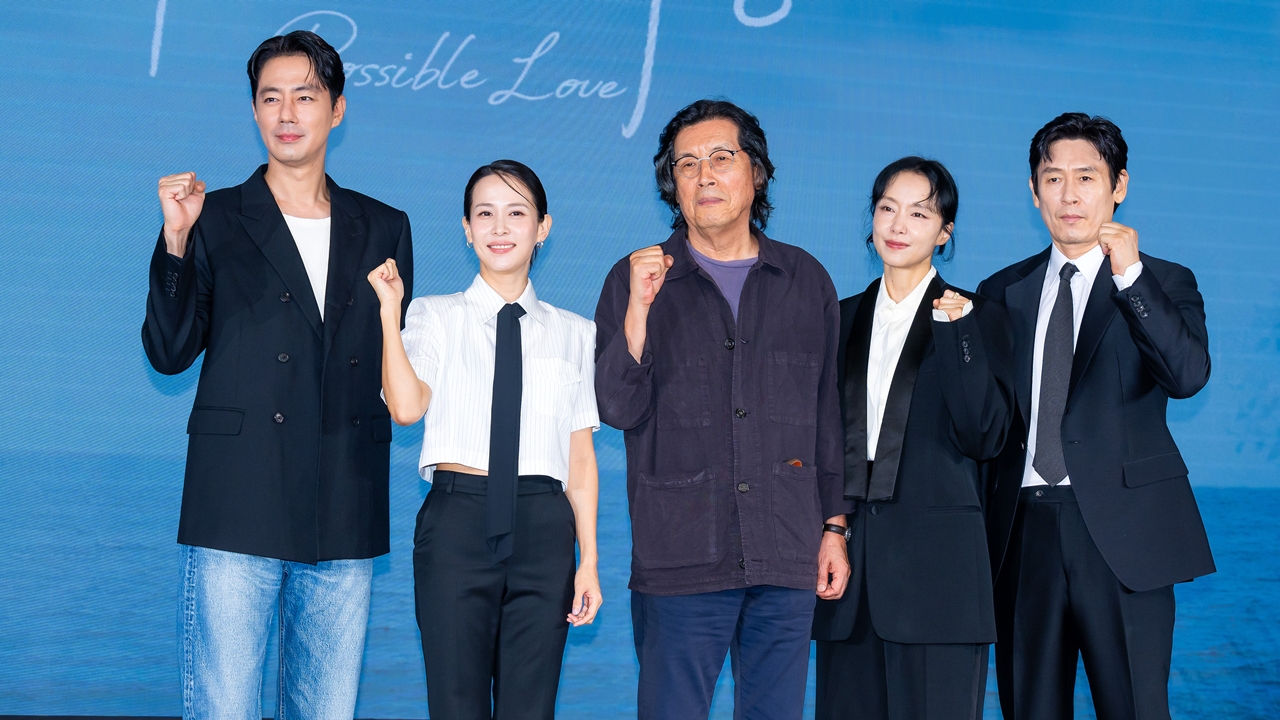
‘possible love’ follows two couples: a dismissed worker and his wife, and a documentary filmmaker and her husband, who gather to produce a documentary and confront their hidden desires and divergent lives. The ensemble cast reads as a who’s who of Korean cinema: Jeon Do-yeon, Sol Kyung-gu, Cho In-sung, and Jo Yeo-jeong. Directors spend decades assembling loyalty from actors who will carry their vision across festivals and awards seasons. Lee achieved something rarer: he convinced the four most respected working performers in Korea to commit before the project had screened anywhere.
The film’s festival run before release was unprecedented. It entered the main competition at the 83rd Venice International Film Festival, the main slate at the 64th New York Film Festival, and the special presentation section at the 51st Toronto International Film Festival. Lee also became the first Korean director to receive the TIFF Evergreen Director Award. This pre-release momentum is unusual for any film, let alone one from a director returning after an eight-year gap.
Why the Hiatus Matters
The conventional wisdom in Hollywood and across European festival circuits is that auteur directors burn out under the pressure of maintaining artistic vision while negotiating with studios, distributors, and the commercial expectations of international co-productions. Bong Joon-ho’s success with ‘parasite’ in 2019 changed the calculus for Korean directors. Suddenly, every major festival wanted the next Korean auteur. Every distributor wanted the next Oscar contender. Every co-production partner wanted access to Lee Chang-dong’s reputation.
That Lee chose to leave institutional power rather than simply step between projects suggests something about the cost of maintaining artistic independence in an era when festivals have become marketing machines and awards campaigns have become distribution strategies. He did not return to festival season for exposure. He returned with ‘possible love’ because the project demanded the depth of engagement only an eight-year gap could provide.
The Oscar Path Ahead
Being selected as Korea’s representative does not guarantee a spot on the final five-film shortlist. The Academy’s International Feature category requires first making the shortlist, announced later this year, before advancing to the final five eligible entries competing for the trophy. Last year, Park Chan-wook’s ‘decision to leave’ made the shortlist but fell short of the final five. The path from Korean submission to Oscar nomination has grown increasingly narrow, with fewer non-English language films reaching the final stage.
The Korean Film Council’s new evaluation criteria reflect this reality. The panel assessed entries on North American distribution potential, aesthetic achievement, and director recognition, with the highest-scoring film receiving the honor. ‘possible love’ earned top marks for its masterful mise-en-scene, clear thematic awareness, and Lee’s humanistic gaze, a quality critics have identified as his signature since ‘old companion’ in 2003. The panel also considered Lee’s track record, noting that ‘burning’ became the first Korean film ever shortlisted for the Foreign Language Film Oscar, and that North American media responded enthusiastically to his return.
What This Signals for Korean Cinema
The selection of ‘possible love’ carries implications beyond a single film’s award prospects. Korean cinema has spent the past decade navigating the tension between domestic box office success and international festival recognition. Directors like Park Chan-wook, Hong Sang-soo, and Lee Chang-dong have built careers that operate simultaneously in two ecosystems: the Korean industrial system and the European festival circuit. That Lee’s eight-year absence ended with a project this ambitious suggests Korean cinema is moving toward a new phase of global positioning.
The conventional narrative in film criticism is that auteur directors either adapt to commercial demands or retreat from the industry entirely. Lee chose neither path. He took institutional responsibility, then returned to filmmaking with a project that required the depth of engagement only time and distance could provide. That ‘possible love’ arrived with Venice, New York, and Toronto commitments before release is unusual for any director, let alone one returning after such a long gap.
The question now is whether ‘possible love’ can navigate the Academy’s increasingly narrow path from Korean submission to Oscar nomination. The festival circuit has become a marketing machine, and the awards season has become a distribution strategy. That Lee chose to return with a film this ambitious rather than simply stepping between projects signals something about the condition of Korean cinema’s global ambitions. The industry watches closely to see whether his return redefines what is possible for Korean auteurs on the world stage.