Lula's fourth term reshapes Latin America's geopolitical map
Lula da Silva's stunning runoff victory over Flávio Bolsonaro marks a decisive shift in Latin America's political center of gravity. With Trump's regional allies faltering, Brasília's next moves will test the durability of BRICS and US-Brazil relations.
The Upset That Unmakes a Belt
Eighty years old and three previous presidential defeats behind him, Luiz Inácio Lula da Silva delivered a fourth term not by out‑running the right, but by out‑organizing it.
With nearly all votes counted, Lula held 51.75 per cent to Flávio Bolsonaro’s 48.25. Three weeks earlier the incumbent had trailed by 2.2 million ballots after a first round where abstention hit 21.08 per cent—a rate that disproportionately kept Lula voters, many living farther from polling stations, away from the booth. In the runoff, abstention fell to 19.21 per cent. The swing: 6.5 million votes. A first‑round runner‑up has never reclaimed the presidency since democracy returned to Brazil in the 1980s.
The arithmetic tells only half the story. The other half is who turned out, and why.
The Street Math
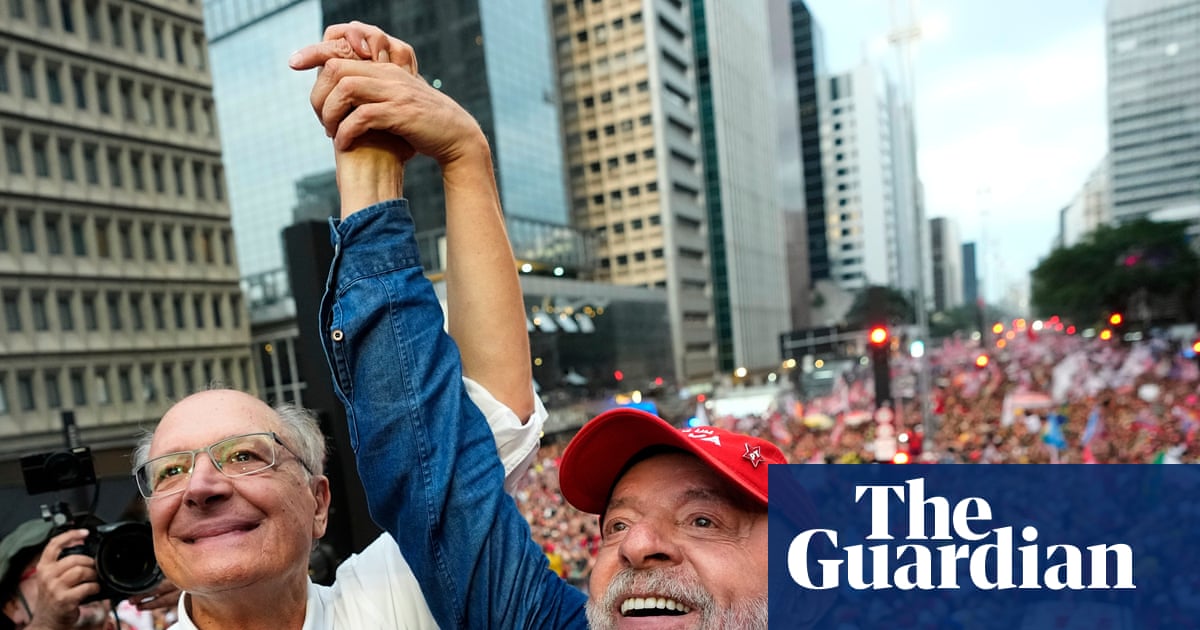
Saturday told the story before the ballots were counted. More than a million people flooded Copacabana beach for Lula’s final rally; Sunday saw an even larger crowd on São Paulo’s Paulista Avenue. Truck driver Josias Silva claimed the turnout made it “the biggest protest in the history of Brazil.” Young supporters—Camilo Buarque, 35; Ester Almeida, 28—spoke of confidence drawn from the energy in the crowd.
But the mobilization also followed a warning. Supporters reported that pro‑Bolsonaro politicians had attempted to disrupt public transport in left‑leaning voting districts, an allegation Lucas Lopes, 32, called “another coup attempt.” The sabotage failed. By nightfall, the red‑flagged crowds had gathered again to watch the count, and Lula’s lead grew.
Reginaldo Lopes, a close Lula ally, framed the result as a civilizational choice: “This is Brazil telling the world that the extreme right is fascist, that the extreme right is against black people, is against the poor, against the state, against gay people. We are going to reorganize the democratic forces.”
The disruption, whether coordinated or spontaneous, appeared concentrated in Rio Grande do Sul, Paraná, and parts of Goiás—states that had delivered comfortable margins for Bolsonaro in 2018 and 2022. In those same states, turn-out dropped below 72 per cent, a level not seen in Brazilian elections since 1994. The data suggests a coalition fraying at its edges, unable to convert ideological enthusiasm into electoral participation.
The Trump Card Misses
For Donald Trump, the result is a strategic setback. Brasília was counted among the latest dominoes expected to fall into a pro‑Washington, economically liberal camp alongside Abelardo de la Espriella in Colombia, Daniel Noboa in Ecuador, José Antonio Kast in Chile, and Javier Milei in Argentina. Bolsonaro’s son had been presented as the candidate who could deliver Brazil into that orbit—a bloc of 230 million Latin Americans united by market openness and security cooperation with Washington.
Instead, Lula returns for a term that began in 2023 after defeating Bolsonaro’s father, Jair, who is now serving a 27‑year sentence for plotting a coup. Flávio Bolsonaro, watching the count from the house arrest residence he shares with his father in Brasília, faced a defeat that likely forecloses any chance of immediate family rehabilitation.
The geopolitical question is not whether Lula will continue his tilt toward multipolar alliances—he already deepened ties with China, Russia, and India during his third term—but how aggressively he will press them now that his domestic mandate is secured. A second‑round victory of this magnitude gives him political room to prioritize BRICS cooperation, expand local‑currency settlement, and resist US pressure on trade and climate policy.
For Washington, the implications extend beyond bilateral friction. A Lula administration that leans harder into BRICS’ de-dollarization agenda could accelerate capital flight from real-denominated assets, weaken dollar liquidity in South American markets, and embolden Venezuela’s Nicolás Maduro to deepen military cooperation with Moscow and Beijing. The Trump White House, already recalibrating its approach to Cuba and Nicaragua, now faces a Brazil that refuses to isolate Havana or Caracas in multilateral forums.
Brazilian diplomats privately acknowledge the risk. “We want engagement, not confrontation,” said one foreign ministry official, speaking on condition of anonymity. “But we will not be asked to choose between the Amazon and the Pacific. Those are not mutually exclusive.”
The Domestic Gambit
Lula’s coalition will test its ability to govern a country that barely voted for it. The 3.5 million‑vote margin is narrow by Brazilian standards, and the abstention rate—though improved—still signals a large pool of disaffected or disengaged citizens. His agenda faces an Congress that remains fragmented, a fiscal ceiling that limits spending, and an economy that must reconcile low interest rates with inflation control.
Age is another variable. Lula turns 81 on Tuesday. The campaign’s reliance on street mobilization rather than policy detail suggests he will govern through personalist networks and coalition patronage. Whether that model can deliver growth, reduce inequality, and protect the democracy his allies say they have saved remains the open question.
Economists at the Fundação Getulio Vargas have projected GDP growth of 1.8 per cent for the year ahead—modest, but above the International Monetary Fund’s baseline. The real could strengthen to 4.80 against the dollar if Lula announces concrete climate commitments, attracting green investment from European and Canadian funds. But any reversal on fiscal discipline would undo those gains within weeks.
The opposition, meanwhile, is already charting a path forward. Flávio Bolsonaro’s defeat does not erase the Bolsonaro brand, which remains deeply embedded in evangelical circuits, rural agribusiness lobbies, and the security apparatus. Several state legislatures controlled by right-wing majorities have announced plans to challenge the election results in the Supreme Court—a maneuver that could consume judicial resources for months and deepen the country’s institutional polarization.
The Second-Order Effects
The ripple effects of Lula’s victory extend well beyond Brazil’s borders. In Colombia, President de la Espriella—who campaigned on a trade accord with Washington and a hardline stance against Venezuelan migration—now faces pressure from Bogota’s business community to reconsider tariffs on Brazilian manufactured goods. A Lula-led Mercosur could revive industrial policy discussions that de la Espriella’s team had shelved.
In Argentina, Milei’s shock therapy reforms appear increasingly isolated. The peso has lost another 12 per cent of its value since April, and inflation has crept back toward 80 per cent annually. Argentine economists are quietly asking whether they have misread the region’s political temperature. “Lula winning wasn’t a fluke,” said one Buenos Aires-based analyst. “It was a forecast.”
Chile’s Kast, another Trump-aligned figure, lost his presidential bid in 2021 and now confronts a right wing that has split between moderate centrists and hardline nationalists. Lula’s victory strengthens the hand of Chile’s centrist government, which has sought to position itself as a bridge between Washington and Brasília—but at what cost to its domestic base?
Within Brazil, the most immediate second-order effect may be judicial. The Supreme Court, already handling dozens of cases related to the January 8 riots, will face renewed pressure to prosecute any further attempts to overturn the election. Lula has indicated he will not pursue retribution, but his allies in Congress may not share that restraint.
What Happens Next
If Lula can hold his coalition together and deliver tangible gains—particularly in the North and Northeast, where his base is strongest—he may reset the region’s center of gravity back toward the left. If he stumbles, the backlash could be severe: the same forces that attempted transport disruptions and questioned the election’s integrity will look for new leverage.
For Washington, the immediate task is damage control. The Bolsonaro family’s legal troubles will dominate Brasília’s news cycle, and any overt US sympathy for the imprisoned former president would poison relations with Lula’s government. A more constructive path would involve quiet engagement on trade, Amazon conservation, and regional security—areas where US and Brazilian interests still overlap.
For Latin America, the message is clearer. The “pink tide” did not end; it regrouped. The next decade of regional politics will be shaped by whether Lula’s victory becomes a template for mobilized leftist realism or a singular anomaly.
The ballots are counted. The streets are quiet. The real work begins—not just for Lula, but for every leader across the hemisphere who must now decide whether to align with the past or prepare for what comes next.