Meta’s First Witness Pointed at Zuckerberg Himself
Arturo Béjar’s testimony marks a turning point in the states’ case against Meta — shifting blame from algorithms to the CEO’s culture. The implications stretch far beyond Oakland.
The Culture Is the Code
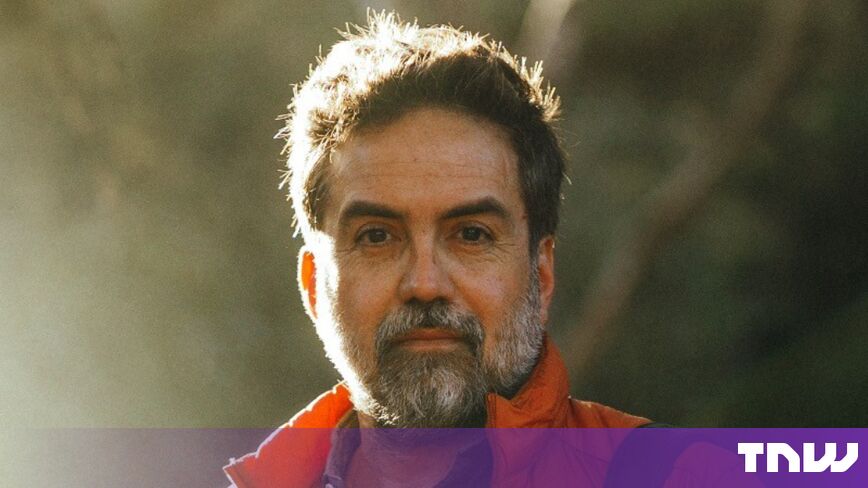
Arturo Béjar did not spend years inside Meta to quietly describe a bad app. He spent eight years there — split across two stints — working directly on the safety problems that four state attorneys general are now suing over. When he took the stand in Oakland on Wednesday, the first witness in what could become the largest consumer-protection case in tech history, he pointed at something bigger than any single design flaw.
He pointed at Mark Zuckerberg.
“At the end of the day, it was the company culture that Mark had created that made it so that it was practically impossible to deliver features that addressed the wellbeing and safety issues,” Béjar told the jury. That sentence, delivered in a federal courtroom under oath, is a seismic shift in how Meta is being argued against — and how the internet might be regulated globally.
From Products to Personality
The states opened their case by reducing Meta’s entire model to three verbs: hook, hold, harvest. It was clean, almost theatrical — the kind of framing that travels well on cable news. Infinite scrolling hooks kids. Autoplay holds them. Data harvesting pays for it all. Judges and juries love three-item lists.
But Béjar’s testimony reframed the argument. This is no longer just about features. It is about the environment those features were built in — and who built it. The states are arguing that the culture Zuckerberg cultivated made safety an afterthought, not because of malice, but because of incentive structure. Profit wasn’t prioritized over safety as a moral choice; it was baked into every promotion, every performance review, every product launch.
That distinction matters legally. Intent is easier to prosecute. Structure is harder to undo.
The Defaults Tell the Story
Much of Béjar’s day was spent on a detail that sounds boring but is devastating: the safety features Meta did ship were left as optional settings, not defaults. In practical terms, that means almost nobody used them. A teenager stumbling into Instagram does not navigate to settings. A parent does not know settings exist. The product designers counted on that — or at least, they designed for the engagement that comes from leaving every friction in place.
Meta’s lawyer, Brian Stekloff, pushed hard on this angle during cross-examination, pressing Béjar on whether he or his teams had actually solved any of the harms he described. The strategy was clear: if the problems are unsolvable, maybe the company wasn’t sitting on solutions it refused to ship — maybe it was doing the best it could. Stekloff was building a bridge from “you didn’t fix it” to “nobody could have fixed it.”
It may or may not hold. The more consequential question is whether the jury accepts the premise that default settings are a form of design intent. In regulatory law, the answer is increasingly yes. The Federal Trade Commission has already moved in this direction with its latest children’s privacy rule, treating defaults as binding choices. If a jury in Oakland follows that logic, Meta loses not because it planned harm, but because it designed comfort instead.
The Money and the Precedent
The financial stakes are staggering and disputed. Meta has told the court the states are seeking penalties that could reach $1.4 trillion — a figure no attorney general has officially adopted and that would exceed the company’s entire market value. California Attorney General Rob Bonta has framed the exposure differently, tying it to the roughly $200 billion in annual revenue the company reports. Either way, the number is large enough to freeze boardrooms.
But the money is only part of why this case matters. Oakland is being tried by states, not individuals, under consumer-protection and children’s-privacy statutes. That lowers the bar for proving harm — the states do not need to show that one specific teenager was damaged, only that Meta’s products systematically exposed millions to risk. That legal standard is broader, messier, and far harder for Meta to dismiss as outlier cases.
The precedent could reshape how platforms are held accountable worldwide. The EU’s Digital Services Act already leans in this direction, requiring platforms to assess and mitigate systemic risks. A US jury finding against Meta would give regulators in London, Tokyo, and New Delhi a powerful domestic benchmark. The opposite outcome would embolden platforms everywhere to treat safety as optional.
The Trial Ahead
Meta had tried to keep Béjar off the stand entirely. Judge Yvonne Gonzalez Rogers overruled that motion, a decision that signal at least one thing: she sees his testimony as relevant and probative, not speculative. Whether the jury does is the real question. The states must still prove that Meta knew about the harms and misrepresented what it knew — and Béjar’s account of off-default safety settings is meant to be the bridge between knowledge and deception.
The trial is expected to run roughly six weeks. Whether Zuckerberg himself will testify remains undecided; the states’ lawyers were declining to answer when court rose Wednesday. If he does, the cultural argument Béjar opened moves from testimony to confrontation. If he doesn’t, the jury gets Béjar’s version unchallenged by the man who built the culture.
The Oklahoma verdict already went the other way — $567 million ordered into a teen mental health fund — and a separate Tennessee trial is weighing Instagram’s design features. But those were individual cases. Oakland is different. It is states versus a company, statutes versus product roadmaps, and a culture versus a corporation. Whatever this jury decides, the definition of platform responsibility is about to change.
What Comes Next
The most important sentence Béjar said in court was not about infinite scroll or autoplay or any specific feature. It was the observation that the culture made safety practically impossible to deliver. That is an argument about systems, not villains — and systems are harder to fix than people.
If the states win, the remedy will not be a fine Meta writes off as a cost of business. It will be structural: defaults that protect, not engage; audits that measure harm, not just compliance; incentives that reward safety as much as retention. That is what makes this case worth watching beyond the courtroom. The next platform to face similar litigation — TikTok, YouTube, Snapchat — will be reading the same jury instructions.
Meta’s counsel Paul Schmidt told the jury the company had been alert to teenage risks and had not misled the public. That is the defense. But alerts and efforts are not the same as outcomes, and the states have spent years assembling the gap between the two. Béjar’s testimony was just the beginning.