Mladić's Death Won't Heal Bosnia—It Could Wound It Again
Ratko Mladić, convicted of genocide and known as the Butcher of Bosnia, has died at 84 in a Dutch hospital. His death threatens to reignite nationalist rhetoric and debate over justice in the Western Balkans.
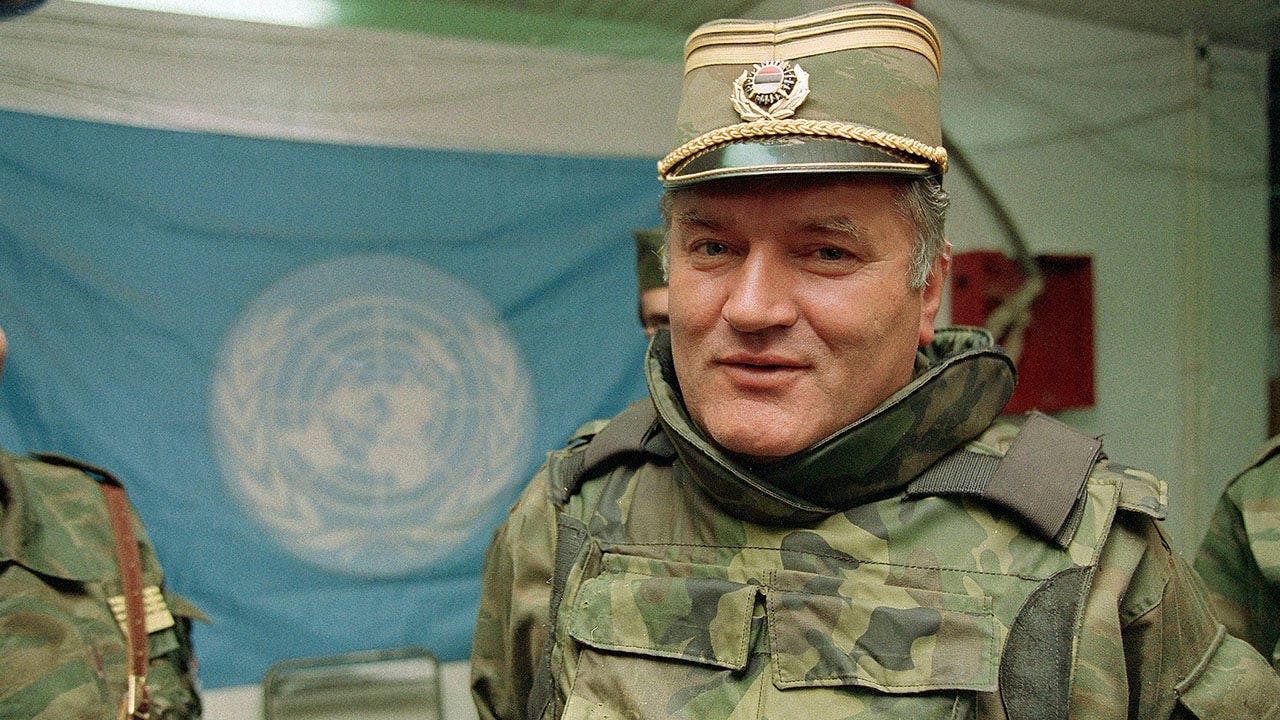
The Butcher Dies, But the Debate Lives On
Ratko Mladić, the man who commanded the Bosnian Serb army during the 1992–1995 war and was convicted of genocide for the Srebrenica massacre, has died at 84 in a hospital in The Hague. He was sentenced to life in prison in 2017. He spent years on the run before his 2011 capture. He never apologized.
His death ends a long chapter of international justice—but it does not close the book on the past. In fact, it may reopen old wounds across the Western Balkans.
Mladić’s death came quietly, without fanfare or ceremony. There were no dramatic final statements, no last-minute appeals, no televised sentencing hearing that might have offered any measure of catharsis for the victims. He simply ceased to exist as the world knew him, and in that silence, the political consequences are already rippling outward.
Who Mladić Was
Mladić led Bosnian Serb forces through one of Europe’s worst conflicts since World War II. His troops laid siege to Sarajevo for nearly four years, subjecting the capital to starvation, sniping, and shelling that killed thousands of civilians and left the city’s infrastructure in ruins. They detained civilians in camps where torture and murder were routine. They killed prisoners systematically, both on the battlefield and in detention facilities.
The most infamous act came in July 1995, when his forces swept through Srebrenica—a UN-declared safe zone that had been promised protection by Dutch peacekeepers—and killed an estimated 8,000 Bosniak men and boys. The killings took place in fields, farms, and warehouses across the eastern enclave. Bodies were buried in mass graves, then exhumed and moved to secondary sites in an effort to cover up the evidence. Mladić himself flew into the area hours before the massacre began and was photographed standing amid the chaos that followed.
He stood before the body count for decades. As one of the most wanted war criminals in Europe, his capture in May 2011 was hailed as a watershed moment for the International Criminal Tribunal for the former Yugoslavia (ICTY). For many observers, it represented the culmination of a long and costly pursuit of accountability. His conviction in November 2017—upheld on appeal in 2021—sent a message that no military commander, no matter how powerful, was above the law.
But for the families of the victims, the conviction was a partial justice at best. Eight thousand names, eight thousand stories, and Mladić died behind hospital walls without ever looking a single survivor in the eye.
The Aftermath Begins Now
Mladić died in custody. There will be no final appeal. There will be no chance to see him face victims’ families one last time. That alone will frustrate many survivors who spent years waiting for a moment that will now never come.
Azra Demirović, whose father and uncle were among the 8,000 killed at Srebrenica, told reporters her grief had been compounded by the long fight for truth. “We waited 30 years for justice,” she said. “Now he dies without saying a word. What do we do with that?”
But the more immediate concern is what comes next in the Balkans, where the politics of memory remain deeply weaponized.
Mladić was a hero to some Serbs. Janko Šešelj, a former Bosnian Serb soldier, told the AP that Mladić was “an honorable man, honorable soldier and commander.” Mural depictions of him have been defaced and then repainted across Serbia and Republika Srpska, a cyclical act of defiance and erasure that speaks to the unresolved nature of the region’s past. Nationalist politicians on both sides of the ethnic divide have used his name and legacy to fuel resentment, framing him as a symbol of Serbian resistance rather than a convicted war criminal.
His death will give all of them new ammunition.
In Belgrade, Prime Minister Ana Brnabić issued a statement expressing condolences but carefully avoiding any acknowledgment of Mladić’s crimes. “We mourn the passing of Ratko Mladić,” she said, a formulation that immediately drew criticism from Bosniak political leaders and survivors’ organizations. The statement was parsed line by line: there was no mention of genocide, no reference to Srebrenica, no apology. It was enough to set off alarm bells across the region.
In Sarajevo, the reaction was sharply different. President Šefik Džaferović called Mladić’s death a loss for justice, while the Federation’s presidency accused Serbian officials of using the occasion to revise history. “They celebrate a genocidiary,” one Sarajevo-based analyst told local media, noting that the language itself had become a battleground.
What This Means for the Balkans
The Western Balkans remain fragile. Bosnia and Herzegovina is still structured by the Dayton Peace Agreement, which ended the war in 1995 but entrenched ethnic divisions through a complex system of power-sharing that has proven increasingly brittle. Serbia and Croatia are EU candidate countries, their accession processes periodically stalled by disputes over war crimes cooperation and historical narrative. Republika Srpska, the Bosnian Serb entity comprising roughly half the country, has repeatedly challenged the authority of the central state, with President Milorad Dodik openly calling for secession on multiple occasions. Kosovo’s independence remains contested by Serbia, which refuses to recognize the state despite de facto control.
Mladić’s convictions were meant to be a landmark—a signal that the era of impunity was over. But accountability without reconciliation is incomplete. Many Serbian politicians still refuse to acknowledge Srebrenica as genocide, a position reflected in school textbooks and public discourse. Many Bosniaks feel justice was never fully served, pointing to the relatively small number of convictions and the perception that Serbian state structures played a role in enabling the crimes. Mladić’s death will intensify these arguments, not resolve them.
The second-order effects are already visible. In the days following the announcement, social media in the region erupted with polarized reactions. Hashtag campaigns emerged on both sides—one mourning a “soldier,” the other condemning a “monster.” Memorial events planned for Srebrenica this summer faced uncertainty as organizers debated whether Mladić’s death should alter the tone of remembrance. Some survivors’ groups called for silence; others demanded louder insistence on the truth.
The risk is not immediate violence—it is a slow erosion of the institutional compromises that keep the region stable. Every nationalist gesture, every act of revisionism, every refusal to confront the past chips away at the fragile architecture that has held since 1995. Mladić’s death will be used as justification on all sides, and the victims will pay the price.
What Happens Next
Governments in the region will likely issue statements. Some will express sorrow. Others will remain silent. The ICTY closed its doors in 2017, and its legacy is already debated. Was it effective? Did it contribute to reconciliation? Scholars are divided. Some argue the tribunal established an important legal record and deterred further atrocities. Others point out that it convicted only a fraction of those responsible, that its reach was limited by politics, and that its work was never fully integrated into the domestic legal systems of the former Yugoslav republics.
Mladić’s death forces those questions into the open again.
Survivors’ groups across the region will demand that his death not become a moment of erasure. They have pushed for decades for recognition, apology, and accountability. This is their moment to speak, and they are not about to be silent. The Mothers of Srebrenica, one of the most resilient civil society organizations in the region, has already announced plans to hold a vigil at the Potočari memorial site, ensuring that the 8,000 names remain visible even as the man who ordered their deaths fades from public life.
For the EU and the US, the challenge is clear: do not let Mladić’s death become a footnote. The rule of law in the Balkans depends on remembering what he did—and on making sure the next generation does not inherit the same divisions. Diplomatic engagement must continue to emphasize accountability and historical truth, not just stability and cooperation. Silence in the face of revisionism is itself a political choice, and one that rewards those who would rewrite the past.
Bosnia and the wider region do not need another funeral for a war criminal. They need a renewed commitment to the kind of honest reckoning that Mladić’s trial briefly promised and that has since been deferred, diluted, and disputed. His body is gone. The debate is not—and it should not be allowed to dissipate with him.