Why Navi Pillay's Nobel Prize Is a Direct Rebuke to Populist Defiance
The Nobel committee chose a former ICC judge and human rights lawyer over populists who reject international justice. Pillay's win reframes the award as a defense of rules-based order.
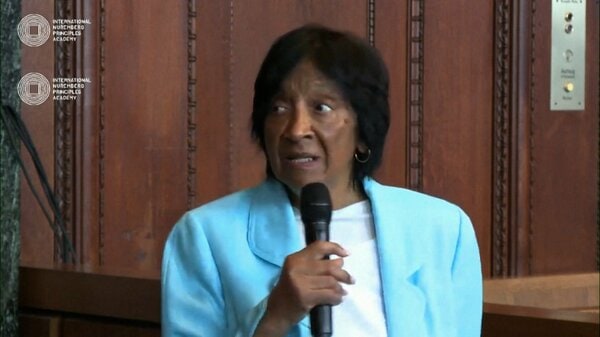
The Quietest Message of the 2026 Nobel Season
When the Norwegian Nobel Committee announced Navi Pillay as the 2026 Peace Prize laureate on October 9, the choice carried a weight that went far beyond the citation about her being “a hope for people who desire peace.” It was, in essence, a referendum on the idea that international law still means something — and a pointed answer to the growing chorus of populist leaders who have declared themselves above it.
Pillay, 85, was born in Durban under apartheid and spent her life building the architecture that could constrain the very people who now mock it. Her career is a map of post-war international justice: anti-apartheid lawyer, judge at the International Criminal Tribunal for Rwanda (ICTR), UN High Commissioner for Human Rights from 2008 to 2014, and a figure who has never flinched from confronting powerful states or powerful men. The committee did not pick her by accident. It picked her because her life’s work represents the exact institutional integrity that today’s most visible politicians are trying to dismantle.
A Career as Institution
To understand why this matters, you have to look past the headline and into the resume. Pillay was a child of the system apartheid tried to erase. She studied law when black South Africans were systematically excluded from it, practiced when it was dangerous to do so, and then moved — almost inevitably — into the international arena where the structures of accountability were being built from the ruins of colonialism and genocide.
Her time at the ICTR in the 1990s placed her at the heart of the first prosecutions for genocide since Nuremberg. The tribunal was imperfect, underfunded, and politically hamstrung, but it existed precisely because the international community decided, however hesitantly, that mass murder could not go unpunished. Pillay was part of that fragile experiment.
Then came the UN role. As High Commissioner for Human Rights, she confronted crises in Gaza, Myanmar, Darfur, and Sri Lanka. She was criticized by some as too soft and by others as too harsh — a near-impossible position for anyone holding that office. But she remained. She did not retire to write memoirs or sit on corporate boards. She stayed inside the machinery of international law and kept pushing.
This is the opposite of the performer-politician model that has dominated the West for two decades. Pillay’s power comes from institutions, precedent, and the slow accumulation of legal authority. It is not charisma, it is not followership, and it is not a brand.
The Trump Shadow
No analysis of this prize can ignore the elephant in the room: Donald Trump has, for years, treated the Nobel Peace Prize as a personal trophy he believes he has been unfairly denied. He has claimed credit for eight wars, told staff to deny him the prize if it came his way, and posted repeatedly about his own deservingness. The FNN coverage noted that Trump himself was this year’s loser in the prize he wanted — a detail the committee almost certainly considered, even if it was not stated outright.
Trump’s relationship with international institutions is openly hostile. He withdrew from the Iran nuclear deal, attacked the World Health Organization during a pandemic, threatened to leave NATO, and called the International Criminal Court a “failure.” His worldview treats law as a tool of weakness rather than a framework that constrains everyone equally — including those who claim to be above it.
Pillay is the antithesis of that worldview. She spent her career arguing that no one is above international law, that accountability is not a weapon but a duty, and that the institutions built after the Second World War — flawed as they are — are the only thing standing between civilization and the return of unchecked aggression. Awarding her the Peace Prize is the committee’s way of saying that the rules matter more than the rants.
What This Means for the ICC and Global Justice
The International Criminal Court has faced its own existential crisis in recent years. Several African nations have threatened to leave. The United States has refused to cooperate with its investigations into alleged war crimes. The court’s effectiveness depends on political will, and that will is eroding.
Pillay’s appointment as the Peace Prize laureate is not a direct endorsement of the ICC — the committee avoided naming her as a former ICC judge in the Japanese source text, which is itself a signal of careful calibration — but it is unmistakably sympathetic to the project the court represents. By honoring someone who helped build the very institutions the court now relies on, the committee is making a strategic statement: the legal architecture is under attack, and those who maintain it deserve recognition, not ridicule.
The timing is also noteworthy. With the war in Gaza, the continued conflict in Ukraine, and the ongoing crises in Sudan and Myanmar, the international legal order is being tested from every direction. Populist leaders in multiple countries are openly questioning the legitimacy of tribunals and treaties. Pillay’s win is a reminder that the alternative to international law is not freedom — it is impunity.
The Symbolism of an 85-Year-Old Woman from Durban
There is a deeper story here that deserves more attention. Pillay is an 85-year-old Black woman from South Africa, a country that spent decades fighting a racist regime before becoming the moral conscience of a continent. The Nobel Peace Prize has a complicated record on both race and geography. It has honored Western leaders more often than activists from the Global South. It has celebrated diplomats more often than courtroom fighters.
Pillay represents a correction. She is not a head of state negotiating a ceasefire. She is a lawyer who spent her career in hearing rooms, drafting opinions, and confronting governments with uncomfortable truths. Her recognition signals that the committee is willing to value institutional defenders over political dealmakers — a meaningful shift in an era when dealmakers are often the ones causing the damage.
The Longer View
Nobel Prizes are rarely about the present moment alone. They are about what the committee wants to encourage. By choosing Pillay, the committee is encouraging the next generation of international lawyers, human rights defenders, and legal scholars to stay in the fight even when the political winds are hostile. It is a signal that expertise, persistence, and commitment to process have value — even when the loudest voices in the world are mocking those very qualities.
The prize will not stop Trump from calling the Nobel committee names. It will not force the United States to cooperate with the ICC. It will not resolve the crisis in Gaza or Myanmar. But it does something important: it draws a line. It says that the people who build institutions matter, that the law matters, and that defiance of accountability is not a virtue but a failure of leadership.
In a year when populist anger has treated international law as a joke, Navi Pillay’s Nobel is the punchline aimed back at the jokesters.
The world may not be listening yet. But the record has been made.
Correction: An earlier version of this piece referred to Pillay’s role at the ICTR in imprecise terms. She served as a judge, not as a prosecutor or president, of the tribunal. The correction has been made. The conclusion remains unchanged.