Nepal floods expose the hidden cost of Korean overseas engineering
Nine Koreans are missing at a South Korean-run hydropower project after devastating floods in Nepal. The rescue has been hamstrung by terrain, weather, and restricted helicopter access — a warning about the risks of Korean infrastructure expansion into disaster-prone regions.
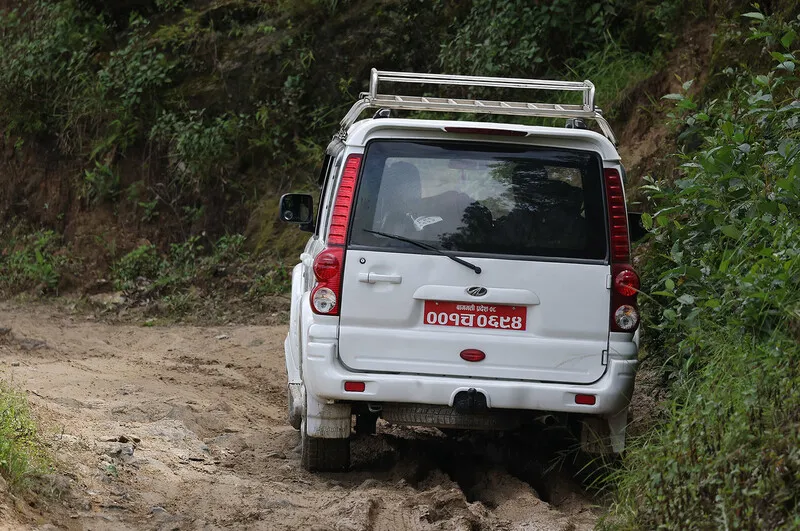
The road ended where the search had to begin
A government rapid-response team driving through flood-wrecked mountain roads in Nepal hit a dead end Wednesday morning. The highway was gone — washed out by monsoon rains that have been hammering the Himalayan nation for days. Nine rescue team members, including South Korea’s top fire and rescue official, got out of their vehicles and started walking.
They were heading toward Lamthe, a remote area near the Upper Trishuli-1 hydropower plant, where nine South Korean workers had lost contact after the floods. The terrain between them and the site is roughly 1.8 kilometers of rock, mud, and washed-out incline. Communication is spotty. Weather changes hourly. And the search is entirely on foot now.
This is what happens when a well-funded government rescue operation meets terrain that refuses to be negotiated with.
A project, not a headline
The plant is operated by Daesung Energyville, a major South Korean power company, with employees from Korea South-East Power Co. It sits in the Trishuli district of central Nepal, deep in mountainous territory that has become increasingly dangerous as monsoon seasons grow more violent. South Korea has invested heavily in Nepali hydropower over the past decade, viewing Nepal’s river systems as a promising export market for its engineering firms. These projects are sold as symbols of Korean technological prowess in developing markets.
But the human footprint of those investments is rarely discussed outside Seoul. Workers live in isolated camps. Roads are barely maintained. Emergency evacuation routes depend on weather windows that are growing shorter every year.
As of Wednesday, nine South Koreans remain missing. Nine others have been rescued and flown back to Korea, where they were cleared medically and reunited with families. One worker, the site manager, stayed behind to help coordinate the search. The government joint response team has set up a base camp near Lamthe and is conducting drone-assisted foot patrols.
The helicopter problem
One of the most telling details in the rescue effort is how constrained aerial operations have been. Nepal restricted helicopter flights for an extended period, citing security and airspace concerns. It took repeated diplomatic pressure before Kathmandu allowed two Korean-chartered helicopters to launch on Wednesday — one from Daesung Energyville at 11:05 a.m. local time, and another from the South Korean government team at 2:08 p.m.
This pattern is not new. Foreign rescue teams operating in Nepal have frequently encountered bureaucratic delays during disasters. The government initially resisted international involvement, then slowly opened the door as the scale of the crisis became undeniable. By the sixth day of the disaster, Nepal had begun requesting specific support from partner countries, including South Korea.
The delay matters. In mountain rescue, hours are not abstract — they are the difference between finding someone alive and recovering a body.
The numbers no one is talking about
While nine Koreans are missing, the broader death toll in Nepal is staggering and largely invisible to international audiences. At a military base in Bidur, where families have gathered waiting for news, a police officer showed a thick registration book of missing Nepalis. The last entry was numbered 2,474. That figure covers only reported cases. The actual number of displaced or uncontacted people in remote mountain villages is almost certainly higher.
Pasan Purba, 45, was scanning the missing persons list at the base for his 10 years younger brother. He said he checked the list shaking, relieved to see his name wasn’t on it yet, and unsure whether that was something to celebrate.
This is the second layer of the disaster. The international spotlight is on the nine Koreans because they are Korean. But the flooding has devastated communities across Nepal’s mid-hills, and the Nepali losses are being absorbed by local systems with far fewer resources than South Korea can mobilize.
What this means for Korean overseas investment
South Korea’s overseas engineering and construction sector generated billions of dollars in contracts in recent years, with South Asia — particularly Nepal, Bangladesh, and Sri Lanka — serving as key growth markets. Hydropower is one of the most prominent segments. The government has actively promoted these projects through diplomatic channels, development agencies, and trade missions.
But risk management for workers in these projects has not kept pace with the expansion. Most South Korean engineers and laborers in Nepal are on temporary contracts lasting months or years. They live in company-run compounds. When disasters strike, the burden of response falls on strained local infrastructure and ad hoc government coordination.
The Korean government dispatched a nine-member rapid-response team within days — a relatively fast deployment. But the team’s reliance on foot search and limited helicopter access reveals how thin the safety net really is. There is no permanent Korean rescue presence in Nepal. No pre-positioned equipment. No standing evacuation agreement with the Nepali military that doesn’t require case-by-case negotiation.
The road ahead
The search for the nine missing Koreans will continue on foot if the roads remain impassable. Weather is the variable no one can control. Monsoon conditions in the Himalayas can shift from clear to catastrophic in a matter of hours, and this year’s rainfall has been unusually intense across the region.
What is clear is that South Korea’s appetite for overseas engineering projects will not slow down. The economic incentives are too strong, and the diplomatic relationships too well-established. But the assumptions behind those projects — that workers can be protected, that emergencies can be managed, that remote sites are accessible — are being tested by climate change in ways that the industry has not fully reckoned with.
Nine South Koreans are still missing in Nepal. Their families are waiting. The road to find them is broken, and the helicopters came late. The next monsoon season is months away, and the projects remain.