Nintendo's Zelda 40th Anniversary Direct Signals Confidence
Nintendo's Zelda 40th Anniversary Direct isn't just a nostalgia play—it's a strategic statement about franchise longevity in an era of short attention spans and mobile-first competition.
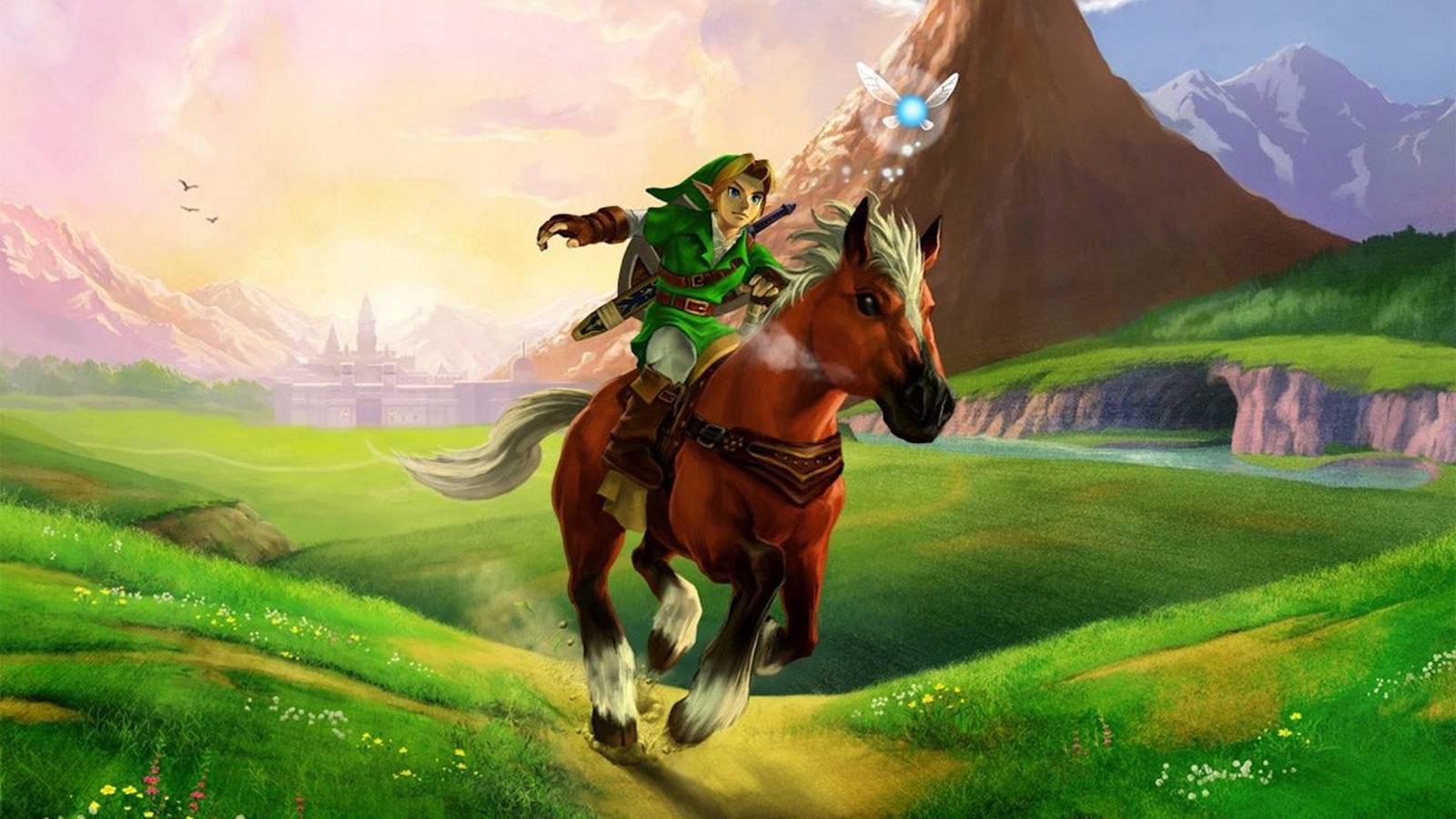
The Long Game in Short Attention Spans
Nintendo’s September 8 Zelda 40th Anniversary Direct arrives at a moment when the gaming industry is increasingly fractured between two opposing philosophies: the endless churn of live-service mobile titles and the deliberate pacing of legacy franchises. While competitors chase quarterly engagement metrics and microtransaction optimization, Nintendo is celebrating four decades of a single intellectual property—one that launched on an 8-bit console with limited memory and still commands global attention in 2026.
This isn’t accidental. It’s architecture.
Nintendo built the original Legend of Zelda around exploration rather than instruction. There were no quest markers, no difficulty settings, no hand-holding. Players navigated a world that assumed competence, and the franchise has carried that DNA through forty years of entries. The result is a body of work that rewards repeated engagement not because of engagement-loop design but because the worlds are internally consistent and generous. That philosophical commitment compounds differently than the compounding interest of daily active users.
What’s Expected, and What It Actually Means
The leaked expectations tell a story of calculated reveals. Ocarina of Time’s Switch 2 remake is considered a lock, with a release window promised within months. The live-action film trailer will likely open the stream, following the proven playbook that turned Super Mario Bros. Movie into a $1.3 billion theatrical event. A Zelda-themed Switch 2 console—already the subject of plausible leaks featuring custom Joy-Cons and Triforce branding—would serve dual purposes: revenue generation during a period when new hardware typically sees reduced margins, and brand reinforcement for a franchise that transcends the hardware itself.
But the most strategically interesting development concerns Grezzo’s Project Bernard, rumored to star Ganondorf as a playable protagonist. If confirmed, this represents something rare in AAA gaming: a major franchise entry that begins from an antagonist’s perspective rather than the heroic tradition. It’s a risk that only a company with forty years of player investment could afford to take.
What makes Project Bernard noteworthy extends beyond narrative novelty. If Ganondorf becomes a playable lead, Nintendo would be testing whether franchise equity can sustain a title that fundamentally recontextualizes the series’ mythology. That test carries second-order implications. A successful Ganondorf-centric game could open a playbook for other Nintendo franchises to explore villain perspectives—the Metroid series imagining a Space Pirate campaign, or even a Kirby title where Dedede or Star Dream takes protagonistic focus. The experiment, however, could also reveal the boundaries of player empathy within beloved worlds. Players invest emotionally in Zelda and Link; asking them to inhabit Ganondorf requires a level of narrative trust that not every franchise can command.
The Switch 2 Zelda edition, meanwhile, represents a hardware strategy worth examining. Limited-edition consoles have historically served as both revenue accelerators and cultural signals. When Nintendo released the Animal Crossing Happy Home Designer edition or the Splatoon 2 splatfest bundle, those products did more than move units—they demonstrated that specific IPs could drive hardware conversations independent of graphical specifications. A Zelda-themed Switch 2 reinforces that the franchise operates as a platform in its own right, one that can attract buyers who may never have engaged deeply with Nintendo hardware previously.
The Nostalgia Economy vs. The Attention Economy
Mobile-first competitors operate on what might be called the attention economy—games designed for sessions measured in minutes, monetized through constant interruption and optimization for dopamine feedback loops. These models generate spectacular quarterly revenue but face structural limitations: player retention decays predictably, competitive landscapes shift with each title launch, and brand loyalty remains transactional rather than emotional.
Zelda’s longevity operates on an entirely different economic model. Players don’t return to Hyrule because the mechanics are polished for retention optimization. They return because the world exists independently of their engagement—a persistent, coherent universe that rewards exploration, patience, and emotional investment. The franchise generates revenue through scarcity (new entries every three to five years) rather than through continuous engagement metrics. This creates different financial rhythms but potentially more durable commercial foundations.
The psychological underpinning of this model deserves attention. Nostalgia research in consumer behavior demonstrates that sentimental longing functions as a stabilizing force during periods of cultural uncertainty. The past decade has seen unprecedented disruption across entertainment, social interaction, and technology. Games that evoke specific temporal anchors—Ocarina of Time’s Nintendo 64 aesthetic, Majora’s Mask’s anxious atmosphere, Breath of the Wild’s post-collapse freedom—tap into emotional infrastructure that no amount of algorithmic optimization can replicate. Players aren’t merely consuming content; they’re revisiting emotional states associated with formative experiences.
This distinction matters for understanding why the Zelda Direct generates speculation comparable to product launches from Apple or Tesla. The event functions as a cultural gathering point, not simply a marketing channel. Communities form around speculation, analysis, and shared anticipation in ways that live-service title updates rarely inspire. The direct format itself—Nintendo’s controlled broadcast presentation—reinforces this by treating the audience as participants in a shared celebration rather than targets of promotion.
The Switch 2’s hardware roadmap reinforces this approach. Nintendo has historically avoided the feature arms race that defines Sony and Microsoft’s console cycles, instead focusing on accessibility, novelty in input methods, and software-driven differentiation. The rumored Zelda edition suggests Nintendo understands that special hardware editions serve a specific market segment—collectors, fans, and casual players attracted by brand identity—without requiring permanent architectural changes.
Who Wins, Who Loses
Nintendo wins regardless of direct content. The mere fact that a 40th anniversary celebration generates this level of global speculation demonstrates franchise equity that no live-service competitor has accumulated. The Zelda Direct positions the company to announce the Ocarina remake at peak cultural moment, potentially driving Switch 2 hardware sales through software demand—the exact pattern that established Nintendo’s modern business model.
Competitors in the mobile and live-service space lose indirectly. Each announcement that reinforces Zelda’s cultural relevance represents a counter-narrative to the assumption that gaming’s future lies in perpetual service models. When a game released in 1998 still generates blockbuster media adaptations and hardware partnerships in 2026, it suggests that some entertainment values transcend technical capability and market timing.
Grezzo, if Project Bernard materializes, gains something rare for a third-party developer working on a first-party franchise: the opportunity to redefine a beloved character’s narrative role while benefiting from Nintendo’s distribution power and marketing machinery. But the studio also absorbs reputational risk. If the project fails to resonate, the backlash could extend beyond Grezzo’s general portfolio and touch Nintendo’s willingness to license third-party developers for flagship entries. The success or failure of Project Bernard may influence how freely Nintendo delegitimizes creative risk within its ecosystem going forward.
Sony and Microsoft face a different calculus. Both companies have invested heavily in live-service ambitions and exclusive narrative franchises built on sequels and remasters. A Zelda Direct that reaffirms the commercial and cultural viability of legacy IP without live-service trappings underscores the strategic gamble that both competitors have made. Neither has a property approaching forty years of continuous evolution, and neither has built a franchise identity that functions as effectively outside its primary hardware ecosystem.
The Bigger Picture
The 40th Anniversary Direct functions as more than a marketing event. It represents Nintendo’s strategic confidence that legacy franchises remain commercially viable in an era dominated by algorithm-driven content discovery and shortened attention spans. Whether through Ocarina’s visual overhaul, Twilight Princess’s anticipated Switch arrival, or Grezzo’s ambitious Ganondorf project, the company demonstrates that depth and continuity can coexist with innovation.
The event also signals Nintendo’s understanding of its own historical position. By foregrounding forty years of output rather than a single contemporary release, the company frames the Zelda franchise as a cumulative asset—something larger than any individual entry. This framing matters for investor relations, partner negotiations, and internal development priorities. It communicates that Nintendo’s strategy isn’t built on capturing the moment but on accumulating value across decades.
The indirect effects of this confidence may prove most significant. When a major publisher validates long-form franchise development over continuous engagement models, it creates space for other studios to pursue similar strategies without facing immediate pressure from shareholders optimized for quarterly returns. The industry could see a gradual recalibration of what constitutes sustainable development practices, particularly for mid-tier studios that have historically struggled between AA ambition and live-service obligation.
The question isn’t whether Zelda will survive another decade. It’s whether the industry will ever again produce intellectual properties with this kind of cultural staying power—or whether the attention economy’s structural incentives make such longevity impossible to replicate. The Zelda 40th Anniversary Direct won’t answer that question definitively, but it will offer compelling evidence that some games build worlds worth returning to, not because they were designed to hold attention, but because they were designed to be inhabited.