OpenAI Solved a Millennium Problem in 88 Hours. Math May Never Be the Same.
OpenAI claims its undisclosed model resolved the Navier-Stokes existence and smoothness problem in just 88 hours — the second Clay Mathematics Institute millennium prize conquered, and the first by a machine. The math world is split between euphoria and alarm.
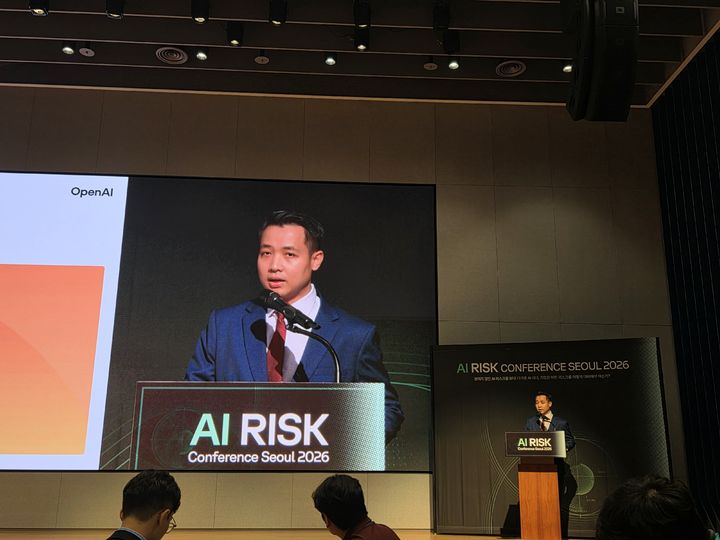
The clock hit 88 hours. The math world stopped breathing.
OpenAI announced on September 8 that an undisclosed internal model had solved one of the seven Clay Mathematics Institute Millennium Prize Problems — the Navier-Stokes existence and smoothness problem — in what the company called just over three days. The proof and its verification ran 165 pages long. It consumed roughly 130 billion tokens across a swarm of about 10,000 AI agents. The cost, unlisted but plausibly measured in millions of dollars given the electricity requirements for specialized inference chips, was left to the imagination.
Two details alone make this extraordinary. First, the Navier-Stokes problem is not a puzzle with a neat trick hidden inside. It asks whether smooth solutions always exist for the equations governing fluid motion — equations that describe everything from weather systems to blood flow. A proof would confirm or deny that, under any initial condition, a fluid never spontaneously develops infinite velocity. No human has settled it since John Clay II endowed the challenge in 2000.
Second, and far more disruptive, is how it was settled. This is not the result of a lone mathematician working at a chalkboard for two decades. It is the output of a system designed to scale, parallelize, and iterate at machine speed.
The Poincaré conjecture — the only other millennium problem resolved to date — fell in 2003 to Grigori Perelman, a reclusive Russian mathematician who essentially worked alone, building on decades of prior geometric analysis. Perelman’s proof still required human peer validation over years. The AI-generated Navier-Stokes proof is being offered first and verified second, compressed into days rather than decades. The order of operations has flipped.
Who wins, who loses
The immediate winner is whoever controls the compute. OpenAI is advertising an undisclosed model that ran 10,000 agents in parallel for 88 hours. That infrastructure is expensive and concentrated. If this result holds — and the crucial word is if — the gap between institutions that can afford this kind of brute-force mathematical search and everyone else widens dramatically. Universities without access to similar hardware will be chasing proofs generated by well-funded labs. The economics of discovery shift.
The secondary winner is anyone who benefits from faster progress in applied mathematics. The Navier-Stokes equations are the backbone of computational fluid dynamics. A rigorous proof of global regularity, or its negation, would reshape turbulence modeling, climate simulation, aerodynamics design, and countless engineering domains. Even an imperfect path toward the answer could accelerate practical work by years.
The loser is harder to name because it is abstract: the slow, deliberate, human texture of mathematical understanding. Terence Tao, widely considered the greatest living mathematician and based at UCLA, has warned publicly that AI could erode human comprehension of the very problems it solves. In Tao’s framing, millennium problems function as lighthouses — they concentrate effort, attract talent, and produce insight that outlasts the original question. If machines can solve them without humans following the same intellectual path, the lighthouse still shines, but fewer people learn to navigate by it.
The peer-review gauntlet nobody skips
This is where the story moves from announcement to adjudication. The mathematical community does not accept results on blog posts. The 165-page proof must survive the same scrutiny Perelman’s manuscript endured — a process that took years and nearly collapsed when the claim appeared incomplete. Reviewers will check every step, especially any that depend on the AI’s intermediate reasoning traces rather than on cleanly stated lemmas.
A significant obstacle: the proof was generated by a system trained partly on Lean, a theorem-proving language originally designed as a tool for human mathematicians. Lean forces every logical inference to be explicit. That sounds ideal for verification, but it also means the AI must translate intuitive leaps into mechanically checkable form. If the 165-page document contains gaps disguised as routine steps — a known vulnerability in prior AI-generated proofs — the result fails immediately. If it passes, it will stand as the first millennium problem solved primarily by an algorithmic process.
The Anthropic race that reframes everything
Even more telling than the proof itself is the timing. The day before OpenAI’s announcement, Tristan Buckmaster, a NYU mathematician who previously posted on social media that he was collaborating with a researcher at Anthropic on a similar problem, revealed his parallel effort. OpenAI’s own blog post acknowledged the competing work and admitted the company decided to concentrate its resources after learning about it — while claiming it had not examined Anthropic’s approach.
That admission is loaded. It implies two well-resourced labs were simultaneously closing in on the same open problem, each treating it as a competitive sprint rather than a shared inquiry. Neither cited the other until compelled. The narrative that emerges is not of math as collaboration but of math as arms race, with compute as ammunition.
Why this matters beyond the problem set
The Navier-Stokes claim sits inside a broader pattern. Earlier this year, OpenAI and the startup Harmonic announced an AI solution to one of Paul Erdős’s longstanding combinatorial problems. That result was narrower. Navier-Stokes is orders of magnitude harder and carries a million-dollar prize attached to its name. The jump in ambition is intentional.
What this signals is a timeline revision. A decade ago, the consensus among most mathematicians was that AI might assist with conjecture generation or small proofs, but tackle a millennium problem? Impossible. Last year, that consensus shifted to “unlikely but possible.” Today, after 88 hours of wall-clock time, it may need to shift again to “we should have expected this eventually.”
The uncomfortable corollary is that the barrier to entry for proof discovery is no longer deep domain expertise but access to large-scale systems. A capable graduate student with a chalkboard once had a fighting chance against a millennium problem. Now the bar includes compute budgets that no single university department can match. The democratizing fantasy of AI — that it levels the playing field — turns out to be selective. It levels the field for organizations, not individuals.
The safety dimension nobody is quiet about
The AI safety community, which has spent years warning about capability escalation outpacing alignment, now faces a sharper question: if a model can solve a millennium problem, what else can it do before we ask it to? The risk is not that the Navier-Stokes proof is wrong — though it very well might be — but that the precedent normalizes deploying increasingly capable systems on problems whose outputs we cannot fully audit.
Tao’s concern about degraded human understanding is one strain of that anxiety. Another is simpler: we may start treating AI-generated proofs as authoritative too quickly, skipping verification because the alternative — spending years on a problem ourselves — feels unsustainable when a lab can ship an answer in days. The incentive structure rewards speed over depth.
What happens next
If peer review validates the proof, OpenAI’s claim becomes history. The millennium prize committee will announce a formal evaluation. The million-dollar prize becomes real. Mathematics changes its relationship with machines permanently.
If the proof fails — and failures are common in early AI-generated mathematics — the episode still matters. It proves the attempt was viable. It establishes a baseline: 88 hours, 10,000 agents, 130 billion tokens, 165 pages. Future systems will use that as a benchmark. The trajectory is visible now regardless of outcome.
What English-language audiences outside Korea may miss is how urgently this story landed in a market that does not typically lead global AI news cycles. The fact that Newsis broke it first, ahead of coverage in major U.S. outlets, underscores how interconnected and fast-moving these developments are. The competition is global. The implications are not bounded by any single country’s research community.
The clock started ticking eight decades ago. It just ran faster this time.