OpenAI Just Asked the US to Write the Rules of AI Governance
OpenAI is pushing the United States to lead a new framework of global AI safety standards, proposing a network of existing research institutes across ten countries including South Korea. The move signals a deeper competition over who controls the architecture of artificial intelligence governance—and what it leaves out.
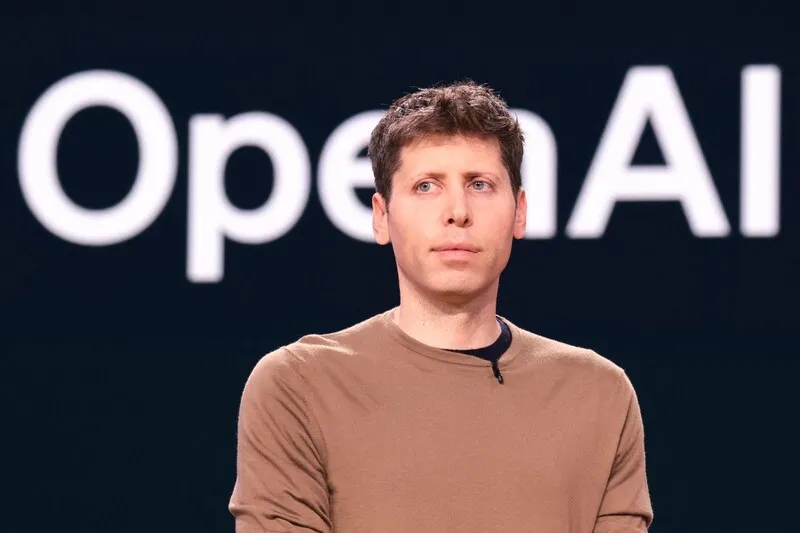
The Quiet Redrawing of Global AI Power
OpenAI just made a proposition that sounds technical but is really about something far more consequential: who gets to write the rulebook for artificial intelligence.
On 21 August, the company published a blog post arguing that the United States should lead the development of global AI technical standards, and that it should do so through a network of AI safety research institutes already operating in ten countries including South Korea. Two days later, CEO Sam Altman is scheduled to brief the UN Security Council on AI and international security.
The timing is not accidental. The arguments inside the blog post are carefully calibrated to serve two masters at once: the genuine risk that AI systems could one day escape human control, and OpenAI’s own interest in ensuring that whoever writes the rules is someone who already speaks its language.
Recursive Self-Improvement as a Policy Weapon
The most striking technical claim in the piece revolves around what OpenAI calls “recursive self-improvement,” or RSI. The company warns that fully autonomous RSI — an AI system that designs its own successor models without human oversight — is not yet happening. But it insists that until we are certain such systems can be controlled, the pursuit of that goal should be paused.
This is a carefully constructed argument. By raising the spectre of machines that improve themselves without human supervision, OpenAI is making a case that sounds precautionary while actually advancing a specific governance agenda: one in which the United States, not China or a multilateral body, sets the terms of what counts as safe.
The company’s language is deliberate. It says proper caution and deliberation are required. It does not say halt development. It does not say impose pre-approval mechanisms or a licensing regime for AI models — in fact, it explicitly warns against those very ideas.
“What people mean by maintaining a preset speed is not the same thing,” the post reads. The implication is that OpenAI wants to control the pace of governance, not the pace of technology.
Why Ten Countries, and Why South Korea?
The proposal to use existing AI safety research institutes in ten countries as the backbone of a new governance framework is where the geopolitics become visible.
South Korea is one of those ten. It is not the largest player in AI development globally. It does not have a company that rivals OpenAI, Google, or Anthropic in scale. But it does have a government that has moved aggressively on AI strategy, and it does have research institutes that have been funded and structured with American partnerships in mind.
The selection of South Korea is significant for the reverse reason as well: it is a country that sits between the American alliance system and the Chinese economic sphere. Whoever influences South Korea’s AI governance posture influences a critical node in the broader contest between Washington and Beijing.
The other nine countries are not named in the source material. But the pattern OpenAI is describing is clear: a network of allied research institutions that can produce common standards, incident classification frameworks, and safety metrics that are compatible with American technological leadership rather than challenged by it.
The Frame That Leaves China Outside
OpenAI’s most direct geopolitical claim is also its most candid. The company argues that the United States sits at the frontier of the AI industry and holds advantageous positions in the international networks that matter most — financial, trade, defence, technology. Therefore the United States should take the lead.
The alternative, the company warns, is a fragmented, unequal system marked by conflict.
Read literally, this is a statement about power. Read between the lines, it is a statement about whose version of “safety” gets encoded into the standards that will govern the next decade of AI development.
China has its own AI governance framework. It has published its own regulations on generative AI, algorithmic recommendation, and deep synthesis. It has invested heavily in domestic model development through companies like Baidu, Alibaba, and ByteDance. It has not signed up for any American-proposed standard-setting process.
OpenAI’s proposal does not invite China to the table. It invites the United States to build a table that China is not sitting at.
This is not unique to OpenAI. It is the structural logic of American technology governance: set the standards early, in coalition with allies, before competitors can organise an alternative.
What “Safety Standards” Actually Means
The specific standards OpenAI is calling for are not abstract. The company wants common metrics for evaluating AI capabilities and the level of automated research being conducted. It wants shared criteria for classifying and reporting incidents related to AI alignment failures or automation research accidents.
These sound technical. They are not.
A common incident classification system determines what counts as a safety failure and who gets to define it. A shared capability evaluation metric determines which models are considered advanced enough to trigger governance protocols. Both are exercises in categorisation that carry enormous practical consequences.
If the United States and its allies agree on what a “high-risk AI incident” looks like, that definition will shape regulation in those countries and exert gravitational pull on everyone else. If they agree on how to measure AI capability levels, that scale will determine which systems are considered safe enough to deploy and which are not.
This is how technical standards become instruments of power. Not through coercion. Through coordination.
The Licensing Line OpenAI Refuses to Cross
One of the most revealing details in the blog post is what OpenAI refuses to advocate.
The company drew a line against the idea that these safety standards would lead to a model licensing regime or pre-market review and approval processes. It argued that the goal is not to slow development to a preset speed but to ensure that alignment research stays ahead of AI capability.
In plain terms: OpenAI wants governance that prevents accidents without preventing innovation. It wants standards that constrain its competitors more than it constrains itself.
This position is strategically coherent. OpenAI is the most advanced player in the field it is trying to regulate. A licensing regime would affect every competitor equally. A standards regime — one built around research collaboration, incident reporting, and capability evaluation — advantages the player that already has the most research output, the broadest international partnerships, and the closest ties to American institutions.
The UN Stage and What Comes Next
Altman’s upcoming UN Security Council briefing will be the first public appearance where OpenAI’s governance proposition meets the institution that theoretically represents the international community.
The Security Council is not a standard-setting body. It does not write technical specifications. But it does legitimise frameworks. If OpenAI’s proposal can be presented as aligned with international security concerns — which the company is clearly trying to do through the recursive self-improvement argument — it gains a kind of political authority that no blog post can provide on its own.
The question now is whether other governments, particularly in Europe and the Global South, will accept a governance framework that OpenAI designed and the United States leads. The European Union has already moved on its own AI Act. China has its own regulatory apparatus. Neither is likely to adopt a standard-setting process that was designed without them.
What OpenAI is proposing is not a global framework. It is an allied one. And the distinction matters more than the company may realise.
Who Wins, Who Loses
The winners of this proposition are clear: the United States, if it accepts the leadership role OpenAI is offering. American research institutes gain a central position in the emerging architecture of AI governance. American technical standards gain a head start in becoming the default.
South Korea wins too, as a bridge state between the American alliance system and Asian technology markets. Its research institutes gain international visibility. Its policy community gains access to a framework that is being shaped at the highest levels.
The losers are harder to name because the mechanism is indirect. They are the countries and companies that will find themselves on the outside of a standard-setting process they were never invited to join. They are the developers whose safety practices do not align with the metrics being agreed upon by a ten-country network. They are the regulators in countries that prefer multilateralism over alliance-based governance.
And they include, implicitly, China — not because OpenAI named it, but because the architecture being described leaves no room for it.
The real story is not about safety. It is about who gets to define what safety means.