The Pentagon Admits What Trump Denies: Munitions Shortage From Iran War
The Pentagon inspector general's first report on the Iran war confirms munitions depletion and supply chain bottlenecks — directly contradicting White House claims of unlimited stockpiles. The finding reshapes the conversation around US strategic readiness and defense industrial capacity.
The Numbers the White House Doesn’t Want You to See
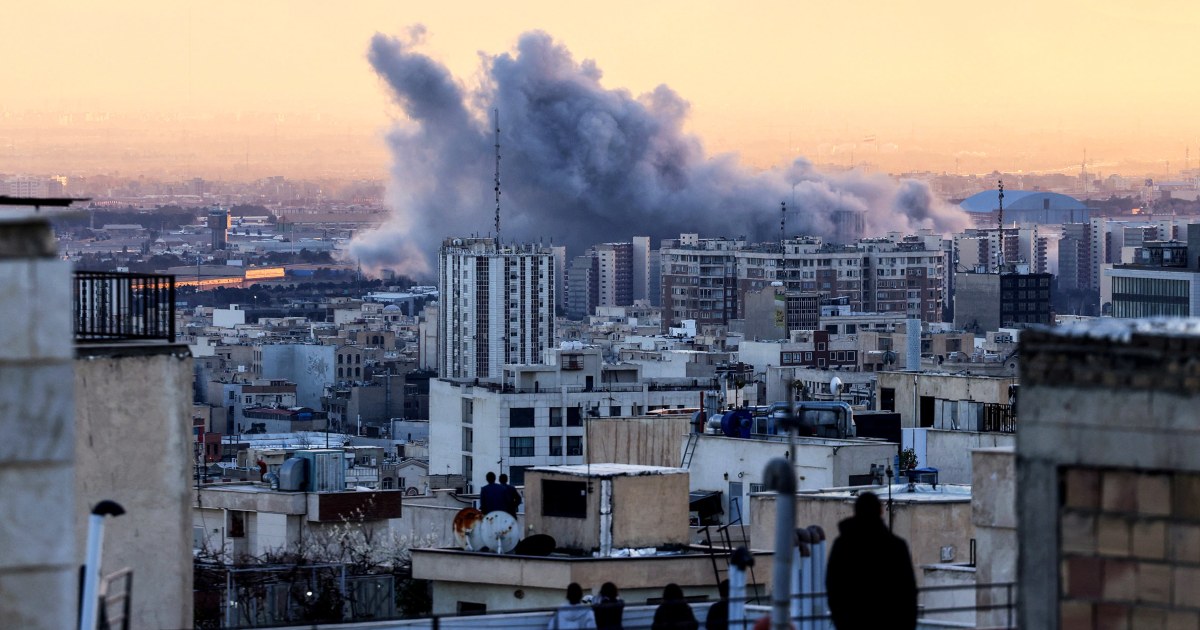
The Pentagon inspector general released its first formal assessment of the Iran war on Monday, and it tells a story that directly contradicts the administration’s public narrative. The report, covering February 28 through June 30, confirms that U.S. munitions are depleted, supply chains are bottlenecked, and the war has already cost roughly $33.4 billion — with most of that going toward expended ammunition alone.
Defense Secretary Pete Hegseth denied reports of a munitions shortfall. President Trump called ammunition supplies “virtually unlimited” just two weeks ago and claimed on Truth Social that the U.S. is “producing more Exquisite and Elite Weapons than at any time in our History.” The IG report suggests otherwise.
This is not a minor accounting dispute. The gap between what the White House tells the public and what the Pentagon’s own watchdog found matters for three reasons: it affects how seriously allies take U.S. deterrence commitments, it shapes congressional funding decisions for the defense industrial base, and it reveals the true scale of a military campaign Trump repeatedly promised would be short and cheap.
What Actually Got Used Up
The report catalogs losses that go well beyond spent munitions. At least 30 large U.S. drones were destroyed over the first four months. Four F-15E fighters, an F-35A, and an A-10 Warthog were destroyed or extensively damaged. Twelve KC-135 refueling tankers and nine other aircraft were lost. Iran targeted the U.S. Navy’s main logistics hub in Bahrain with drones and ballistic missiles — a blow to a facility designed to be the regional backbone of American power projection.
The State Department sustained more than $208 million in damages across Iraq, Kuwait, Saudi Arabia, and the UAE, including $184 million in damage to diplomatic facilities. More than 20,000 military and diplomatic personnel were displaced from the region at the war’s outset.
Perhaps most revealing: medical evaluations of injured U.S. forces were often conducted on the ground by local ambulances because airlift capabilities had been redirected. Troops were flown to local treatment facilities instead of receiving organized military medical evacuation. That is not how a superpower typically operates in a combat zone.
The Cost Gap That Matters
The $33.4 billion figure in the IG report is the lowest estimate on the table. NBC News reported in July that internal estimates place the total war cost between $80 billion and $100 billion. The Pentagon’s own public figure of $37.5 billion, released the same month, explicitly excluded aircraft replacement, base repairs, and munitions replenishment — the very categories that define long-term readiness.
This pattern of selective accounting is the real story. When an administration claims a conflict will last only weeks and then extends it past midterm elections while obscuring the true cost, the problem isn’t just dishonesty. It’s that Congress and the public cannot make informed decisions about a war whose expenses are being managed downward rather than reported honestly.
Trump initially said the war would last only weeks. Over the weekend, he suggested it might not end until right after November’s midterm elections — or perhaps before. The munitions report arrives at a moment when the administration needs to justify a longer conflict to a public that has been told repeatedly it was nearly over.
The China Problem in Plain Sight
The munitions shortfall is not just a Middle East problem. It is a China problem dressed in Middle Eastern uniform. The Pentagon has spent years warning that the U.S. defense industrial base cannot sustain a high-intensity conflict against a peer adversary — and now it has been proven in a lower-intensity fight against Iran.
China’s defense manufacturing capacity has expanded dramatically in recent years. Its shipbuilding output alone now dwarfs America’s. If the U.S. enters a conflict with Iran and burns through critical munitions, supply chains, and drone fleets within four months, the calculus changes completely when facing an adversary with a larger industrial base and no such constraints.
The IG report notes the Pentagon is “working to streamline procurement processes and production lead times, and to stockpile critical materials, components, and selected munitions to respond rapidly to a contingency.” That language — contingency, not conflict — is telling. The Pentagon is treating this as a temporary disruption rather than a structural failure.
Allies Flew the Plane While Washington Complained
One of the most striking details in the report: U.S. forces flew as many as 5,000 missions from European bases in support of the war. Trump has bitterly complained that European allies have not done enough. The numbers suggest otherwise — Europe is keeping American operations airborne while Washington debates who contributed what.
This dynamic will not resolve itself. If the U.S. cannot fight a sustained campaign without European logistical support, and if European partners hear the president publicly disparaging their contributions, the willingness of those same partners to provide that support erodes. Deterrence depends on credibility. Alliances depend on reciprocity. Both are being tested right now.
What Happens Next
The report does not address what was likely a U.S. strike on an elementary school in Iran during the initial hours of the conflict. The military has not released its internal investigation into the bombing. It also does not cover troop morale, though NBC News reported in recent weeks that conditions aboard the USS Abraham Lincoln had deteriorated to the point where the Pentagon announced it would replace the carrier.
The munitions shortage is the most consequential finding precisely because it is actionable. Shortages can be fixed with funding, policy changes, and time. But the time horizon matters. If the war continues through the midterms or beyond — as Trump’s own comments now suggest — the pressure on an already strained defense industrial base intensifies. Every additional day of conflict consumes more munitions, more aircraft, more readiness.
The White House will likely continue to insist supplies are adequate. The IG has now put its judgment on record. Congressional oversight committees will scrutinize the $33.4 billion figure and the $80–100 billion internal estimates. Defense contractors will feel the demand signal. And somewhere in the accounting, the question that matters most remains unanswered: how much more can the U.S. military give away before it has nothing left for the next fight?