POSCO's Argentina Lithium Bet: Korea's Lone Play in a State-Backed Scramble
POSCO is turning Argentina's high-altitude brine into cash — 70 tons a day, quarterly profits, and a 34% margin outlook. But Korea's lone champion faces Chinese and Japanese coalitions armed with sovereign capital.
The number that changes everything
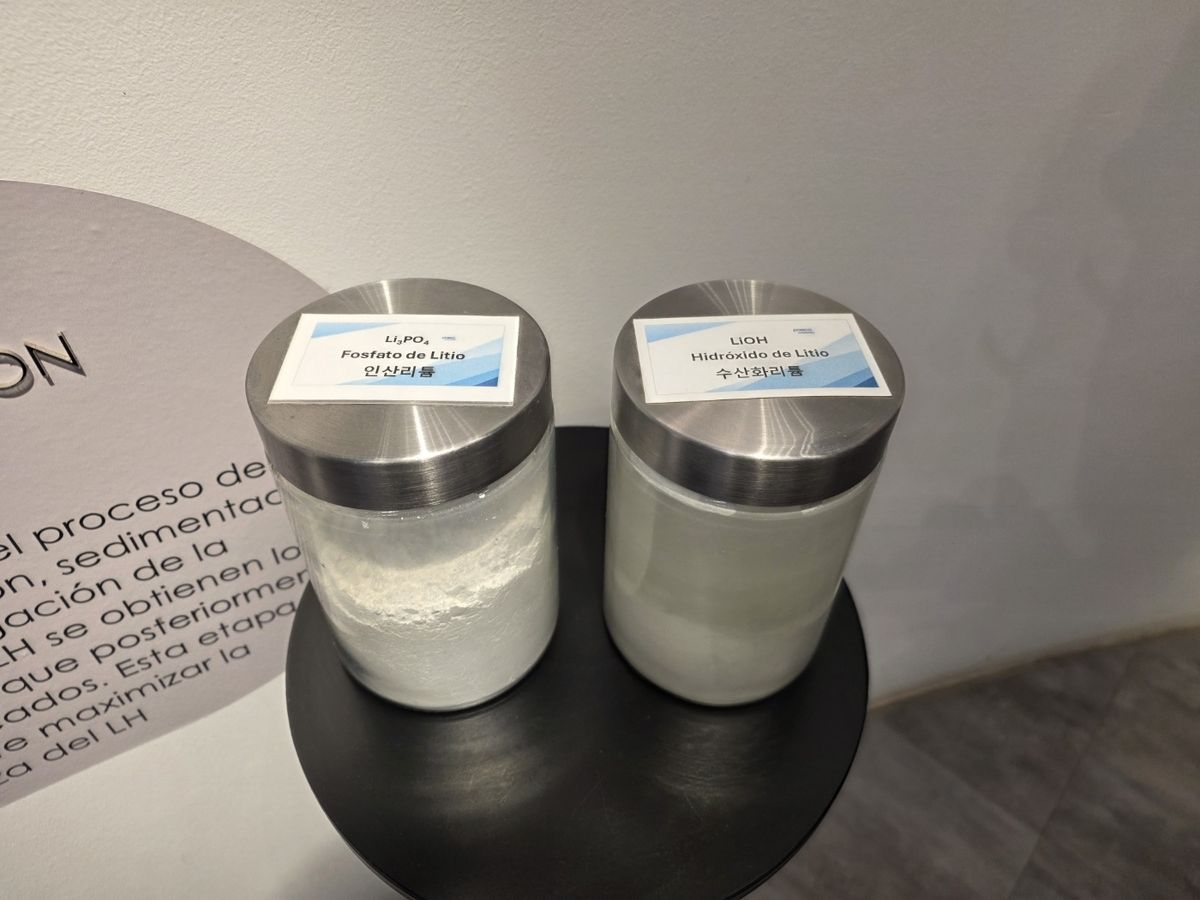
At 4,000 meters above sea level in Argentina’s Salta province, POSCO is pulling lithium-rich brine from salt flats that sit above the clouds. That brine travels 3,200 meters down the mountain to an 800-meter processing plant where it becomes lithium hydroxide — and that descent is where the economics live.
POSCO’s Argentine operation is now producing a minimum of 70 tons of lithium product per day from its first plant alone, generating over 2 billion won daily in revenue at current spot prices near $18,500 per ton. The company posted a quarterly profit in 2026 — a milestone for a project that once looked like a expensive gamble. Next year’s operating margin is projected at 34 percent, buoyed by Argentina’s RIGI investment incentive program, which grants tax breaks for strategic-resource development.
This is not a small thing. It is, however, a lonely thing.
One Korean company against two empires
What POSCO is doing technically — and it is doing it well — is only half the story. The other half is who is standing next to it.
Chinese firms, backed by Beijing’s resource security strategy and state lenders, have poured capital into Argentina’s lithium triangle for years. Ganfeng Lithium operates its Cauchari-Olaroz joint venture there. CATL has investments in multiple projects. Chinese offtake agreements with Argentine producers lock in supply for Beijing’s battery giants at favorable terms.
Japan is moving similarly through coalition structures. Sumitomo, Mitsubishi, and Nissan have coordinated investments in Salta projects, pooling risk and sharecropping access to the same salt flats POSCO draws from.
Korea has POSCO — and POSCO, for all its industrial heft, is a single company without the sovereign treasury behind it. When the Argentine government renegotiates export taxes, or when Beijing freezes supply, or when a Japanese partner pulls in a state guarantee for a rival project, there is no Seoul equivalent to fall back on.
POSCO’s own president, Park Hyun, put it plainly in a local press briefing: the company is no longer buying concentrate and processing it. It owns the brine. It controls the feedstock. “Our potential is clear,” he said, emphasizing that direct brine operations lower cost pressure compared to the spot-market concentrate model.
That advantage is real. But it is not immune to the geopolitics of extraction.
The numbers that matter
POSCO’s 17,000-ton production target for 2026 is just the beginning. The second plant, currently in commissioning, will come online in October and bring total nameplate capacity to 50,000 tons annually. The company has publicly laid out a path to 100,000 tons by 2033, adding two more 25,000-ton plants.
On the resource side, POSCO’s holdings reached 15 million tons of lithium content in April after acquiring the Ombré Muerto North concession. The total brine surface area — 287 square kilometers, roughly half the size of Seoul’s Yangcheon district — could theoretically sustain 100,000 tons of annual production for 42 years. That is a massive, long-dated asset.
Revenue stability is being locked in through offtake. A contract with SK On, signed in February, commits up to 25,000 tons by 2028. Seventy percent of projected output is already under fixed-price or committed-volume agreements. The remaining thirty percent is being parked for emerging buyers — mid-tier automakers and energy storage system operators who cannot secure supply from Chinese-integrated chains.
That portfolio diversification strategy is smart in a tightening market. It is also a signal that POSCO knows it cannot rely on a single customer the way CATL relies on its captive demand.
Who wins, who loses
The winners in this sequence are clear: POSCO, which has converted a remote high-altitude brine operation into a cash-generating asset; SK On, which secured a multi-year supply deal before the market tightened further; and Argentina, which is finally seeing meaningful value capture from resources it has sitting in for decades.
The losers are harder to name because they are not losing yet — they are merely behind. Chinese battery makers who expected to secure Argentine lithium through price leverage now face a Korean operator that does not need to sell at distressed prices. Japanese coalitions that counted on shared infrastructure deals finding first-mover advantage are competing with a single entity that moved faster and cheaper.
The more consequential loss may be structural. If Korea cannot replicate this model — a profitable, sovereign-backed-or-not critical minerals operation — in another resource race, the question is not whether POSCO will fail, but whether Korea will be absent from the next one.
China does not send companies to secure resources. It sends state-directed institutions with implicit guarantees. Japan coordinates its trading houses like a federation. Korea sends a steelmaker that happens to understand batteries.
That is not a criticism of POSCO. It is an observation about the architecture of competition.
What happens next
The immediate bet is on the second plant hitting full rate by October and the margin story holding as lithium prices stabilize. The medium bet is on POSCO’s 100,000-ton-by-2033 roadmap surviving Argentine fiscal swings — the country has a history of suddenly taxing resource exports when currencies weaken.
The longer bet is whether a Korean company operating without sovereign capital can maintain competitive positioning against coalitions that treat lithium access as national security strategy rather than commodity trading.
POSCO is proving it can win the technical game. The question that will define this investment over the next decade is whether it can win the political one.