A Pre-Midterm Trump-Kim Deal Would Leave Tokyo and Seoul Exposed
A former Trump administration North Korea negotiator is openly discussing a scenario where Kim Jong-un and Donald Trump meet before the midterms — and it would upend Seoul and Tokyo's defense planning overnight.
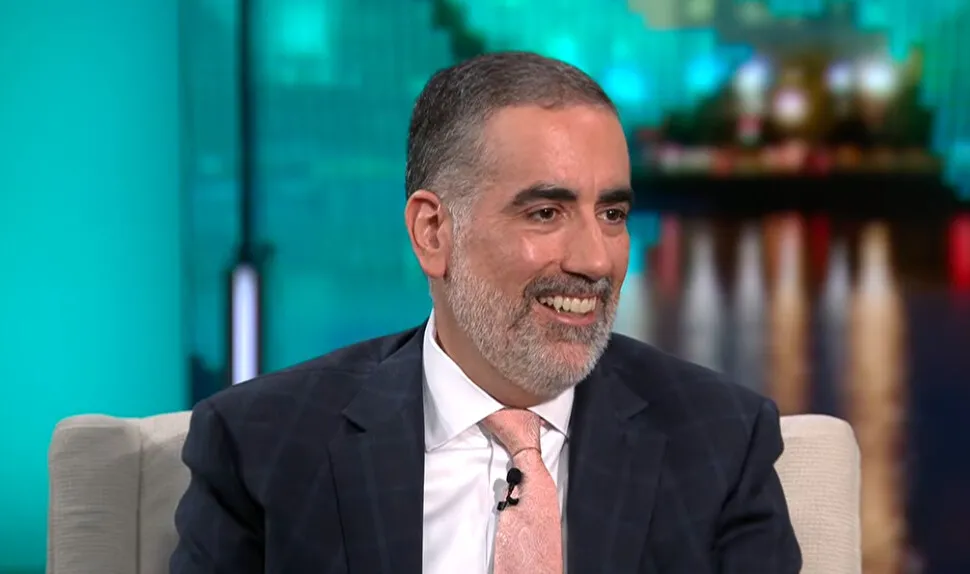
What Anthony Lugiato Is Really Saying
Anthony Lugiato is not a fringe commentator. He served as the White House National Security Council’s North Korea director during Trump’s first term, advising directly on the Singapore and Hanoi summits. When he goes on PBS and says Trump will likely meet Kim Jong-un “in some form” to open dialogue before the midterms, that’s not speculation from the outside — that’s a window into how the second-term Trump team is thinking about its first move in Northeast Asia.
The scenario he paints is specific and dangerous for Washington’s allies. Trump meets Kim first. They strike an initial deal — possibly a framework agreement, maybe even a symbolic peace declaration to formally end the Korean War. Then, after the November midterms or into next year, a follow-up summit locks in more substantial terms. In return, Pyongyang gets sanctions relief, diplomatic normalization, and perhaps a guarantee of regime security. The catch for Seoul and Tokyo: they are not at the table.
Lugiato also signaled something that would have been unthinkable in the first Trump term. He said his own position has shifted — he now believes the US should “implicitly accept” North Korea’s nuclear possession and redirect negotiation leverage toward concrete issues like ending North Korean troop support for Russia in Ukraine. That is a fundamental abandonment of the denuclearization-first posture that has underpinned US strategy for decades. And it means the next Trump administration will likely offer Seoul and Tokyo a completed deal, not a negotiated one.
Why This Is Worse for Seoul Than You Think
South Korea is the alliance most exposed. The article notes Lugiato’s comment about Trump “reducing” USFK joint exercises — something he called only surprising because Trump didn’t do it last year. In other words, a full suspension of the annual combined military exercises is on the table as a gift Trump could offer Kim. Seoul’s defense planning for the past five years has been built around calibrated deterrence, joint readiness drills, and the slow buildout of its own strike capabilities to complement USFK. All of that becomes redundant if the exercises stop and the US troops rotate out under a bilateral Washington-Pyongyang agreement.
This is not hypothetical leverage. Trump has already signaled he wants to end the Korean War with a peace treaty rather than a ceasefire. Lugiato’s piece in The Hill described a package that could include a formal peace declaration, normalized political and economic ties between Washington and Pyongyang, and the permanent end of USFK training — all in exchange for verifiable limits on North Korea’s missile and nuclear programs and the withdrawal of North Korean troops from Russia. That is a massive concession for minimal deliverables.
President Yoon Suk Yeol’s government has spent billions expanding its own strike network, building submarine-launched cruise missiles, and coordinating tightly with USFK. A pre-midterm deal that removes the exercise calendar and repositions US forces effectively erases years of planning overnight. The signal to North Korea is even worse: the alliance that was supposed to contain it is being unilaterally dismantled by its American partner.
Japan’s Invisible Exposure
Japan has a different calculus but the same structural risk. Tokyo has been using the North Korean threat to justify historic shifts in its own defense posture — increasing defense spending, acquiring counterstrike capability, and deepening its security tie with the US. A Trump-Kim deal that reduces or ends USFK’s role changes the strategic landscape Japan is trying to harden against.
More critically, Japan is not mentioned in Lugiato’s scenario at all. The architecture he describes is strictly Washington-Pyongyang bilateralism. That means Tokyo gets no seat, no assurances, and no guarantee that the deal includes any framework for Japanese abductions or nuclear disarmament. If the US is satisfied with a North Korean nuclear freeze in exchange for sanctions relief and troop reductions, Japan’s long-range missile threat from Pyongyang remains untouched.
Tokyo has been quietly pushing for trilateral coordination with Seoul and Washington on North Korea. A deal that skips both allies entirely would be the single biggest strategic rebuke Japan could receive from Washington in decades — and it would force an urgent recalibration of its defense industry plans, especially around missile defense and submarine capabilities.
The Regional Domino Effect
What Lugiato is most careful not to say is what every capital in the region is already calculating: if the US tacitly accepts North Korea as a nuclear state in a deal brokered for domestic political gain, the message to Seoul, Tokyo, Taipei, and even Riyadh and Tehran is unambiguous. Nuclear weapons are a valid path to security if you can wait out the American president.
Lugiato himself flagged this risk, saying the administration will need to ensure the deal does not become a green light for other countries to develop their own nuclear arsenals. But his confidence that “we have sufficient incentives and deterrents to prevent it” rings hollow in a region where the US is retreating from its forward-deployed security architecture and China is expanding its own reach.
The Bigger Picture
The real story here is not whether Trump and Kim will meet. It is that a former senior North Korea negotiator in the Trump orbit is publicly outlining a deal structure that prioritizes American domestic politics over allied security architecture. Lugiato’s PBS comments and Hill op-ed read like a policy blueprint. They describe exactly how a second-term Trump administration could claim a diplomatic victory with minimal concessions and maximal speed — by going bilateral, bypassing allies, and accepting North Korean nuclear status as a starting point rather than an obstacle.
For Seoul and Tokyo, the timeline is the problem. The midterms are in November. If a pre-midterm deal is the goal, the clock is already running. Japan and South Korea do not have the luxury of waiting to see what kind of framework emerges. Their defense industrial bases, force postures, and strategic alliances have been calibrated to a US commitment that is now being openly discussed as negotiable in a Washington-Pyongyang hallway agreement.
The question is not whether Trump and Kim will sit across a table. It is what Seoul and Tokyo will inherit when the deal is signed and they were never invited.