Riyadh Airport Strike: Oil, Troops, and the Houthi-Iran Nexus
A missile hit on Riyadh's international airport kills 12 and wounds over 300, the deadliest attack in the Gulf since the Iran war began. The strike escalates energy risks and could pull the US directly into the conflict, with ripple effects for Asian importers like South Korea.
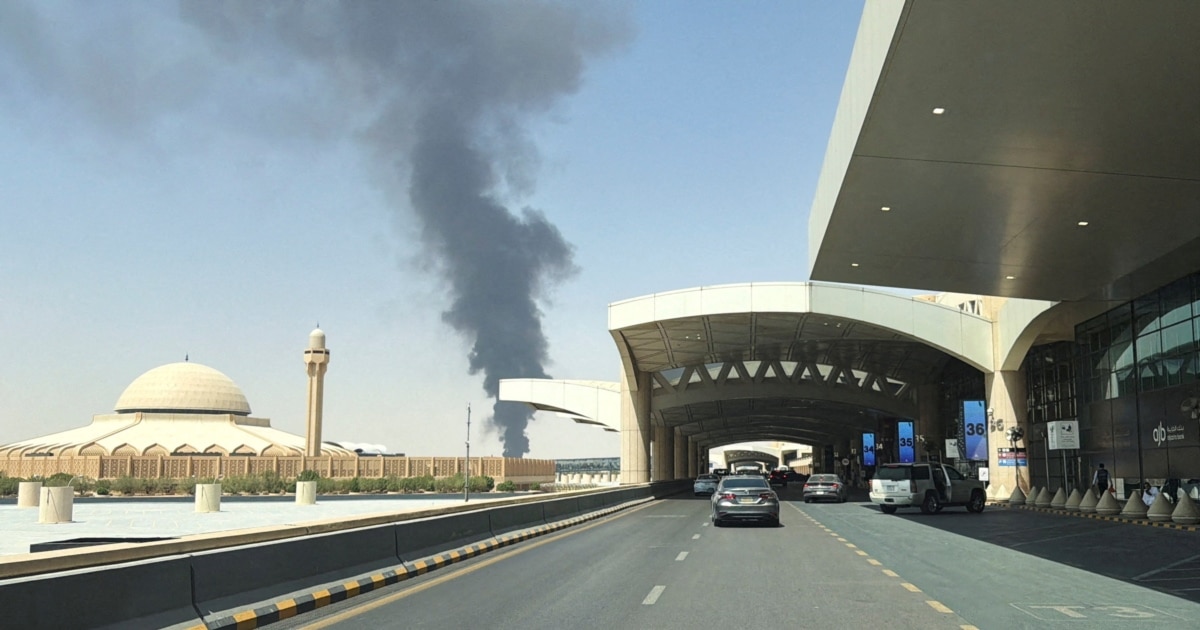
The Deadliest Strike Yet
A missile struck the domestic terminals at King Khalid International Airport in Riyadh late Tuesday, killing 12 people and wounding more than 300. Among the dead were four Saudi citizens, two Bangladeshis, and one each from the United States, Palestine, Egypt, Jordan, Syria, and Sudan. Some of the injured remain in critical condition, according to the Saudi Civil Aviation Authority.
The attack hit terminals three and four, a detail that signals precision rather than random terrorism. It is now the single deadliest assault on an Arab Gulf state since Iran’s war began, according to unnamed regional officials who spoke on condition of anonymity.
Previous strikes on Riyadh airport by Houthi rebels had killed three Saudis, including pilots, just last week. This latest incident follows a clear pattern: the Houthis are testing Saudi Arabia’s ability to protect its civilian and strategic infrastructure, and they are pushing the kingdom toward a wider confrontation.
Who’s Blamed, Who’s Hesitant
Saudi Arabia’s coalition leadership immediately pointed the finger at Iran-backed Houthi forces, calling the attack a clear war crime and promising a strong response. The Houthis have not yet claimed responsibility, a silence that is itself a signal. Tehran may be encouraging proxy activity while avoiding direct attribution—a classic hybrid warfare posture.
President Donald Trump said on Wednesday that the United States was reviewing whether to join Saudi strikes against the Houthis. “That could happen. We’re looking into it,” he told reporters, adding that he had just learned of the attack and would decide quickly. Washington has so far limited its role to intelligence sharing, target identification, and operational planning for the Saudi-led campaign in Yemen.
The shift from advisory support to possible direct participation would be a major escalation. It also comes as Saudi Arabia faces a pressing logistical problem: its stock of missile-interceptor ammunition is running low. Riyadh has requested air-defense help from France, Britain, Pakistan, and Egypt, according to reports. The US has not yet announced whether it will replenish Saudi interceptor stocks or join combat sorties itself.
The Oil Flow Question
Every strike on Saudi infrastructure raises the same question: how vulnerable is the kingdom’s energy export pipeline to a grinding war of attrition? Riyadh’s airports, oil facilities, and military sites have been hit repeatedly in recent weeks. The Houthi campaign has proven that even high-value targets inside Saudi territory are within reach.
Global oil markets reacted nervously to news of the airport strike. Brent crude futures ticked up, reflecting fears that a broader conflict could disrupt shipping through the Strait of Hormuz or damage Saudi production assets further. Saudi Arabia remains the world’s largest oil exporter; any sustained disruption would send shockwaves through Asian refineries and European markets alike.
The kingdom’s interceptor shortage is a vulnerability in itself. If Saudi air defenses cannot shoot down incoming missiles, the Houthis will feel emboldened to target oil terminals, pipelines, and processing plants with greater frequency. A single successful strike on a major facility like the Tanajib oil field or the Yanbu refinery could cut millions of barrels per day from global supply.
The US Troop Posture Shift
The United States has maintained a steady but limited footprint in the region, focusing on maritime security, intelligence, and defense cooperation. A decision to join Saudi airstrikes against Houthi positions would likely require deploying additional troops, aircraft, and naval assets to the Gulf. That move would signal a clear departure from the current cautious approach.
Trump’s statement that the US is “looking into” participation keeps options open without committing forces. Washington may choose to bolster Saudi air defenses with additional interceptor missiles and Patriot batteries instead of launching direct attacks. Either path carries risk: joining the fight could draw the US into a protracted ground war, while ignoring Saudi pleas could fracture the alliance and push Riyadh closer to other partners.
Britain, France, and other European allies have echoed calls for restraint but have not offered concrete military support beyond humanitarian aid. Pakistan and Egypt, both of which have been asked for air-defense help, are unlikely to commit combat forces. The burden of response will fall largely on Saudi Arabia and the United States.
Why Seoul Should Watch Closely
South Korea imports nearly 90 percent of its oil from the Middle East, and more than half of that flows through the Strait of Hormuz. Any disruption to Gulf shipping or Saudi production hits Korea first and hardest. Korean shipping companies that ply these routes face higher insurance premiums, rerouting costs, and the constant threat of attack.
Beyond energy, Korean corporations have significant investments in Saudi infrastructure projects and construction contracts. A widening war could strand assets and halt development programs. Seoul’s own diplomatic stance—balancing relations with Washington, Riyadh, and Tehran—will be tested as the conflict intensifies.
The Houthi-Iran nexus matters to Korea not just because of oil, but because of the precedent it sets for asymmetric warfare. If Iran can project power through proxy militias across the Gulf without direct retaliation, other regional actors may follow suit. For a middle power like South Korea, that means reassessing how to protect maritime routes and invest in energy security amid growing regional volatility.
What Happens Next
The immediate future holds several likely scenarios. Saudi Arabia will almost certainly launch retaliatory strikes against Houthi targets in Yemen, possibly with US intelligence and logistical support. The Houthis may respond with more missile and drone attacks on Saudi civilian and energy sites. The US could decide to join the air campaign, or it could limit its role to reinforcing Saudi air defenses.
Diplomatic efforts to de-escalate are unlikely to gain traction in the short term. Iran has not signaled a desire to rein in the Houthis, and the Saudi leadership has framed the conflict as an existential struggle against Iranian expansion. Unless a third party brokers a ceasefire, the violence is expected to continue.
For global markets, the risk premium on oil will remain elevated. For regional stability, the line between proxy war and direct confrontation is growing thinner. For countries like South Korea, the lesson is clear: the Middle East is no longer a distant theater. It is a core determinant of energy security, economic stability, and strategic calculation.
The Riyadh airport strike is not an isolated incident. It is a warning shot across the bow of the international system—one that asks whether the world is prepared for a wider war, and whether alliances will hold when the missiles start falling.