Rouhani's Referendum gambit could unravel Iran's war strategy
Former Iranian President Hassan Rouhani has proposed a de facto peace referendum — a move that sounds democratic but is actually a power play within Tehran's fractured leadership. The question isn't whether Iranians want peace. It's who controls the answer.
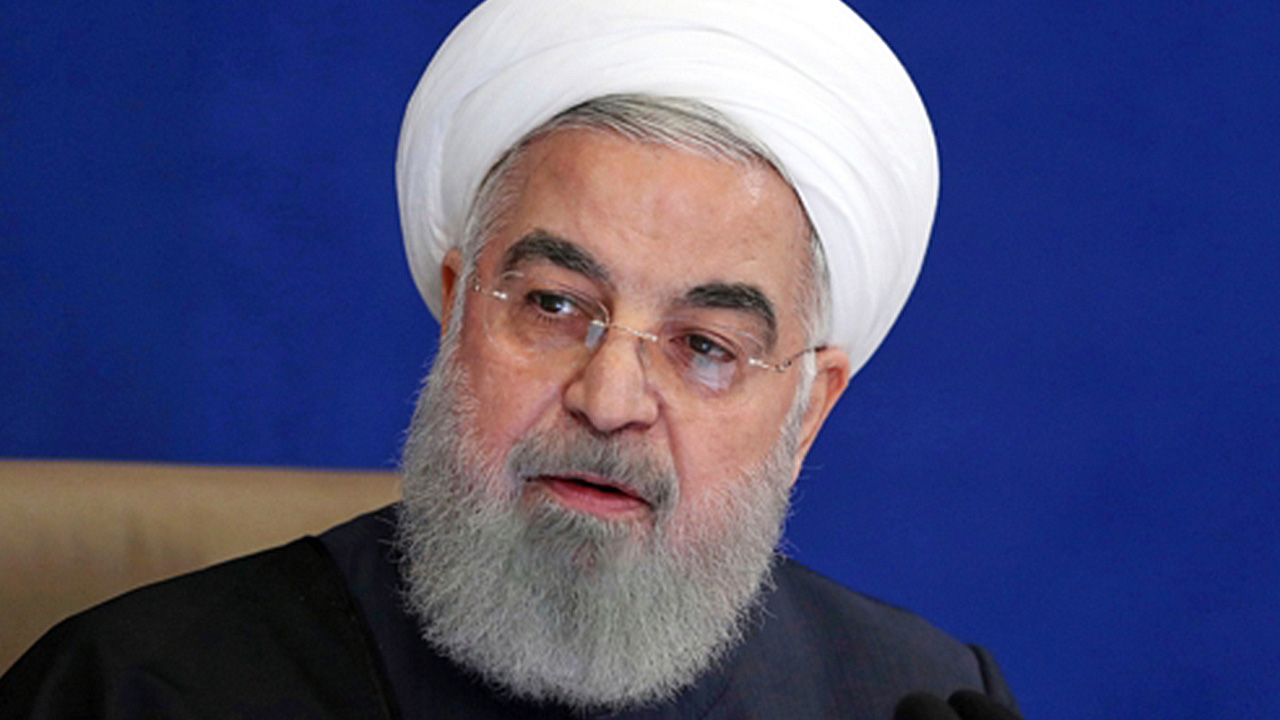
The referendum nobody saw coming — from inside the machine
Former Iranian President Hassan Rouhani did something unusual for a man outside office: he publicly called for the Iranian people to decide the fate of a war they are living through. Speaking at a recent event, he framed the choice not in ideological terms but as a direct question to the public — if the majority wants peace, the leadership must accept it. He did not use the word “referendum.” Iranian media did not need him to.
What makes this moment striking is not the content of the proposal — war-weariness in Iran is obvious — but its origin. Rouhani is not a fringe figure. He is a former president, a member of Iran’s elite political class, and someone who served as chief nuclear negotiator during the Obama era. His voice carries weight precisely because he has been inside the system. When he speaks now, he is not outside demanding change. He is reaching across the ruling establishment and appealing directly to citizens over the heads of those currently directing the war.
Who wins, who loses
The immediate loser is the hardline faction that has overseen Iran’s military posture. Pars News, a hardline outlet, called Rouhani’s remarks a “dangerous statement that cannot be overlooked.” That language is significant. In Iran’s political ecosystem, where dissent is typically managed through quieter channels — deferrals, reinterpretations, or simply being ignored — open criticism from state-aligned media signals that Rouhani has crossed a line the establishment feels compelled to publicly address.
Rouhani, meanwhile, positions himself as the voice of pragmatism. He invoked two arguments that resonate across Iranian society: the need to rebuild war damage and the need to restore hope for young people and investors. Both are coded references to an economy that has endured sanctions, mismanagement, and the costs of regional confrontation. Neither argument directly challenges the revolution’s ideological foundations. That is the careful calculation. He is not asking Iranians to reject their system. He is asking them to reject a direction.
The winner, potentially, is anyone in Tehran who wants an off-ramp from the current trajectory but needs a legitimate cover to pursue it. A referendum — even a symbolic one — provides that cover. It transforms a policy shift from betrayal into democratic mandate.
The constitutional obstacle nobody is talking about
Here is what Western reporting tends to miss: Iran’s constitution does allow for referendums on major national issues, but only with parliamentary approval and, critically, the consent of the Supreme Leader. Ayatollah Khamenei holds ultimate authority. Any referendum on peace would require his blessing. And Khamenei has not signaled any desire for one.
That creates an immediate paradox. Rouhani’s proposal is simultaneously bold and structurally powerless unless the Supreme Leader chooses to embrace it — or is forced to by circumstances he cannot control. If Khamenei rejects the idea outright, Rouhani’s gesture becomes another echo in Iran’s political cavern. If he allows it to proceed, he risks legitimizing a process that could produce an outcome he dislikes.
This is not merely a legal question. It is a test of Khamenei’s authority. The Supreme Leader’s legitimacy rests on his position as the final arbiter of state destiny. A popular vote that contradicts his preference would force him into a corner: accept the result and appear responsive, or reject it and appear detached from the people he claims to represent.
Why this matters beyond Iran
The broader implication is that Iran’s leadership may be fracturing over the war. When former presidents publicly call for peace referendums, it suggests that the consensus around continued confrontation is no longer as solid as it appeared from the outside. Regional actors — Israel, Saudi Arabia, the United Arab Emirates, even Iraq — are watching closely. Each has its own calculus on how to respond to a potentially opening Iran, and Rouhani’s proposal gives them a new variable to factor in.
For the United States, the proposal is both opportunity and complication. On one hand, a domestic Iranian push for peace aligns with Washington’s stated goal of de-escalation. On the other, it raises uncomfortable questions about who speaks for Iran and whether any agreement reached with a faction that lacks Supreme Leader backing will hold. The Trump administration’s approach to Iran has been characterized by maximum pressure andTransactional diplomacy. A referendum proposal complicates both — it introduces a democratic legitimacy that neither pressuring nor bargaining easily addresses.
What happens next
The most likely scenario is that Rouhani’s proposal enters a period of political limbo. It will be discussed in semi-official circles, critiqued by hardline media, and largely unanswered by the Supreme Leader’s office. But limbo is not inaction. Every day the idea exists in public discourse, it normalizes the notion that Iran’s war policy is subject to popular judgment. That normalization is the real outcome — not a vote, but a shift in what is politically thinkable.
A less likely but more consequential scenario is that internal pressure mounts to the point where Khamenei feels compelled to authorize some form of plebiscite — perhaps not a binding referendum, but a consultative exercise that signals responsiveness without surrendering control. Either path represents a departure from the current posture of unilateral decision-making.
The alternative is that the proposal is buried. In that case, Rouhani’s gesture becomes a footnote — a reminder that at least one prominent voice inside Iran’s establishment questioned the cost of continued war. Even that has consequences. It establishes a precedent. Future critics will point to it. And the fact that it was published, debated, and reacted to rather than silenced tells you something about the information environment inside Iran that outside observers often underestimate.
The quieter earthquake
Rouhani did not propose a revolution. He proposed a vote. In Iran’s context, that distinction matters enormously. A revolution threatens the system. A referendum works within it — or appears to. That is what makes the proposal strategically clever and politically dangerous in equal measure. It forces the regime to confront a question it has spent years avoiding: on what basis does it continue a war that its own citizens are living through?
The answer, if one comes, will not necessarily be peaceful. But the fact that the question is being asked publicly — from within the establishment, by a former president with an international profile — changes the terrain. It means the war is no longer solely a decisions made in sealed rooms. It means there is now a vocabulary for dissent that does not require leaving the country or joining an opposition group. It means the debate has moved into the open.
For observers outside Iran, the significance is clear: the regime is not monolithic, the war is not unstoppable, and the path to de-escalation may come from an unexpected direction. The referendum proposal is not a solution. But it is a signal — and in a system where signals are carefully controlled, an uncontrolled signal is itself a kind of event.