Samsung Is Betting Big on AI Infrastructure — And It Changes Everything
Samsung's $1 billion investment in AI infrastructure firm Helix signals a strategic pivot from memory supplier to infrastructure player. KB Securities sees this as a valuation inflection point for Korean tech.
Samsung Just Stopped Being Just a Chip Supplier
In June 2026, a new company called Helix was founded with a single, straightforward ambition: build the missing backbone of AI infrastructure from the ground up. Data centers, power delivery, network connectivity — all under one roof. No fragmentation. No middlemen arguing over who owns the bottleneck.
Adam Selipsky, the former Amazon Web Services CEO, runs it. And behind him stand three deeply unlikely partners: Vistra, the US electricity giant; the Kuwait Investment Authority, one of the Middle East’s sovereign wealth behemoths; and Samsung Electronics, the South Korean electronics titan.
This week, KB Securities delivered a report that sounds routine on the surface but carries real implications for how global capital thinks about Korean technology. Samsung and five of its affiliate companies — Samsung Corporation, Samsung SDS, Samsung SDI, Samsung Life Insurance, and Samsung Fire & Marine Insurance — have committed a combined $1 billion to Helix. Samsung itself is putting up $500 million. The other half comes from the affiliated companies.
That’s not a minority stake. That’s a table seat at the table where AI infrastructure gets built.
Why This Matters Beyond the Deal
The conventional narrative around Samsung in the AI boom has been simple: they make memory chips, so they benefit when hyperscalers scramble for HBM and high-bandwidth DRAM. It’s a supply-side story. Samsung is a vendor, not a player.
KB Securities is arguing that this framing is now wrong.
The investment in Helix moves Samsung from the periphery into the architecture itself. This isn’t a financial investment in a startup. It’s a structural bet on the layer beneath the servers — the power grids, the cooling systems, the fiber networks that determine whether an AI data center actually works. When you’re embedded in that layer, you’re no longer subject to the same pricing pressures that constrain a pure memory supplier.
The report acknowledges this explicitly: Samsung is entering the top tier of AI data center demand. Not as a bidder. As an owner.
The DRAM Picture Is Getting Stranger
While the Helix deal grabs headlines, the memory business itself is telling an equally important story. KB Securities projects that DRAM average selling prices will climb 15 to 20 percent in both the third and fourth quarters of this year, with another double-digit increase expected in the first quarter of 2027.
That’s aggressive. More importantly, it’s happening because hyperscalers are pre-buying capacity for 2027 right now, offering higher prices in Q4 negotiations than they would have expected to pay earlier in the year. The supply constraint isn’t temporary. It’s structural.
KB Securities specifically flagged a contradiction in the market narrative. Acer’s CEO recently downplayed DRAM shortage risks, pointing to rising supply volumes and claiming DDR4 and DDR5 shortages are unlikely. But the CEOs of Dell, HP, and Lenovo told a different story — one of genuine supply scarcity. KB sides with the buyers, not the memory makers.
The reason is simple: Samsung, SK Hynix, and SK Group’s DRAM capacity through 2028 is effectively sold out. No one can expand fast enough to meet the AI data center buildout. When supply can’t move and demand keeps climbing, pricing power shifts decisively — and it’s shifting toward Samsung.
The Real Shift: From Vendor to Architect
What KB Securities is calling a “strategic revaluation” isn’t just about memory prices. It’s about where Samsung sits in the AI value chain.
For years, Samsung’s positioning in AI has been reactive. Nvidia designs the GPU. Microsoft and Google design the system. Samsung makes the memory that goes inside it. If demand spikes, Samsung wins on volume. If demand falls, Samsung loses on price. The company has always been one demand shock away from a cyclical gut punch.
Helix flips that dynamic. By co-founding a company that builds and operates the actual infrastructure where AI workloads live, Samsung gains influence over capacity planning, power allocation, and network routing. These are decisions that determine how much memory gets bought, when it gets bought, and at what price.
This is the kind of vertical integration that semiconductor companies rarely attempt. It requires capital, yes — $1 billion is significant — but more importantly, it requires a willingness to operate in an industry that has nothing to do with chips. Power grids. Real estate. Utilities regulation. These are domains where Samsung has zero historical advantage.
The partnership with Vistra and the Kuwait Investment Authority suggests Samsung is compensating for exactly that gap. Vistra brings electricity expertise. Kuwait’s fund brings capital patience. Samsung brings the technology credibility and the ecosystem.
What This Means for Global Capital Flows
KB Securities isn’t the first firm to notice Samsung’s strategic positioning. But it may be the first major Asian brokerage to frame it this way publicly. That matters because Korean equities have long been undervalued relative to their technological weight. The KOSPI closed around 6,870 recently despite Samsung being one of the world’s most important technology companies.
When a major broker like KB Securities issues a revaluation thesis, it doesn’t just change how Korean funds think. It sends a signal to global allocators who are already debating whether Korea deserves a place in AI infrastructure portfolios alongside Taiwan Semiconductor and the American chip designers.
The Helix investment gives those allocators a new data point. Samsung isn’t just making components for the AI boom. It’s helping build the facilities where AI gets done.
That distinction may seem subtle, but in equity valuation, it’s everything. Component suppliers trade at cyclical multiples. Infrastructure owners trade at different multiples entirely.
What Comes Next
The immediate catalyst is clear: DRAM prices are rising faster than the market expected, and supply remains constrained through 2028. That alone should support Samsung’s memory business for the next two years regardless of strategy.
But the longer-term question is whether the Helix investment generates returns that justify the capital outlay. AI data center development is capital-intensive and slow-moving. Power permits take years. Grid connections are the bottleneck everywhere. Samsung’s ownership stake doesn’t guarantee speed — it guarantees a voice.
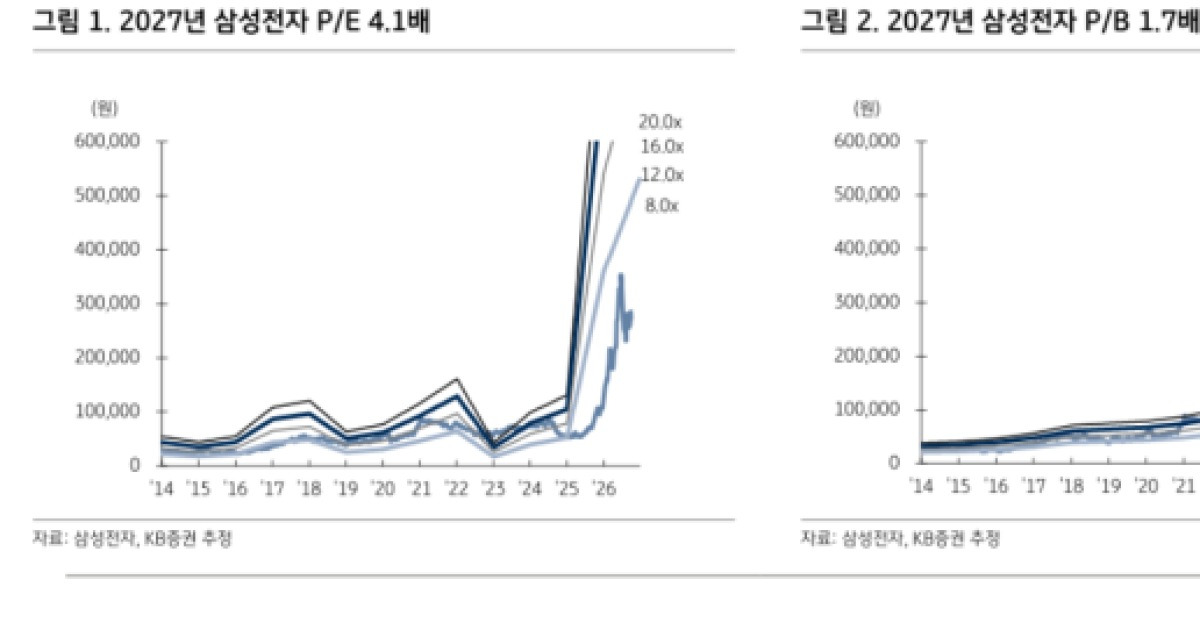
KB Securities believes that voice matters. It believes Samsung’s strategic position in the AI infrastructure layer will force a revaluation of the company’s entire memory business, not just the short-term price cycle. That’s a conviction call. It may prove correct. It may also turn out to be optimism dressed as analysis.
What’s undeniable is that Samsung has stopped playing defense. For the first time, it’s positioning itself not just to supply the AI revolution, but to help build it.
Whether the market agrees is the question that will determine Samsung’s next chapter.