Samsung's Semiconductor Union Splits — And the Chip World Pays Attention
Samsung Electronics' largest labor union is fracturing along business-line fault lines, carving out a dedicated semiconductor union amid corruption allegations against its chairman. The move sends a tremor through the global chip supply chain.
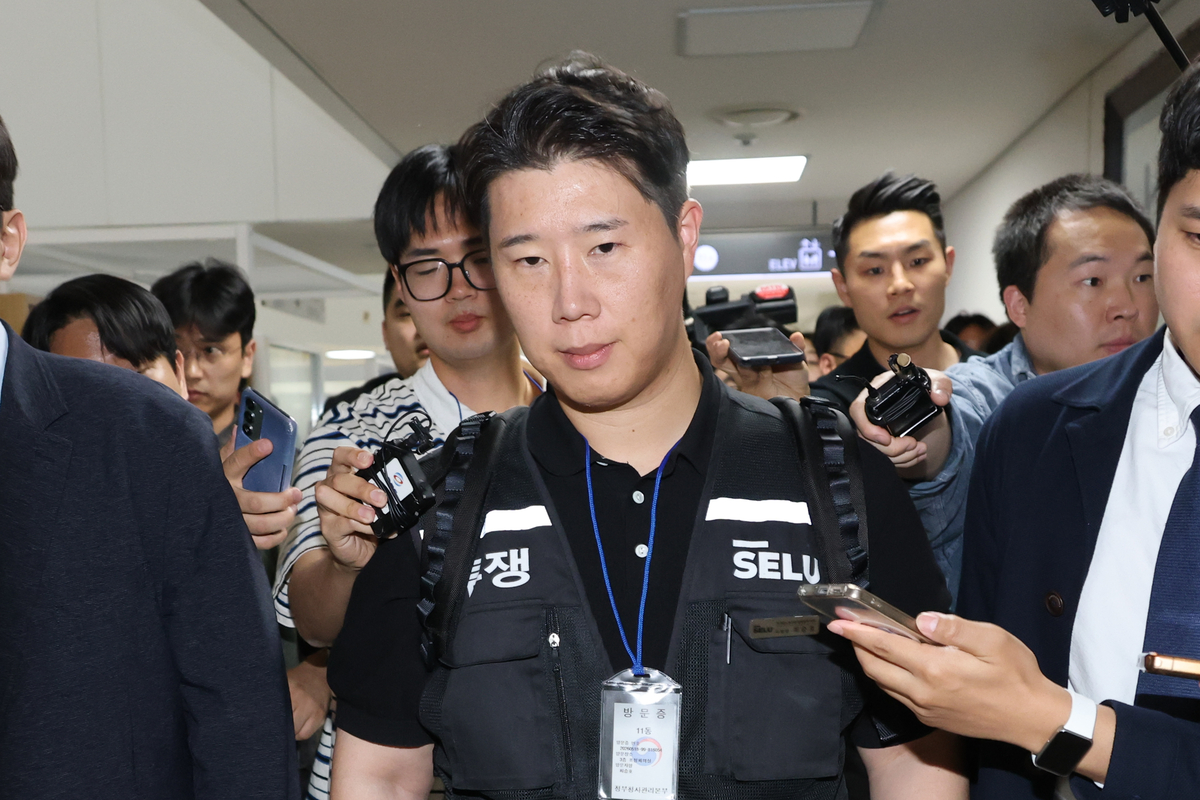
The Split
Samsung Electronics’ largest labor union is tearing itself along the fault line that already separates its two very different businesses. On July 20, the Samsung Group Initial Industry Labor Union Samsung Electronics Branch announced it would restrict membership to workers in the DS (Device Solution) division — the chip unit — and oust two executives from the DX (Device eXperience) division from positions of trust. The union is, in effect, declaring itself a semiconductor union.
This is not merely an internal reshuffling. It is a realignment of bargaining power at the single most important factory floor in the global memory chip supply chain. Samsung Electronics is the world’s largest memory chipmaker. Its DS division produces the HBM (High Bandwidth Memory) chips that power the AI boom. TheDX division makes smartphones, TVs, and consumer electronics — a business that has struggled since 2022 and continues to limp along.
The split formalizes what was already happening: the semiconductor workers, who generate far more value per employee and operate under tighter delivery schedules for customers like NVIDIA and AMD, are pulling away from a union structure that once tried to speak for both divisions with one voice.
The Conflict Behind the Split
The immediate trigger is a compensation dispute. After this year’s performance-pay negotiations, friction between the DS and DX sections intensified. DS workers, who had pushed hard for raises tied to the AI-driven demand for HBM chips, found themselves sharing a union with DX workers whose division has been cutting jobs and freezing pay. The DS faction wants a union that fights exclusively for chipmakers. The DX faction, which had held key administrative positions, sees its influence evaporating.
The ouster of the two DX executives — specifically those responsible for union finance — was the structural signal. One of them, Deputy Chairman Lee Song-i, is now the one leveling the most serious allegations against the union’s top leader.
The Corruption Allegations
What makes this story dangerous — and why it will draw scrutiny beyond Korea’s labor world — is the corruption probe swirling around Union Chairman Choi Seung-ho.
According to Lee, Choi used his personal credit card to purchase union-supplied goods and event materials, then claimed reimbursement through the union’s accounting system. In the process, Choi accumulated personal loyalty points and airline miles. The receipts alone from the Dongtan Lotte Department Store number 41 transactions totaling approximately 110 million won (roughly $80,000 USD).
Even more damaging is the allegation surrounding Choi’s father-in-law’s company. Between March and April, the union purchased approximately 368 million won ($270,000 USD) worth of rally supplies — vests and similar items — from a firm operated by Choi’s in-law. No personal financial gain, Choi’s side says. The union’s opposition calls it a conflict of interest and has referred the matter for criminal investigation.
Choi denies the points and mileage allegations, calling them fabrications by political rivals. He says he will pursue legal action.
Why This Matters Globally
Samsung’s semiconductor division is not just Korea’s most valuable company — it is a keystone in the global AI hardware supply chain. HBM chips are the bottleneck product of the current AI arms race. Samsung’s primary competitors in HBM are SK Hynix and, increasingly, Micron. Every production line at Samsung’s fabs in Pyeongtaek and Hwaseong is running at or near capacity for HBM3E and the upcoming HBM4.
A fractured union at Samsung carries supply-chain consequences that no buyer can ignore.
If the DS union strengthens its bargaining position — which is the whole point of the split — it could push for larger wage increases, better shift conditions, and tighter safety commitments. Samsung has already been raising wages in DS to compete with SK Hynix for semiconductor talent. A more aggressive union could accelerate that cost curve at a time when memory prices, after a brutal downturn, are only beginning to recover.
Conversely, labor disruption at Samsung’s fabs is a black-swan risk for every AI company that relies on HBM supply. NVIDIA, Microsoft, Google, and Amazon have all signed multi-year supply agreements with Samsung for HBM. A work stoppage, even a brief one, would ripple through data-center build schedules.
Who Wins, Who Loses
Choi Seung-ho wins if he survives the allegations and emerges with a consolidated semiconductor union that has a clearer mandate to push for DS-specific concessions. A focused union is a tougher union.
Lee Song-i and the DX faction lose immediate power but gain a platform. By filing criminal complaints, they are forcing public scrutiny onto Choi — and by extension, onto Samsung’s labor practices at its most strategic asset.
Samsung’s management loses either way. A divided union weakens the company’s ability to present a unified labor front during negotiations. It also exposes the DS division’s labor dynamics to outside investigation at exactly the moment Samsung needs to project stability to its biggest customers.
SK Hynix watches carefully. If Samsung’s semiconductor union becomes more militant, SK Hynix faces its own workers demanding similar terms. The Korean memory chip market is already a wage-war arena. An organized push at Samsung could trigger a cascade.
What Happens Next
The union’s fifth general assembly has set the course: a semiconductor-only structure. But the corruption allegations will not fade. Criminal referrals mean prosecutors will review the points, the receipts, and the contracts with the father-in-law’s company. Korean labor union finances are already under tight regulatory scrutiny after a series of scandals across chaebol unions in recent years.
If prosecutors find evidence of embezzlement or fraud, Choi could face indictment. A chairman under criminal investigation loses moral authority in negotiations — exactly when the DS division needs a strong voice at the bargaining table.
The timing is cruel. Samsung is racing SK Hynix to qualify HBM4 for production. The HBM market is projected to exceed $30 billion by 2026. Labor stability at Samsung’s fabs is not a domestic HR concern. It is a global technology supply-chain issue.
The split is real. The allegations are serious. And the world’s AI builders are now watching a labor dispute at the center of their hardware future.