Samsung's 100 Trillion Won Quarter Is Just the Beginning
Samsung Electronics is on track for a record-breaking third quarter with operating profit expected to exceed 100 trillion won, driven by an HBM sales surge that is reshaping the global AI chip supply chain and intensifying the rivalry with SK Hynix.
The Number That Changes Everything
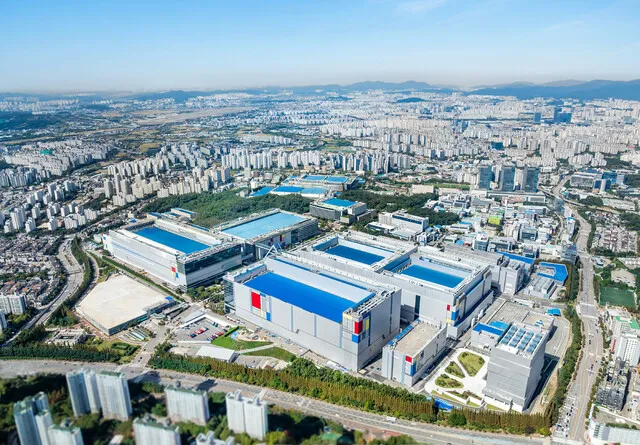
Samsung Electronics is about to do something no Korean company has ever achieved in a single quarter: report operating profit exceeding 100 trillion won. Not annual profit — a three-month stretch. According to consensus estimates from eight brokerages compiled by Yeopon Informatics, Samsung’s third-quarter operating profit will land at roughly 106.99 trillion won, with revenue approaching 200 trillion won. Kiwoom Securities forecasts 107 trillion won; Shinhan Securities projects 105 trillion won. The previous quarterly record was Samsung’s own second-quarter result of 89.2 trillion won, a figure that itself had stunned analysts only weeks earlier.
To put that in perspective, Samsung’s full-year operating profit in 2024 was 43.6 trillion won. This single quarter could nearly double the entire prior-year total. No quarter in Samsung’s modern history has come within touching distance of this threshold. The company’s legendary turnaround under Jay Y. Lee and his management team — which pulled the semiconductor division out of a crippling HBM2e crisis — has culminated in a moment that rewrites the historical baseline.
That is not a marginal beat. That is a structural rupture.
Why HBM4 Is the Real Story
The headline number would not be possible without one specific product: HBM4, Samsung’s latest high-bandwidth memory chip. HBM is the VRAM that AI data centers cannot function without. Every NVIDIA GPU cluster, every custom AI accelerator, every enterprise inference node requires it. The demand elasticity for HBM in the AI infrastructure stack is effectively zero — buyers will pay whatever is required because there is no substitute at the required throughput and density levels.
Samsung’s HBM4 is now in full production and the sales trajectory is aggressive. KB Securities estimates that HBM4 revenue in Q3 will more than triple compared to the previous quarter. In the second half of the year, HBM4 is projected to account for over 60 percent of Samsung’s total HBM sales. And this is not a one-quarter anomaly. KB Securities also expects HBM4 revenue in 2027 to more than double year over year, indicating that the ramp is being driven by durable contract commitments rather than opportunistic spot buying.
The implication for the global supply chain is direct and far-reaching. Samsung is no longer playing catch-up in HBM. It is moving at a pace that will force both customers and competitors to recalibrate their expectations, their capacity planning, and their financial models. NVIDIA and other GPU manufacturers have historically relied on SK Hynix as their primary HBM supplier, a dependency that gave SK Hynix enormous pricing leverage. Samsung’s acceleration changes the calculus for anyone who assumed HBM supply would remain concentrated in a single supplier’s hands. Dual-sourcing strategies that were once aspirational are becoming operational necessities, and Samsung is positioned to capture a meaningful share of that shift.
Beyond the immediate supplier dynamics, HBM4’s success has second-order implications for Samsung’s foundry business. The company has long struggled to convince fabless AI chip designers to trust its process nodes, but a proven HBM4 pipeline demonstrates advanced packaging and 3D integration capability that foundry customers find hard to ignore. Memory and foundry have historically operated as separate divisions within Samsung; HBM4’s prominence may accelerate internal efforts to integrate the two more tightly, creating a one-stop-shop proposition for AI chip manufacturers seeking both logic fabrication and high-performance memory co-design.
The SK Hynix Competition Intensifies
SK Hynix has held the crown in high-end HBM for the better part of three years. Its HBM3E chips are widely regarded as the gold standard for AI training workloads, and the company has cultivated deep, sticky relationships with NVIDIA, AMD, and the major cloud providers who build custom accelerators. But Samsung’s HBM4 ramp is happening faster than many analysts expected, and the market is responding accordingly.
SK Hynix’s response has been swift. The company has announced accelerated timelines for its own HBM4 production and is reportedly investing billions in additional test and packaging capacity to match Samsung’s output cadence. This competitive escalation benefits the broader industry — it keeps pricing discipline from eroding and ensures that AI infrastructure builders are not held hostage by a single supplier’s yield problems — but it also raises the capital intensity floor for everyone in the business.
This matters because HBM supply is not just a Korean industrial policy question. It is a constraint on the entire AI buildout. Data center operators planning their 2026 and 2027 capacity need to know who will deliver memory at scale. If Samsung can credibly volume-produce HBM4, the pricing power of the current HBM leaders weakens. Buyers gain leverage. AI infrastructure costs could fall faster than anticipated, which would accelerate deployment curves across every vertical from autonomous vehicles to generative AI applications.
The competitive dynamic is also shifting inside Korea. Samsung’s semiconductor division alone is projected to generate over 107 trillion won in operating profit this quarter, enough to offset losses across the rest of the conglomerate. That means the memory business is now effectively subsidizing everything else — from consumer electronics to foundry operations to biopharma investments. For SK Hynix, which remains more narrowly focused on memory, the pressure to match Samsung’s pace without the same diversification cushion is real. Any deceleration in HBM demand would hit SK Hynix harder proportionally, making Samsung’s current diversification advantage a structural feature rather than a temporary windfall.
The Honam Cluster Expansion Signals Government Commitment
The South Korean government is not watching passively. Park Hong-geun, the Minister of Strategy and Finance, confirmed in a recent interview that Samsung is moving forward with its fourth fabrication plant in the Honam semiconductor cluster, and that additional expansion is being considered if market conditions hold. The minister described the project as being advanced with urgency and committed to supporting it as one of three national mega-projects, including supporting infrastructure like railways and highways in the Honam region. This is not symbolic backing. It is resource allocation at the cabinet level, with budgetary commitments that extend well beyond the semiconductor site itself.
What this reveals is how deeply South Korea has bet on semiconductors as the anchor of its economic strategy. The Honam cluster is meant to decentralize an industry that has been concentrated around the capital region, both to reduce geographic risk and to stimulate regional economies that have lagged behind Seoul’s growth. Whether that geographic diversification delivers long-term resilience or simply spreads the same risks across more sites remains an open question. But the political will behind it is unambiguous, and it signals that the government views Samsung’s memory dominance as inseparable from national economic security.
The Honam expansion also carries geopolitical significance. South Korea is positioning itself as a reliable alternative to Taiwan for advanced chip manufacturing, a narrative that has gained traction among Western governments concerned about escalation risks in the Taiwan Strait. Samsung’s ability to scale production outside the traditional semiconductor corridors of Gyeonggi and Chungcheong provinces reinforces that positioning, even as the company must balance diversification against the efficiencies of agglomeration that have historically made clustered operations so productive.
What Happens Next
If Samsung delivers on these estimates, full-year operating profit could exceed 350 trillion won, surpassing last year’s total revenue of 333 trillion won. That kind of year would mark Samsung’s most profitable period since the financial crisis of 1997, if not ever. The implications extend far beyond the company’s balance sheet. A profitable Samsung at this scale reinforces the Korean won, puts upward pressure on domestic asset prices, and strengthens the fiscal position of a government that has been deploying massive subsidy programs to sustain the semiconductor sector.
But several variables could alter the trajectory. General memory prices are showing signs of deceleration, according to broker reports, even as HBM continues to climb. This divergence suggests that Samsung’s profit engine is becoming increasingly narrow — dependent on HBM’s premium pricing while commodity memory margins compress. The won-dollar exchange rate is also weakening, which could compress reported earnings when converted. Supply chain bottlenecks in advanced packaging or test capacity could throttle HBM4 output. And the geopolitical dimension — export controls, Taiwan tension, China demand restrictions — remains a background risk that no quarterly forecast captures.
Still, the direction is clear. The memory chip supercycle is not slow-rolling into Samsung’s lap. It is arriving faster than the consensus expected, and the company is positioned to capture more of it than its rivals. The real question for the next twelve months is not whether Samsung reaches another milestone. It is whether SK Hynix and the rest of the industry can respond before Samsung’s lead becomes structural rather than cyclical — before the 100 trillion won quarter stops being a historical first and starts being a benchmark that defines what is possible in a single quarter of memory-driven profitability.