Saudi Rare-Earth Discovery Could Break Chinas Monopoly
Saudi Arabia has announced the discovery of an estimated 110 million tons of rare earth and uranium deposits in Madinah — a find that, if developed alongside its new US partnership, could fracture China's stranglehold on the minerals powering EVs, chips, and defense systems.
The number that should wake up Washington and Brussels
Saudi Arabia’s energy minister dropped a figure at the IAEA conference in Vienna that quietly upends a core assumption about global critical minerals. Madinah’s Jabal Said deposit — an estimated 110 million tons of ore containing roughly 552,000 tons of medium rare earths like dysprosium and terbium, plus 355,000 tons of light rare earths such as neodymium and praseodymium — ranks as the world’s fourth-largest known deposit. Alongside it sits an estimated 31,000 tons of uranium.
That combination — rare earths and uranium in the same formation — is unusual. It is also geopolitically explosive.
For more than a decade, China has treated rare earth processing as a strategic weapon. It controls approximately 60 percent of global mining and well over 85 percent of refining capacity. The United States, the European Union, and Japan have tried repeatedly to build alternatives. Most have stalled on economics. One did not.
How the US-Saudi deal changes the board
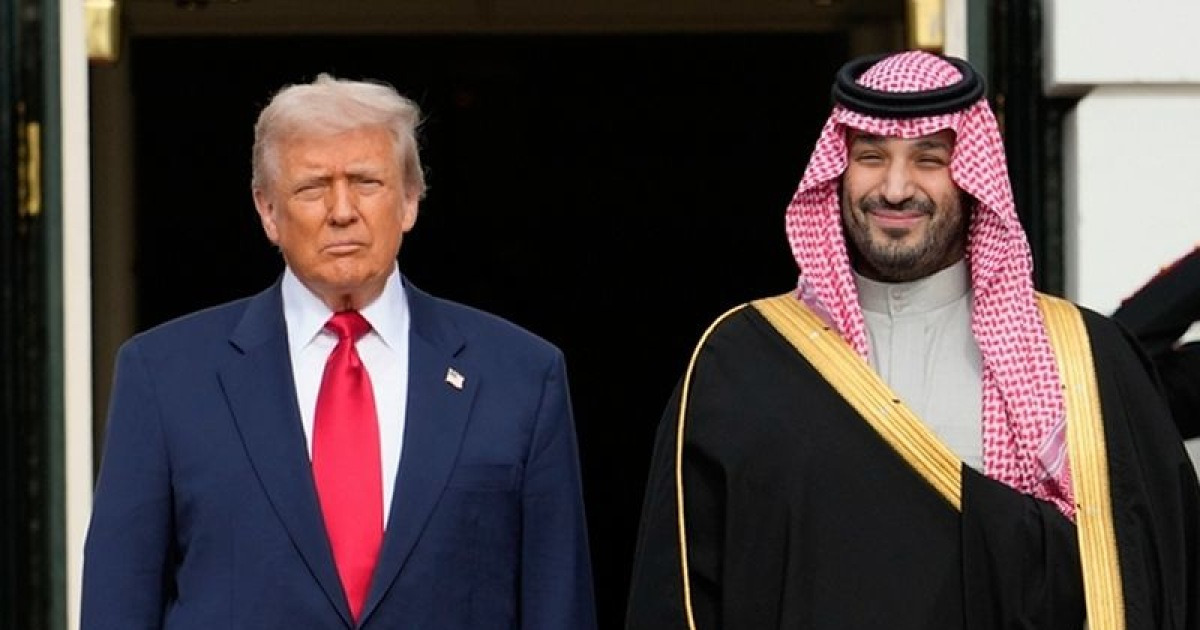
The discovery did not happen in isolation. It arrived less than two months after Washington and Riyadh finalized a civilian nuclear cooperation agreement in July, clearing the legal path for US firms to build and operate reactors inside Saudi Arabia. Before that came a November 2025 strategic framework signed during Crown Prince Mohammed bin Salman’s visit to the White House, which explicitly tied critical minerals to the broader security bargain.
The most concrete signal came next: the US Department of Defense agreed to back a new rare earth processing plant in Saudi Arabia being built by Ma’aden, the state-owned mining giant, and MP Materials, the sole US rare earth miner currently operating at Mountain Pass. Under the arrangement, DoD would take a 49 percent stake. That is not a passive investment — it is a supply chain lock-in designed to feed Pentagon procurement directly.
The logic is transparent. China can veto access to gallium, germanium, and antimony at the border. It cannot easily veto a processing facility owned half by America’s defense industrial base on Saudi soil.
Who wins, who loses
The immediate winners are Ma’aden and MP Materials. Both now have a second processing site far from South China Sea chokepoints, with US government backing that lowers financing costs and raises political priority. For American EV makers and defense contractors that have been quietly panic-buying rare earth compounds, this is a tangible lifeline — even if the ore has not yet left the ground.
China loses leverage, at least marginally. The damage depends entirely on speed. If Jabal Said reaches production within five years, it chips away at the pricing power Beijing has wielded since its 2010 rare earth export restrictions. If it drags for a decade or more, the symbolic value remains but the economic impact fades.
Europe is the canary. Brussels has been drafting its own Critical Raw Materials Act and scouting alternative suppliers from Canada to Morocco. A functioning Saudi corridor would give the EU a second non-Chinese source without forcing it into harder diplomatic choices about Iran or Qatar. That makes the find quietly attractive to European automakers anxious about Chinese dominance in battery supply chains.
The uranium factor nobody is shouting about
The rare earth headline will dominate trade desks. The uranium story may matter more over the long term.
Saudi Arabia already operates no commercial nuclear reactors and has no established fuel cycle. The July civilian nuclear agreement with the US changes that architecture. If Jabal Said’s 31,000 tons of uranium — comparable to the known reserves of several mid-tier producing nations — feeds domestic reactor construction, Riyadh could eventually become a exporter of low-enriched uranium to allies. That would shift the Middle East from a net importer of nuclear fuel toward a producer, a structural change the IAEA would need to verify and the US Congress would need to approve under its non-proliferation guardrails.
This is where the deal gets politically thorny. Iran watches every step of Saudi nuclear development. The US stance — enabling civilian cooperation while tightening safeguards — walks a narrow line. It is not clear how far Washington will press Saudi fuel-cycle ambitions before regional tensions force a recalibration.
What is missing from the announcement
Several questions hang over the figure Saudi officials released.
The 110 million tons is an estimated ore volume, not proven reserve. Ore grade, mining depth, and separation chemistry all determine whether that number translates into commercially viable material. Saudi Arabia’s geology is not identical to the Ion-adsorption clays of southern China, which yield heavy rare earths at comparatively low processing cost. If Jabal Said requires more energy-intensive separation, the economics shift dramatically.
No production timeline was announced. Ma’aden has not disclosed drill results, feasibility studies, or permitting milestones. Mountain Pass itself took more than a decade to rebuild after its 2017 bankruptcy. Replicating that history on Saudi soil — with different geology, a different labor market, and a different regulatory environment — is not a given.
The $100 billion resource valuation cited by Saudi geological surveys is a forward-looking estimate based on current prices, not a balance-sheet asset. Commodity cycles turn. A rare earth price collapse would shrink that number faster than the deposits shrink.
What happens next
The next twelve months will reveal whether this is a turning point or a press release.
Ma’aden and MP Materials should file initial feasibility studies and secure offtake agreements with at least one major buyer — ideally a US or European automaker or defense prime. Those contracts would signal commercial confidence beyond government subsidies. The US Defense Logistics Agency should announce whether it is designating Jabal Said output as a qualified source under its strategic stockpile rules. The IAEA will likely request safeguards discussions before any uranium work proceeds.
Beijing will be watching closely. China has a track record of using pricing pressure, export controls, and investment leverage to delay rival projects. It may not need to do much if Saudi development simply takes time. But if output begins flowing within three to five years, expect retaliatory measures targeting downstream buyers.
For the rest of the world, the finding is a reminder that the critical minerals race is still open. China’s monopoly is real today, but it is not permanent. Saudi Arabia has just added a second front to a contest most observers assumed was already decided.