Seoul's Chain Meetings Signal a New Industrial Policy Play
President Lee Jae-myung is quietly rebuilding the Korean developmental state through direct deal-making with Samsung, Hyundai, and SK. The question isn't whether this works — it's what Washington makes of it.
The President Has a Table and Four Chairs
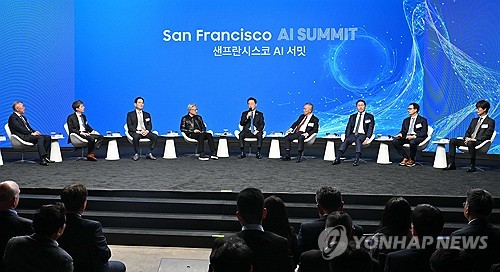
President Lee Jae-myung is not waiting for market signals. Over the past week, he has been arranging direct, bilateral meetings with the CEOs of Samsung Electronics, Hyundai Motor Group, and SK Group — the three conglomerates that collectively determine how much South Korea invests in semiconductors, physical AI, and mobility. The first was a working dinner with SK’s Choi Tae-won on July 20. A meeting with Samsung’s Lee Jae-yong is expected today, July 26. Hyundai’s Jeong Eul-sun, who shared a stage with Lee at the San Francisco AI Summit on July 25, is already in the frame.
This is not routine diplomacy. It is the ghost of Park Chung-hee’s Economic Planning Board materializing in real time. Seoul has not conducted industrial policy through direct presidential-chaeol conversations since the late 1990s, when the Asian financial crisis forced a restructuring that deliberately weakened the very mechanisms Lee is now reassembling. The timing is deliberate: roughly one month after the San Francisco AI Summit, where Lee stood alongside Sam Altman, Jensen Huang, Dario Amodei, and others at the Midway, the president is now following up with the very companies whose capital decisions will determine whether South Korea becomes a meaningful AI and semiconductor player or remains a contract manufacturer for American design houses.
What Is on the Table
Three items dominate the conversations, according to government and industry sources. The first is investment commitments. Samsung, SK Hynix, and Hyundai each have multi-billion-dollar expansion plans underway — Samsung’s new Texas fab, SK’s Giheung semiconductor cluster, Hyundai’s mobility-AI integration push — and Seoul wants to know whether those plans hold, what conditions are attached, and where the government can intervene to lock in outcomes.
The second is US pressure. Washington has been explicit about wanting Korean semiconductor investment aligned with American strategic interests, including technology transfer restrictions and supply chain decoupling from China. Choi Tae-won reportedly raised this directly in their July 20 dinner. Lee Jae-yong will face the same conversation today. The question Seoul is trying to answer is whether there is room to absorb American demands without hollowing out its own competitive position in memory chips and advanced packaging.
The third is physical AI. Hyundai’s presence at the San Francisco Summit alongside OpenAI and Anthropic is notable. The company is not building large language models; it is trying to become the integration layer between AI software and physical systems — robots, vehicles, factory automation. This is where Seoul sees a potential asymmetry: American firms dominate the model layer, but Korean firms control the hardware and deployment platforms. The government wants to ensure that investment in this layer stays in Korea rather than migrating to Texas or Taiwan.
The Developmental State, Rebooted
The term “developmental state” is overused in policy circles, but South Korea’s current trajectory deserves the label. Lee Jae-myung is attempting something that his predecessors, both conservative and liberal, largely abandoned: direct presidential involvement in allocating capital toward strategic industries. The mechanism is not hidden subsidies or state-owned enterprises, as in the 1970s. It is high-level coordination — the president convening CEOs, aligning government support with corporate investment timelines, and using diplomatic channels to create favorable conditions for Korean firms competing globally.
This approach has precedents. Park Geun-hye’s “creative economy” initiative in the mid-2010s attempted something similar, though it lacked the specificity and follow-through of what Lee is now doing. Japan’s METI model, which coordinates industrial policy through informal ministry-keiretsu channels, is closer to what Seoul is attempting. The difference is that Lee is personalizing the process — himself as the node, not the bureaucracy.
The risk is obvious. Direct presidential deal-making concentrates power, reduces transparency, and creates dependency relationships between the executive and the conglomerates. But the opportunity is equally concrete: South Korea faces a narrowing window to reposition its semiconductor and AI industries before American export controls, Chinese competition, and Taiwanese capacity expansion compress its margins. Every month of indecision is a month of capital allocation that goes elsewhere.
Washington’s Dilemma
The United States will watch these meetings closely, and not all of it will be comfortable. American policymakers want Korean semiconductor investment to serve US strategic interests — which often means locating advanced fabrication capacity in America, sharing technology under American supervision, and reducing dependence on Chinese markets. A Korean president who is personally coordinating investment decisions with his country’s largest firms may conclude that some commitments require different terms than Washington prefers.
The friction points are already visible. Samsung’s Texas fab is a direct product of American pressure, yet the company continues to expand capacity in Gyeonggi Province for memory chips that serve global, including Chinese, demand. SK Group’s investments in Louisiana are real, but its partnerships with Chinese battery and semiconductor firms remain extensive. Hyundai’s US manufacturing footprint is growing, but so is its R&D spend in Seoul and its sales in China.
What makes Lee’s approach different is the directness. Where previous administrations negotiated through ministries and trade channels, Lee is convening CEOs personally. This creates both leverage and vulnerability: the president can make credible commitments that officials cannot, but he also exposes the contours of Korean strategic thinking to American scrutiny in real time.
What Happens Next
The immediate test is investment confirmations. If Samsung, SK, and Hyundai announce expanded domestic commitments within the next quarter — particularly in advanced packaging, physical AI hardware, and next-generation memory — Seoul’s strategy has traction. If the announcements are vague or deferred, the developmental state reboot is more theatrical than substantive.
The medium-term test is geopolitical. How Seoul balances American demands against Chinese market realities and Taiwanese competitive pressure will determine whether this coordination model survives beyond the current administration. If the US perceives Korean investment as insufficiently aligned with its interests, it may escalate sanctions or restrict technology transfers — leverage that could unravel the very deals Lee is trying to coordinate.
The long-term test is structural. South Korea’s chaebol system has proven resilient because it adapts. The question is whether presidential-level industrial coordination represents adaptation or regression — a modern response to genuine competitive threats, or a nostalgic return to patterns that contributed to the 1997 crisis in the first place.
One thing is clear: the meetings are happening. The president is chairing them. The CEOs are attending. Whatever the outcome, South Korea is no longer outsourcing its industrial strategy to market forces or foreign governments.