Seoul's Silent Acceptance of North POWs Changes Everything
Zelenskyy publicly confirmed North Korean soldiers captured in Ukraine were sent to South Korea. Seoul's calibrated refusal to detail the transfer speaks volumes about a geopolitical shift in the Indo-Pacific.
The Transfer That Wasn’t Announced
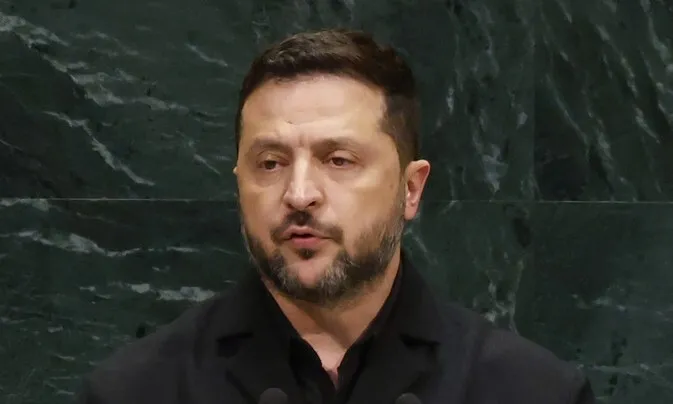
When Volodymyr Zelenskyy took the stage at the UN General Assembly on September 23, he didn’t mince words. Two North Korean soldiers captured in Ukraine had been sent to South Korea. That single sentence — delivered not in a closed briefing but before the world’s press corps — represented a diplomatic escalation of unusual magnitude.
South Korea’s response was a masterclass in calibrated silence. The Ministry of Foreign Affairs issued a statement saying it could not confirm details about individual cases, timelines, routes, or bilateral consultations — precisely because the matter involved sensitive personal security concerns. Then it added, almost as an afterthought: “Based on this position, we have been conducting necessary communication and consultations with Ukraine and other relevant countries and organizations.”
That was an acknowledgment. A quiet one, but unmistakable.
What Just Happened
North Korean troops were deployed to Russia’s war effort in Ukraine, likely beginning in 2024, with estimates from Ukrainian intelligence placing the total at around 8,500 soldiers. Among them were combat units and a drone detachment tasked with reconnaissance and strike missions against Ukrainian positions. Two were captured in the Kursk region last January. They had previously expressed defection intentions through South Korean defector groups and media.
Ukraine transferred them to South Korea. Zelenskyy announced it publicly at the UN. Seoul neither denied nor detailed it.
The logistics alone are noteworthy. Moving two prisoners from a war zone in Eastern Europe to the Korean Peninsula requires coordination across multiple intelligence services, airspace agreements, and a degree of trust between partners that is not automatically given. Ukraine and South Korea do not have a long history of operational cooperation. This transfer suggests something has shifted.
Why the Silence Matters More Than Words
Seoul’s refusal to confirm specifics is not evasion. It is strategy.
South Korea faces a delicate balancing act. Confirming the transfer openly would anger China and Russia both — and China is Seoul’s largest trading partner.北京的反應尤其敏感,因為平壤的命運在很大程度上取決於北京。但如果完全否认,又会让泽连斯基在联合国公开点名的尴尬局面中失去信誉,损害韩乌关系。
Calibrated silence lets Seoul accomplish three things simultaneously: it acknowledges what happened without providing ammunition for adversaries, it signals to Kyiv that Seoul is a reliable partner, and it avoids unnecessarily provoking Beijing into escalatory moves against South Korean interests.
The foreign ministry’s language was carefully chosen. “We respect the free will of the parties” and “in accordance with international law and humanitarian principles” are phrases that anchor South Korea’s position in universal norms rather than alignment against any specific adversary. That framing makes it harder for China or Russia to object without appearing to defend North Korea’s deployment of its soldiers to fight a foreign war.
Who Wins and Who Loses
Kyiv wins a significant propaganda and operational victory. Zelenskyy used the UN podium to highlight North Korea’s military collaboration with Russia — a fact some Western capitals had been reluctant to emphasize too loudly. By confirming the transfer publicly, Ukraine demonstrated it treats defectors as partners, not pawns, which could encourage other North Korean soldiers to consider defecting rather than continuing to fight for Moscow.
Pyongyang loses visibility and control. Kim Jong Un has been portrayed in state media as building a stronger military alliance with Russia. The defection of even two soldiers, combined with Zelenskyy’s public commentary about how North Korea “raises people like currency,” undermines that narrative. If soldiers can be captured, switched sides, and sent home, the deterrence value of deploying them to Ukraine evaporates.
Beijing faces a new calculus. China has walked a careful line between supporting Russia’s war effort enough to avoid alienating Moscow and avoiding secondary sanctions that would damage its economy. North Korean troop deployments complicate that balance further. Every North Korean soldier caught fighting for Russia increases the risk that Washington will pressure allies to sanction Chinese entities doing business with Pyongyang — a scenario Beijing desperately wants to avoid.
Seoul gains strategic credibility without paying an immediate diplomatic price. The transfer establishes a precedent: South Korea is willing to operate in theaters far from the Korean Peninsula and coordinate closely with European partners on security matters that directly affect regional stability.
The Bigger Picture
This is not just about two prisoners. It is about the integration of two separate conflicts — Ukraine and the Indo-Pacific — into a single strategic framework that adversaries are now forced to navigate together.
Russia and North Korea have signaled a deepening military partnership. In return, the United States has been pushing its allies to treat those two relationships as interconnected. South Korea’s participation in the NATO summit in Ankara in July, where President Lee Jae-myung discussed the POW issue with Zelenskyy, was an early signal that Seoul is willing to engage on this expanded security architecture.
The POW transfer operationalizes that signal. It proves that Kyiv and Seoul can execute a sensitive, multi-step coordination that crosses continents and involves intelligence services from at least three countries. If they can do this with two soldiers, they can do it with far more.
What Happens Next
Expect North Korea to tighten control over its deployed personnel. Defections, even of two soldiers, are a vulnerability Pyongyang cannot ignore. We should expect tighter monitoring, harsher punishment for attempted defections, and possibly a reduction in the scale of future deployments — or at minimum, a selection process that filters for soldiers less likely to defect.
Expect Ukraine to continue using the POW issue as diplomatic leverage. Zelenskyy’s speech framed North Korean soldiers as tools of Kim Jong Un, not willing combatants. That framing serves Kyiv’s broader campaign to isolate Pyongyang internationally and discourage other states from mirroring the Russia-North Korea military cooperation.
Expect South Korea to walk an increasingly narrow path. The government’s silence was deliberate and effective, but silence only works when both sides benefit from ambiguity. If Russia or China decides that making an example of South Korea — through economic coercion or military posturing — is worth the cost, Seoul’s careful calculus could unravel quickly.
The transfer of two North Korean soldiers from Ukraine to South Korea seems like a small event. It is not. It is the first concrete proof that the war in Europe and the tensions in Asia are no longer separate theaters. They are converging. And South Korea, by staying quiet about it, may have just made itself more central to the conversation.
The Numbers Behind the Story
Approximately 8,500 North Korean troops have been deployed to Ukraine, according to Ukrainian intelligence estimates.
Two were captured in the Kursk region last January.
South Korean President Lee Jae-myung discussed the POW issue with Zelenskyy at the NATO summit in Ankara in July.
The foreign ministry declined to confirm details, citing personal security and sensitivity concerns.
Zelenskyy described one prisoner’s suicide attempt upon realizing he would become a POW, calling it evidence of how North Korea “raises people.”
These numbers tell a story far larger than two individuals crossing an ocean.