The Shakahola verdict and why cult killings expose legal blind spots
The upcoming verdict in Kenya's Shakahola case is more than a trial—it's a stress test for how courts handle collective suicide, state negligence, and the global architecture that lets lethal cults flourish.
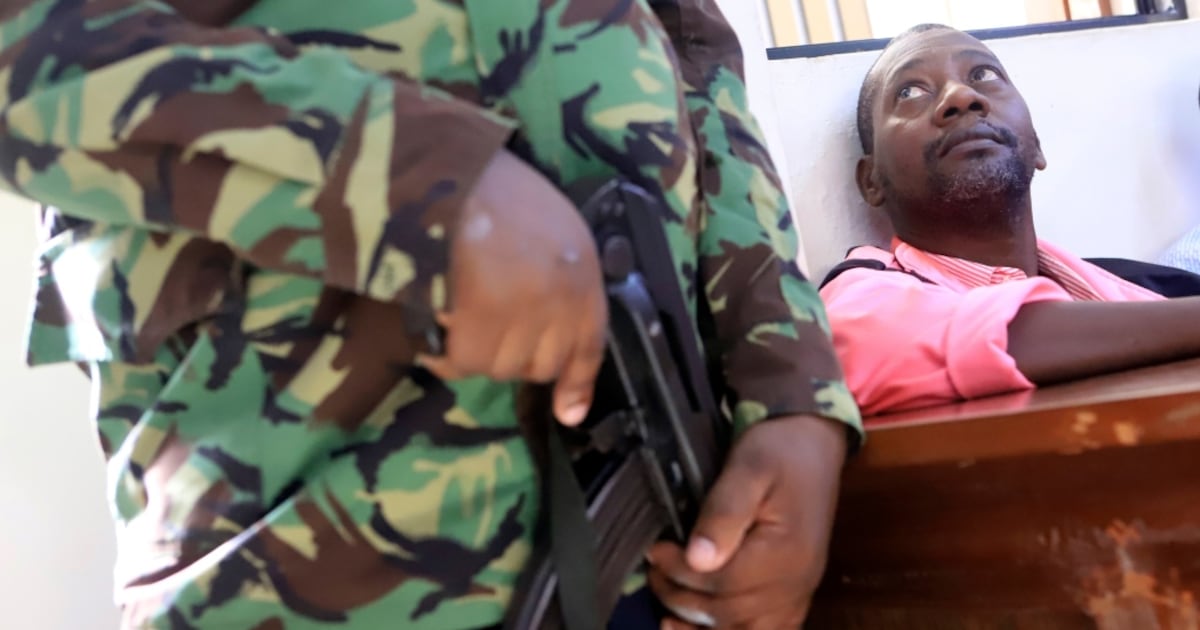
A verdict waiting to shake legal frameworks
The Mombasa Law Courts will deliver its ruling on Monday in the trial of Paul Mackenzie and 29 co-accused, charged with 191 counts of murder stemming from the Shakahola Forest Massacre. But the real story here goes beyond a single courtroom outcome. This case exposes something most legal systems around the world are quietly failing to address: how the law handles organized collective suicide driven by religious extremism, and why it repeatedly does so poorly.
Mackenzie, a self-proclaimed pastor, allegedly directed followers at his 800-acre ranch in Shakahola Forest to starve themselves to death in order to “meet Jesus.” According to prosecution allegations, he established what prosecutors called a “structured hierarchy of death”—children first, then teenagers, women, and men. The estimated death toll now exceeds 400, though the formal charges cover only 191.
Why this trial matters globally
What happened in Shakahola is not unique to Kenya. Fatal cult movements have surged in recent years across Europe, North America, and Asia. The 2018 Manson Family-style killings in Thailand, the Group of Seven case in Canada, and multiple deaths linked to doomsday cults in Japan all share DNA with Shakahola: charismatic authority figures weaponizing faith to orchestrate mass death.
Yet the legal architecture for prosecuting these cases remains surprisingly thin. Most jurisdictions treat cult-related deaths under existing murder or manslaughter statutes, which assume individual acts of violence. Shakahola flips that assumption. No one pulled a trigger. No one slashed a throat. The killing mechanism was belief itself—engineered, systemic, and meticulously organized.
Mackenzie’s defense team has already signaled the core legal challenge: they argue the case rests on “circumstantial evidence, hearsay accounts and inconclusive forensic findings.” That argument, however weak or strong, reveals a deeper problem. When death results from enforced starvation rather than direct violence, proving causation becomes extraordinarily difficult. How do you prosecute someone who told people to stop eating but did not physically force them?
The state’s complicity question
The more uncomfortable thread running through this case is what it reveals about state failure. Mackenzie was arrested twice before the massacre came to light—first in 2017 on charges of “radicalisation” (and acquitted), then again in 2019 in relation to two child deaths at Shakahola, and released on bail. The Kenya National Commission on Human Rights documented these gaps in 2024. The government did nothing meaningful between those arrests and the full-scale discovery of mass graves.
Francis Wanje, 62, lost eight family members in Shakahola, including his daughter and two grandchildren. “This day, to me, is a very, very important day,” he told AFP. “We are expecting a ruling that will be a lesson to the whole public, so that such kinds of things will not happen again.” His anger at the initial government inaction is shared by many victims’ relatives who traveled from rural coastal communities to attend the verdict.
This is where the case takes on global resonance. Kenya’s failure mirrors a pattern seen worldwide: authorities repeatedly identify dangerous religious figures, impose insufficient consequences, and then express shock when catastrophe follows. The 2017 arrest of Mackenzie and his subsequent acquittal on radicalization charges should have been a signal. The 2019 arrest over two child deaths should have been a second. Neither triggered action.
Who wins, who loses, and what comes next
If Mackenzie is convicted on the 191 murder charges, the verdict will set a legal precedent worth watching. No court has ever prosecuted a case of this scale involving enforced fasting as a method of mass killing. The conviction—or acquittal—will signal to prosecutors and judges everywhere whether existing laws can handle the new morphology of religiously motivated mass death.
Victims’ families win if the verdict acknowledges the structural nature of the crime and the state’s role in enabling it. They lose if the court treats this as a series of individual moral failings rather than a coordinated operation. Either outcome carries weight beyond Kenya’s borders.
The broader losing party in this scenario is the global legal framework itself, which remains ill-equipped for cult-based mass death. Western legal systems, in particular, operate under assumptions that break down when victims are adults who “chose” to participate, even under coercive ideological pressure. The line between voluntary martyrdom and induced murder is far blurrier than prosecutorial guidelines suggest.
Mackenzie’s Good News International Church, founded in 2003, attracted thousands of followers across Nairobi and the Kenyan coast before claiming to close in 2019. It did not. The network persisted underground, feeding the Shakahola operation. This pattern of organizations surviving official dissolution is common among lethal cults worldwide.
The path forward
Kenya is already hearing calls for tougher regulations on religious organizations. What those regulations should look like remains unclear, but the Shakahola case makes one thing certain: the current system is inadequate. Arresting dangerous figures and releasing them on bail is not a strategy. Tracking religious organizations with a history of extremism should not require mass graves to be discovered first.
For other countries, the lesson is equally stark. Legal systems need to develop specialized frameworks for prosecuting collective religious killings—statutes that recognize ideological coercion as a form of homicide, that mandate monitoring of high-risk religious groups, and that treat repeated arrests without conviction as a trigger for enhanced oversight.
The Mombasa verdict on Monday will not solve these problems. But it will at least force a conversation that has been avoided for too long. The 191 charged deaths, the 400-plus actual bodies, and the state’s repeated failures to act before the graves were dug—all of it points to a systemwide blind spot that Shakahola has made impossible to ignore.