SK and Kioxia's Joint Production Bid Could Redraw Chip Geopolitics
SK Group's chairman floated co-production with Japanese rival Kioxia — a move that would create the world's largest NAND flash alliance and test whether Korea and Japan can turn industrial competition into strategic cooperation.
The Unlikely Alliance
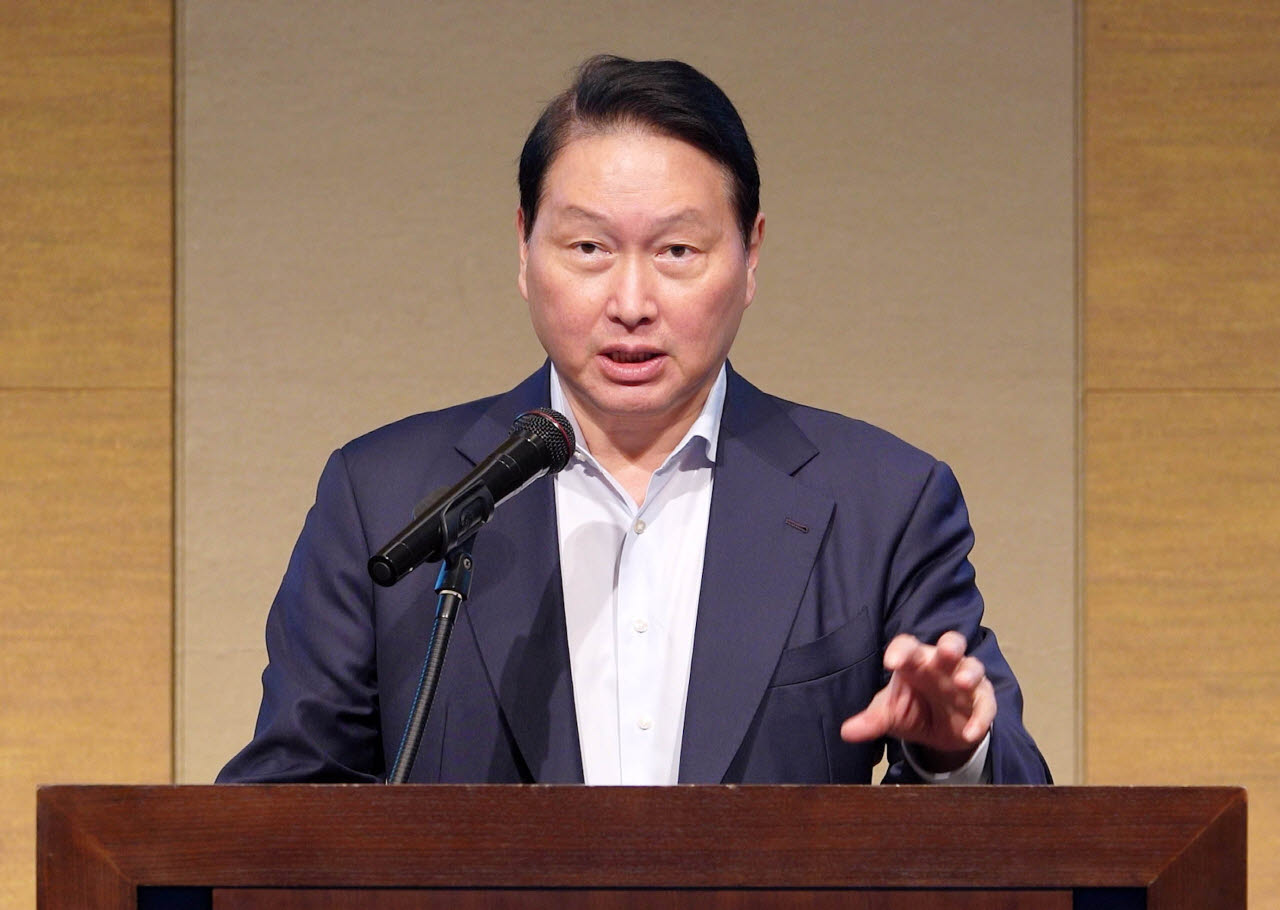
Choi Tae-won did not mince words. In an interview with the Asahi Shimbun released September 2, the SK Group chairman called co-production with Kioxia “one option” and said the company is actively reviewing whether to build a new factory in Japan. He was more blunt about the alternative: if no cooperation can be built with Kioxia, SK Hynix will end its investment stake in the Japanese memory chipmaker.
This is not merely a commercial negotiation. It is a signal about where the semiconductor industry is heading — and which countries are willing to move past their own history to get ahead of the AI chip rush.
The Math Behind the Move
The numbers matter here. According to Counterpoint Research, SK Hynix and Kioxia together held 36 percent of the global NAND flash shipment market in the April-to-June 2026 quarter. Samsung Electronics led with 25 percent. Combine the two and you have a bloc larger than the market’s current number one.
That kind of concentration would reshape pricing, capacity allocation, and bargaining power with customers ranging from Apple to cloud providers building out data centers for generative AI. And it would all hinge on whether two companies that have spent decades competing can now share a factory floor.
SK Hynix already holds an indirect stake in Kioxia through a special purpose company that took over Toshiba’s semiconductor operations last August. If SK Hynix converts its convertible bonds into equity, it could gain majority voting power in that SPC — but only with Kioxia’s consent, and only after 2028 under existing agreements that cap direct or indirect voting rights at 15 percent before then.
Choi’s public comments suggest he is pushing for a deal that goes beyond that ceiling.
Why Japan, Why Now
SK Hynix is investing heavily in domestic expansion, but Choi acknowledged that Korea alone cannot meet demand. He estimated that data center memory chips are short 20 to 30 percent globally, a gap driven by the generative AI boom. Japan offers something Korea does not: a dense cluster of semiconductor manufacturing equipment and materials suppliers, the backbone of any chip fab.
It also offers something neither company would have sought five years ago: proximity to a trusted industrial partner in a country whose local governments have already sent factory land proposals to Seoul.
Japan’s manufacturing culture — process-driven, meticulous, long-term oriented — is not so different from South Korea’s industrial DNA, Choi noted. That cultural affinity, he said, makes Japan “a very attractive candidate” even when risk and history are factored in.
A concrete investment decision could come as early as this year.
The Geopolitical Subtext
The real story here is not NAND flash capacity. It is the implicit argument that Seoul and Tokyo are making about themselves — that economic rivalry does not have to mean estrangement, and that the two biggest advanced economies in East Asia have more to gain from coordinating their chip supply chains than from treating each other as strategic threats.
The context is critical. Korea and Japan have been locked in a trade war since 2019, when Japan imposed export controls on three key semiconductor materials destined for South Korea. The measures were lifted in 2023 under diplomatic pressure, but the industrial chill lingers. A joint production pact between SK Hynix and Kioxia would be the first major sector-level reconciliation since those controls were imposed — and the most concrete evidence yet that the two countries are finding ways to cooperate in the areas that matter most.
The United States has been pushing hard for allied coordination on semiconductors, especially around restricting China’s access to advanced technology. A Korea-Japan memory chip alliance would advance that goal in an unexpected way: it would concentrate production in friendly jurisdictions, reduce reliance on Chinese supply chains, and create a bloc that could compete more effectively with Samsung-led capacity in Korea and Micron in the United States.
But it also introduces friction. Washington may view a deeper Korea-Japan industrial tie with suspicion if it appears to diverge from U.S.-led alliance structures. And China, which consumes a significant share of global memory chip output, will watch closely to see whether this alignment tightens or loosens its access to the technology it needs.
Who Wins, Who Loses
SK Hynix wins if the deal delivers new capacity fast enough to capture AI-driven demand. It wins even more if it gains a seat at Kioxia’s strategic table — something the convertible bond structure was designed to enable.
Kioxia wins if it finally breaks out of its post-Toshiba limbo with a partner that brings capital, technology, and a customer base in the world’s largest memory chipmaker. Its relationship with SanDisk, its current joint venture partner, gives it a template but not necessarily the scale that a Korea partnership would provide.
Samsung loses if the SK-Kioxia alliance locks up capacity and customers before it can respond. The Korean giant leads NAND flash by market share, but it does not hold the same kind of embedded financial leverage inside a competitor that SK is building inside Kioxia.
The United States wins in the abstract — allied coordination on critical tech is exactly what Washington has been advocating — but it may find itself navigating a partnership it did not design, between two countries whose economic interests sometimes run ahead of American strategic preferences.
What Happens Next
The most important deadline is this year. Choi indicated SK Hynix could announce a concrete investment plan in Japan before the calendar ends. If the plan includes a co-production facility with Kioxia, it will be the most significant semiconductor collaboration between Korea and Japan since the trade war began.
If cooperation stalls, the threat is real: SK Hynix will exit its Kioxia investment. That outcome would leave Kioxia more exposed, reinforce Samsung’s market lead, and send a signal that Korea-Japan industrial reconciliation has limits.
Neither side wants that. The AI memory chip shortage is too urgent. The competitive pressure from China’s growing domestic semiconductor industry is too immediate. And the economics of NAND flash — where scale and shared R&D matter enormously — favor consolidation over fragmentation.
The question is whether two companies that have spent years treating each other as competitors can now act like allies without losing their competitive edge. Choi’s comments suggest SK Hynix is willing to try. The ball is now in Kioxia’s court — and in the hands of Japanese officials who will decide whether to greenlight a factory that could redefine the memory chip industry.