Solidym's $150B IPO Is SK Hynix's Power Move for AI Chip Dominance
SK Hynix's Solidym is targeting a landmark US IPO valued at up to $150 billion, which would dwarf all prior semiconductor listings. The move cements SK Hynix's dual dominance in DRAM and NAND — and signals a new playbook for memory companies chasing AI upside.
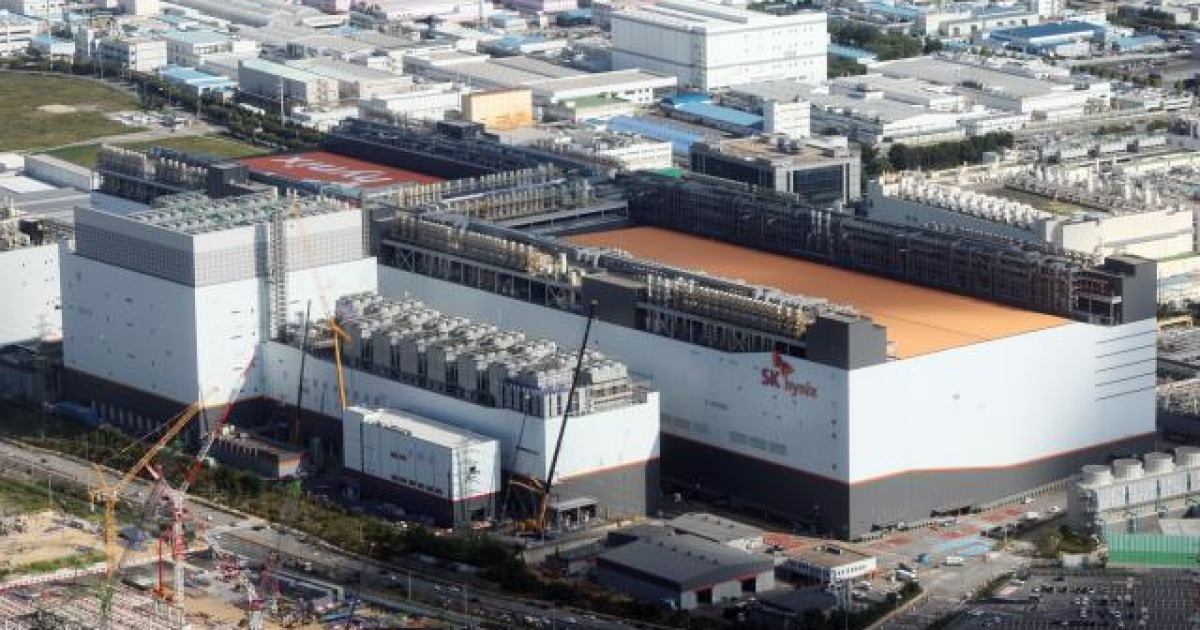
A $150 Billion Bet on AI’s Second Rail
SK Hynix is preparing to take its American subsidiary Solidym public in a listing that could redefine what a semiconductor IPO looks like. According to Reuters, Solidym has begun preliminary meetings with global investment banks to select lead underwriters, with a target valuation of up to $150 billion and proceeds of as much as $15 billion. If executed, the offering would eclipse the 2023 ARM IPO and this year’s Cerebras deal to become the largest semiconductor listing in history.
The scale alone commands attention. But the real story is what this IPO represents: SK Hynix’s deliberate push to transform from a memory chipmaker into a vertically integrated AI infrastructure player. The days of treating DRAM and NAND as separate businesses are ending. AI data centers need both, and SK Hynix intends to own the supply chain on both sides.
From Burden to Crown Jewel
Solidym was born in 2021 when SK Hynix acquired Intel’s NAND flash and SSD division for roughly $9 billion. It was not an easy acquisition. Memory cycles turned brutal, integration costs mounted, and Solidym burned through cash in its early years — becoming a drag on SK Hynix’s balance sheet rather than a source of pride.
That narrative flipped dramatically. As hyperscalers and cloud providers raced to build out AI training and inference infrastructure, enterprise SSD demand exploded. Solidym’s proprietary high-density QLC-based eSSD technology — a capability inherited from Intel’s NAND engineering team and refined since — became a critical differentiator. AI servers consume enormous amounts of structured and semi-structured data before and after GPU computation. Fast, reliable, high-capacity storage is no longer a secondary consideration. It is a bottleneck.
Solidym went from liability to strategic asset in under five years. The IPO formalizes that reversal.
Why the US Market, Why Now
Solidym is already a Delaware-incorporated subsidiary, and its primary revenue now flows from American cloud customers. Listing on a US exchange is not arbitrary — it is structurally logical. But the timing is equally deliberate.
NAND supply for server workloads is tightening globally. SK Hynix sees a window to lock in market share while demand outpaces industry-wide capacity expansion. The $15 billion in fresh capital will fund next-generation eSSD development and new production sites, reportedly including a NAND manufacturing and research complex in New York state. Building fabs in the US also positions SK Hynix favorably under the CHIPS Act framework and reduces geopolitical friction with its largest customer base.
Memory companies have traditionally raised capital in Korea or Japan. Solidym’s US IPO breaks that pattern and signals that SK Hynix views this as a globally distributed business, not a Korean export play.
The Balance Sheet Unlock
Beyond the strategic narrative, the financial mechanics matter. SK Hynix carries the debt it assumed alongside the Intel NAND acquisition. An IPO injects liquidity directly — through both new share issuance and partial selling of existing holdings — and lifts the parent company’s financial flexibility. Analysts at Korean brokerages have noted that a successful listing could materially improve SK Hynix Group’s credit profile and free up capital for aggressive R&D in next-generation memory technologies.
There is also a revaluation effect. If the market assigns Solidym a $150 billion valuation, SK Hynix’s retained stake becomes dramatically more valuable on paper. That boosts consolidated market capitalization and potentially attracts institutional investors who previously viewed SK Hynix as a cyclical memory play rather than an AI infrastructure name.
The Vertical Integration Signal
The most important implication of this IPO is not financial — it is structural. SK Hynix now owns the world’s leading position in HBM (high-bandwidth memory) for GPU interconnect and, through Solidym, a dominant position in enterprise SSDs. No other memory company can make that claim.
Nvidia’s GPU architecture depends on HBM for speed and on fast NVMe storage for data loading. Amazon’s Trainium and Google’s TPUs face the same dual dependency. By controlling both axes, SK Hynix gains pricing leverage and supply chain influence that pure-play DRAM or NAND companies simply do not have.
Competitors take note. Samsung Electronics remains the larger memory company by revenue but has lagged in HBM qualification and is still working to close the gap with SK Hynix in AI-optimized DRAM. Micron has made progress but lacks the integrated NAND-plus-HBM combo that Solidym provides. Intel, for its part, sold off its SSD business precisely because it could not compete at scale against exactly this kind of vertically integrated model.
What Could Go Wrong
Nothing here is guaranteed. Semiconductor IPOs face volatile windows. A prolonged memory downturn, a slowdown in AI capex, or a regulatory complication around foreign ownership of US-based fabs could all derail or delay the offering. Solidym’s valuation assumes continued AI infrastructure spending at current trajectories — a bet that could prove optimistic if hyperscalers revisit their spending plans.
The company also faces execution risk. Building a new NAND facility in New York is a multi-year, capital-intensive undertaking with uncertain yields. Solidym must prove it can replicate Intel’s engineering culture at scale while managing the cost structure of a Korean parent company.
Who Wins, Who Loses
SK Hynix wins if the IPO prices well and the capital raises execute as planned. It gains balance sheet strength, a global listing platform, and a public valuation that validates its AI memory strategy. Samsung loses relative positioning — every quarter Solidym stands taller, the gap in AI-memory leadership feels wider.
American cloud providers win on supply diversification, gaining a second-source NAND supplier with US production footprints. China-aligned memory initiatives may find less room to maneuver as SK Hynix’s US integration deepens. Smaller SSD vendors face intensifying competition from a company with SK Hynix’s R&D depth and customer relationships.
The Playbook for the Next Decade
If Solidym’s IPO succeeds, it establishes a template: memory companies will list their highest-growth AI-adjacent businesses separately in the US to capture premium valuations and fund aggressive expansion. Expect others to follow. The era of monolithic memory conglomerates is giving way to segmented, strategically listed subsidiaries — each optimized for a specific slice of the AI infrastructure stack.
SK Hynix is not just raising money. It is rewriting the rules of how memory companies compete in the AI era.