South Korea's Hormuz Nightmare: Why the Strait of Hormuz Crisis Is a Crisis for Seoul
Two oil tankers on fire in the Strait of Hormuz is more than a Middle East problem. For South Korea, which imports nearly all its Iranian crude through that waterway, it is an existential energy threat — and a diplomatic trap between Washington and Riyadh.
The Two Tankers That Changed Everything
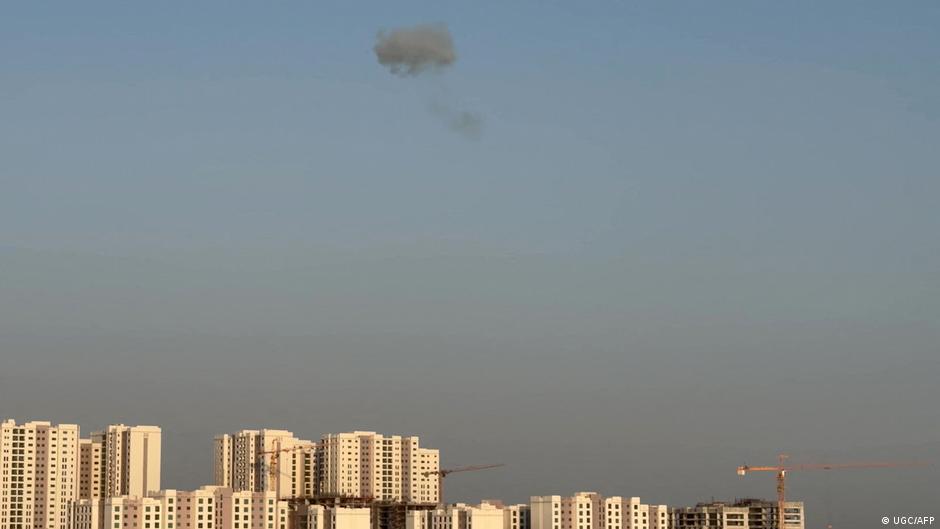
Two oil tankers caught fire after hitting mines in the Strait of Hormuz. The Islamic Revolutionary Guard Corps claimed they were forced onto an “illegal route” at the urging of the US military. Saudi Arabia’s national shipping company Bahri confirmed one of its vessels, the Sidr, was involved — and that two Filipino crew members were killed. The information has not been independently verified, but the implication is already rippling across Asia.
For South Korea, this is not a distant geopolitical drama. It is a direct attack on the lifeline that keeps its lights on, its factories running, and its economy from collapsing. Nearly every barrel of Iranian crude that fuels Seoul’s petrochemical complexes — and a significant portion of its total oil imports — transits through that 33-kilometer chokepoint. Six months into the Iran war, and the strait remains one of the most dangerous maritime corridors on Earth. Satellite imagery released by European defense analysts shows at least three new minefields established along the primary shipping lanes since the conflict escalated, forcing commercial vessels into wider, slower routes that add nearly two days to transit times.
The burning tankers represent more than lost cargo. They signal a deliberate strategy by Tehran to weaponize the strait itself — the world’s most critical oil transit chokepoint, through which roughly 20 percent of global petroleum consumption passes daily. Insurance premiums for vessels transiting the zone have tripled in the past fortnight, according to London-based maritime risk assessors. Several major shipping conglomerates, including those headquartered in Korea and Japan, have temporarily suspended bookings through Hormuz, redirecting vessels around the Cape of Good Hope — a detour that adds 10,000 kilometers and significant cost to every shipment.
Who Wins, Who Loses
The immediate winners in this escalation are few and far between. Iran’s IRGC appears to be achieving its strategic objective: making the Strait of Hormuz so perilous that commercial traffic, even under US protection, will reconsider its viability. The US, for its part, has responded with a wave of strikes on IRGC targets — air defense sites, radar systems, mine-laying capabilities, and communications facilities — as CENTCOM confirmed on Wednesday. President Donald Trump warned that any further Iranian retaliation would meet “a much harder and higher level” response.
But the real losers are nations like South Korea, Japan, and Taiwan — East Asian economies that depend on Middle Eastern energy and have no meaningful leverage over the combatants. Japan imports over 90 percent of its crude from the Middle East, with Iran accounting for a meaningful share before the war disrupted flows. South Korea is slightly less exposed but still critically dependent: roughly 40 percent of its oil imports transit the Strait of Hormuz. When mines appear and tankers burn, those percentages become survival metrics.
Saudi Arabia’s Bahri company loss of crew members adds a human dimension to what might otherwise be read as a purely economic calculation. But the Philippine deaths — two sailors killed aboard the Sidr — also carry diplomatic weight for Manila, which has historically been reluctant to criticize Iran given its large overseas workforce in the Gulf. The Philippines’ Foreign Affairs Secretary has already summoned the Iranian ambassador for consultations, a move analysts say could constrain Tehran’s freedom of action if more Filipino seafarers fall victim to the escalating violence.
Beyond the immediate casualties, second-order economic effects are already materializing. Global benchmark crude prices spiked nearly 8 percent on Thursday following the tanker attacks, with Brent surging past $112 a barrel. Refining margins in East Asia have compressed sharply as feedstock costs outpace product pricing. South Korea’s petrochemical industry — a cornerstone of its manufacturing export base — is particularly vulnerable; complex crackers running on cheaper Iranian crude are now facing input cost shocks that domestic light sweet crude cannot absorb. Industry sources at Samsung SDI and LG Chem subsidiaries estimate production curtailments could begin within weeks if Hormuz remains disrupted beyond the current month.
Seoul’s Tightrope
South Korea faces a diplomatic nightmare. Its alliance with the United States is non-negotiable — 50,000 US troops are stationed in the region, and Seoul depends on the American security umbrella for its own deterrence against North Korea. But Washington’s military campaign against Iran forces Seoul into an impossible position: how do you simultaneously support your security ally and protest the destruction of your energy supply?
The Korean government has historically walked a careful line between Washington and Tehran, maintaining trade relations with Iran even as it deepened its security cooperation with the United States. That balance is now shattered. Iranian attacks on commercial shipping — including South Korean-flagged or -owned vessels that may well be transiting the strait — make neutrality impossible. The Ministry of Foreign Affairs issued a terse statement Wednesday condemning “attacks on civilian maritime commerce” without explicitly naming Iran, a diplomatic understatement that drew quiet criticism from opposition lawmakers who called it insufficiently forceful.
Meanwhile, Riyadh matters more than ever. South Korea has cultivated strong energy ties with Saudi Arabia, and Crown Prince Mohammed bin Salman’s ambition to diversify away from Iranian crude makes the kingdom both a lifeline and a complicating factor. Seoul must ensure that Saudi oil flows continue even as Iranian shipments stall — a task made harder by the fact that several South Korean companies have operated in Iran’s oil sector for decades. SK Innovation and GS Caltex both hold active exploration and production contracts in Iranian fields that are now frozen by sanctions enforcement and wartime disruption. The question haunting Seoul’s energy ministry is whether Riyadh can scale up production fast enough to fill the gap left by Iranian volumes — currently estimated at 800,000 to 1 million barrels per day heading to South Korea alone.
There is also a domestic political dimension. President Yoon Suk Yeol’s approval ratings have already dipped on energy anxiety, and opposition parties are framing the Hormuz crisis as evidence that Seoul’s alliance-dependent security posture leaves it economically hostage. Public opinion polls conducted this week show 68 percent of South Koreans identifying energy security as their top foreign policy concern — surpassing North Korea for the first time in two decades of polling.
The Pakistani Angle
Pakistan’s diplomatic engagement with both Washington and Tehran adds another layer. Prime Minister Shahbaz Sharif met Iranian President Masoud Pezeshkian on the sidelines of the Shanghai Cooperation Organisation summit in Bishkek, and Chief of Defense Forces Asim Munir visited Tehran the prior week. Pakistan’s Foreign Ministry spokesperson Tahir Andrabi said talks between the US and Iran could “return to the table for dialogue” and that the Munir visit had “generated momentum” toward reopening the Strait of Hormuz.
For Seoul, Pakistan’s mediation role is worth watching. A stabilized Hormuz would ease South Korea’s energy anxiety overnight; a prolonged closure would force emergency fuel rationing and possibly industrial shutdowns. The window for diplomatic resolution appears narrow — US Treasury Secretary Scott Bessent announced new sanctions on Iranian banks this week, signaling Washington’s intent to intensify economic pressure rather than de-escalate.
Pakistan’s positioning is delicate in its own right. Islamabad receives its own critical energy shipments through the Strait of Hormuz and has privately urged Tehran to allow humanitarian and commercial transit — a message conveyed through back channels in Baghdad, according to diplomats familiar with the discussions. If Pakistan succeeds in brokering even a limited de-escalation framework, Seoul will want to be associated with that outcome without appearing to leapfrog Washington in diplomatic initiative.
What Happens Next
The next few weeks will determine whether the Strait of Hormuz reopens or becomes a permanent casualty of the Iran war. Jordan intercepted ten Iranian ballistic missiles this week; Bahrain sounded air raid sirens; Kuwait reported repelling drone attacks. The violence is spreading beyond the strait itself, raising the prospect of a broader regional conflagration that would further destabilize energy flows across the Persian Gulf.
South Korea’s government will face intense domestic pressure to act — whether through energy diversification, strategic petroleum reserve releases, or direct diplomatic engagement with Tehran and Washington. The timing is cruel: any move perceived as soft on Iran risks alienating Washington; any move seen as too aligned with US military action risks provoking Tehran further. The SP R reserves, currently at roughly 100 days of import coverage, could be drawn down significantly within a month if Hormuz remains closed and no alternative supply materializes at scale.
There are also longer-term structural consequences to consider. The crisis is accelerating a quiet but realshift in South Korean energy thinking. Discussions within the Ministry of Trade, Industry and Energy about accelerating LNG import diversification — particularly from Australia, Qatar, and potentially the US shale sector — have moved from theoretical exercises to urgent planning. South Korea’s state-owned Korea Gas Corporation has reportedly opened emergency procurement channels with Qatari suppliers, though Qatar’s own LNG export capacity is already constrained by long-term contracts and limited additional liquefaction infrastructure before 2028.
The fires on those two tankers were not just an attack on shipping. They were a warning to every East Asian capital that depends on Middle Eastern energy: the next crisis may not arrive with a declaration of war, but with a mine in a narrow channel and a crew that never makes it home. For Seoul, the question is no longer whether it can protect its energy lifeline — it is whether it can survive the moment until that lifeline is restored.