How a New Drug Lobbying Scandal Is Unraveling South Korea's Ruling Coalition
A string of text message leaks implicating top Democratic Party figures in a COVID-19 drug lobbying scheme is forcing Han Dong-hoon to pivot from isolated allegations to a broader counteroffensive. The scandal threatens to upend Minister-of-Justice nominee Kim Seung-won and expose deep informal networks of legislative influence.
A Scandal Named After Its Victims
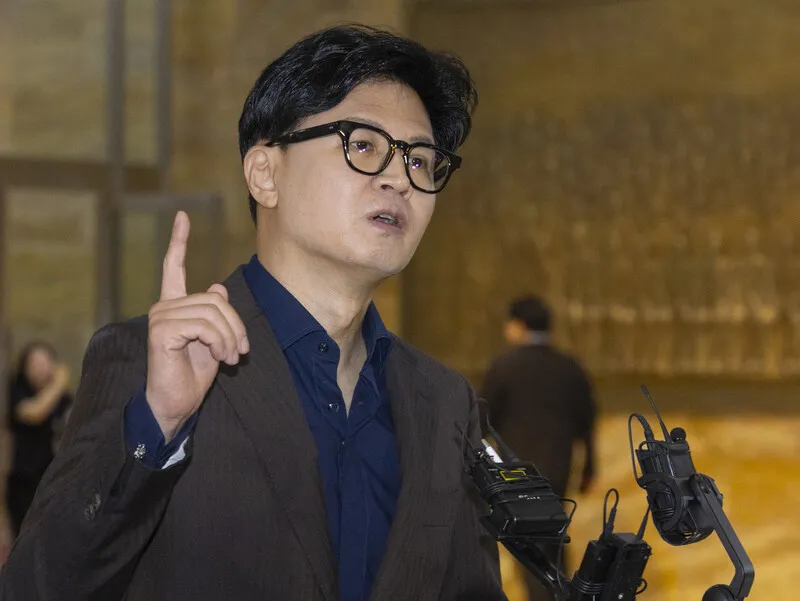
Han Dong-hoon did not set out to drag an entire political party into a scandal. He arrived at Parliament on October 7 with questions about Kim Seung-won, the Justice Minister nominee accused of brokering a backdoor deal to accelerate COVID-19 drug approvals. By the afternoon, he had reframed the story entirely.
The incident, he declared, was no longer about one man. It was “Democratic Party Oppas Gate” — a phrase that turned a personal ethics allegation into a structural indictment. The Korean term “oppa” carries affectionate weight when used among friends, but in a political context it signals informal networks of loyalty and obligation. That is exactly what the leaked text messages appear to document.
What the Messages Reveal
The core of Han’s case rests on a chain of text exchanges from October 2021, obtained by the Hani newspaper. The documents paint a picture of a pharmaceutical broker navigating a web of political connections to fast-track a drug application.
On October 8, the broker — identified in reports as Yang — messaged Kim Seung-won about the commercial stakes. If the Food and Pharmaceutical Safety Authority approved the IND (Investigational New Drug) application, the payoff could run into the billions of won. The next day, October 9, the broker relayed that a meeting with another lawmaker, referred to as “Brother Choi,” was arranged at his office. He also disclosed a payment structure for Song Young-gil, a senior Democratic Party figure, characterizing him as someone who would only move when money changed hands.
The timeline tightens further on October 19. Kang, the founder of biotech firm GeneScience, sold 660,000 shares to a company called 세종메디칼. Two days before the sale, the broker had been lobbying for IND approval. The sequence suggests the approval process was being cultivated precisely to make the shares more valuable.
The Escalation Pattern
What makes this story move faster than most political scandals is Han’s methodical release of evidence. He did not wait for a single smoking gun. Instead, he published one text exchange, waited for denial, then published another — each revealing a new connection within the same informal network.
The second round of leaks included conversations between the broker and former presidential chief of staff Choi Jae-sung. In these messages, the broker claimed he had warned Kim Seung-won about the financial arrangement with the biotech founder. Choi’s response, quoted in the texts, was terse: that Kim had acted in good faith.
Neither Choi nor Song has substantively engaged with the full pattern. Choi told Hani that he met the broker through a charity organization, had never visited the broker’s office, and had never lobbied the drug regulator. Song dismissed the leaked excerpts as selective and defamatory. Both deny wrongdoing.
Why This Matters Beyond One Nominee
Kim Seung-won’s confirmation is already under scrutiny. But the broader damage to the Democratic Party is structural. The scandal reveals how informal political networks — the kind bound by shared university ties, regional alumni associations, and mutual favors — operate as back channels for regulatory influence. This is not unique to South Korea. It is the default operating system of East Asian politics.
What is unusual is the speed of exposure. Han is exploiting a gap that exists in nearly every parliamentary system: the moment between a scandal breaking and the institutions responding to it. During that window, the narrative belongs to whoever controls the evidence. By releasing messages chronologically rather than all at once, Han is forcing the Democratic Party to respond to each new revelation individually — a defensive posture that looks like guilt even when the answer is denial.
The Stakes for Governance
If the allegations hold, the scandal points to a practice that has quietly shaped South Korea’s pharmaceutical regulatory landscape for years. The IND approval process is supposed to be scientific. In practice, it involves timelines that political actors can influence. A single approval decision can swing stock prices by billions. The incentive to cultivate relationships with lawmakers who sit on relevant committees or advise ministerial departments is real and persistent.
The immediate consequence is political paralysis. A Justice Minister nomination cannot proceed cleanly when the nominee’s closest allies are implicated in the same network. Legislative oversight of the drug approval process becomes a partisan battleground rather than a technical review. And the public’s trust in the regulatory system takes a hit that no official statement can repair.
Who Wins, Who Loses
Han Dong-hoon wins tactical ground. He has transformed a narrow ethics complaint into a party-wide credibility crisis. His next move will determine whether the scandal remains confined to confirmation hearings or spreads to legislative investigations.
The Democratic Party loses whatever margin of trust it had built around institutional reform. For a party that has spent years positioning itself as the vehicle for depoliticizing appointments, the “Oppas Gate” framing is devastating. It reduces their entire project to a network of favors.
Kim Seung-won loses regardless of outcome. Even if he is confirmed, the shadow of these allegations will define his tenure. If he is not, the scandal has already accomplished what Han intended: it has made the Justice Ministry a contested institution before a single minister takes office.
The broker and the unnamed biotech founder remain in the background, profitable and unprosecuted. That is the most sobering detail. South Korea’s political scandals rarely end in court. They end in reshuffles, resignations, and the quiet reopening of the same back channels under different names.