Spider-Man Just Took Titanic’s Crown. The Real Story Is Who Loses Next.
Spider-Man: Brand New Day has overtaken Titanic to become the fourth highest-grossing film of all time, a moment that reveals where Hollywood’s franchise model stands—and what it cannot yet replace.
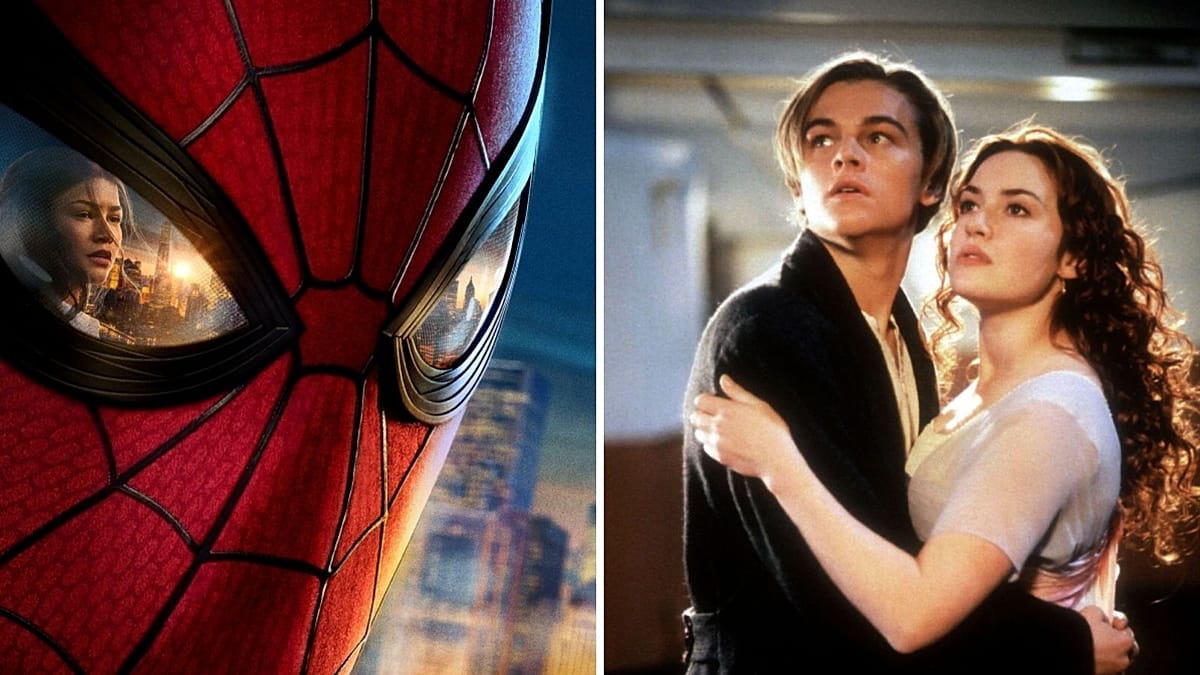
The Unlikely King
Spider-Man: Brand New Day has officially dethroned Titanic from the all-time global box office top five. It sits at $2.332 billion now, having closed out a nine-day window since its July 31 release. James Cameron’s 1997 romance—a film that held the record for nearly thirty years, surviving multiple re-releases and a cultural memory that refuses to let it go—has finally been passed. The man who built his career on ships sinking and lovers freezing is no longer the king of the world. Peter Parker is.
It is a moment that should matter more than it might. Not because another superhero film has sold tickets—we are saturated with that news—but because of what this particular climb reveals about the state of Hollywood’s economy.
The Franchise Moat
The current standings tell a story most observers miss. Of the top six films globally, only one—Ne Zha 2—is not part of an existing cinematic universe. Avatar holds two slots. Star Wars, Marvel, and the Spidey brand each hold one or more. The remaining films outside this list share almost nothing in common except that they were not designed to carry the weight of an entire studio’s fiscal year.
This is not an accident. It is the result of twenty-five years of risk mitigation. A studio greenlights a property with built-in audience attention and a decades-long shelf life. The returns compound. The losses stay small. Meanwhile, original mid-budget fare—romantic comedies, adult dramas, even ambitious thrillers—have been systematically starved of distribution budgets and marketing teeth. Theatres prefer the four-alarm event. Streaming platforms have filled the gap for everything else.
What Brand New Day proves is that the moat around franchise IP remains remarkably deep, even as audiences grow louder about fatigue. Tom Holland’s fourth solo outing did not arrive with the cultural shockwave of Avengers: Endgame or the technical novelty of Avatar: The Way of Water. It arrived with a director—Destin Daniel Cretton, stepping in from Jon Watts—who committed to comic-rooted storytelling, strong action sequences, and an emotional core that matched the spectacle. That formula, refined across four films, is what carries $2.3 billion. Not reinvention. Consistency.
The Encore Gambit
Something else is happening in the numbers that deserves attention. Avengers: Endgame, currently sitting at $2.797 billion, is being re-released on September 25 under the title Avengers: Endgame (Encore), ahead of Avengers: Doomsday on December 18. This is not nostalgia mining. It is a tactical move to close the gap with Avatar: The Way of Water (£2.334 billion) and potentially leapfrog it for the second spot overall.
Marvel Studios is clearly playing a long game. The re-release strategy signals an intention to shape the all-time rankings as carefully as any theatrical release shapes a weekend. It also reveals something about the economics of franchise IP: when a title has cultural permanence, every incremental dollar from a re-release is near-pure margin. Marketing costs have already sunk. The venue is already booked. The audience is already warm.
This matters because it changes how we should read Brand New Day’s achievement. It is not just the fourth highest-grossing film of all time. It is competing in an ecosystem where past winners can be replayed, extended, and repositioned at will. The record is not as static as a leaderboard suggests.
What This Means for Theatres
The broader implication concerns the future of theatrical exclusivity. Brand New Day crossed the $2 billion mark in roughly eleven days, matching the pace of Endgame. That speed reflects an audience that still chooses a cinema over a couch for the right product. But it also reflects a narrowing set of products that justify the trip. Most of the year’s releases do not generate this kind of momentum. The middle class of cinema is shrinking.
For studios, the lesson is clear: double down on properties that can deliver event-scale attendance. For exhibitors, the lesson is less comfortable: their survival depends on curating a schedule of these rare events, because the fillers between them no longer pay.
Streaming windows have shortened dramatically. The traditional ninety-day exclusive run has largely collapsed. But rather than treating theatres as a disposable launchpad, Brand New Day’s run suggests that a genuine theatrical event can still command a global audience large enough to reshape the all-time record. The window is not the question. The quality of the event is.
The Path Ahead
Spider-Man: Brand New Day now trails Avatar: The Way of Water by just two million dollars. That gap is small enough to flip within days. If it overtakes Avatar, the next barrier is Endgame—already being amplified by its Encore re-release. After that sits Avatar (2009) at $2.923 billion, a number that feels increasingly distant.
Doomsday arrives in December. Its launch will likely pull Endgame’s re-release numbers higher, extend the franchise’s grip on the upper rankings, and push any fresh contender into a narrower lane. The Spider-Man franchise, for all its success, occupies a strange position: it is the most reliable pillar of the current MCU era, yet it exists in a phase of transition. Holland’s era is ending. Doomsday may mark a new beginning with a different cast or direction.
What Brand New Day confirms is that the audience for Spider-Man on the big screen remains enormous. What it does not confirm—and what the next twelve months will test—is whether that audience is loyal to the character or to the specific actor, the specific director, or the specific moment in cinematic history. Records are made to be broken. But franchises are built to outlast them.
The real question is not whether Spider-Man stays at number four. It is what happens to the rest of the industry while it is there.