What Square Enix's ANANTA Reveal Means Beyond the Hype
Square Enix is doubling down on open-world ambition with ANANTA, but the real story is what comes after the FFVII Remake saga ends. A look at the company's shifting strategy.
The Aftermath of the VII Remake Saga
Square Enix is standing at an inflection point. The final chapter of the Final Fantasy VII Remake trilogy has dominated the company’s creative and financial energy for years. With that arc drawing to a close, the question now is what comes next — and gamescom Opening Night Live 2026 made one thing clear: the answer is not a quieter retreat, but a bolder pivot into uncharted territory.
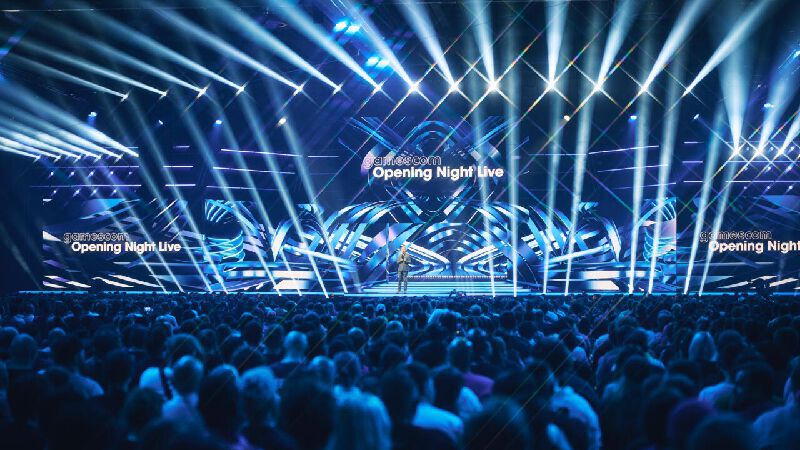
The event, held ahead of gamescom 2026 in Cologne on August 26, confirmed two major titles heading toward the spotlight — Final Fantasy VII Liberation and the open-world RPG ANANTA, along with the Japan-only project Showa America Monogatari. Last year’s ONL had already set a high bar with trailers for Resident Evil Requiem and Silent Hill f, plus news of a Sekiro anime adaptation and Black Myth: Zhong Kui licensing. This year’s lineup suggests Square Enix is preparing to recalibrate its entire portfolio strategy.
ANANTA: Square Enix’s Most Ambitious Bet Since the Remake
ANANTA — officially described as an open-world RPG — represents the kind of genre leap Square Enix has long been circling but never fully committed to. The company built its modern identity on linear, narrative-driven JRPGs: the Final Fantasy series, the Dragon Quest franchise, Kingdom Hearts. Open-world design, with its emphasis on player agency, systemic gameplay, and sprawling exploration, has been something Square Enix has flirted with in moments — the later chapters of the VII Remake project showed hints of it — but never fully embraced as a standalone format.
ANANTA changes that. Whether the title draws from Final Fantasy lore or exists as a new IP within the same creative universe remains unclear from the initial announcement. What is significant is the structural implication: Square Enix is signaling that its post-Remake identity will not rely solely on the tail end of a decades-long project, but will instead build momentum around fresh, expansive experiences.
This matters beyond any single game. The open-world RPG space is where the most visible competition currently lives — titles like Elden Ring, The Legend of Zelda: Tears of the Kingdom, and Larian’s Baldur’s Gate 3 have redefined what players expect from the genre. For a Japanese publisher known for handcrafted, linearity-first design, entering this arena is both a creative risk and a strategic necessity.
FF7 Liberation: A Mobile Expansion, Not a Distraction
Final Fantasy VII Liberation, also announced during the ONL window, fits a different part of Square Enix’s current strategy. The title has circulated in various forms through the company’s mobile and live-service experiments, and its appearance at gamescom signals an effort to give it greater visibility and perhaps a more refined final shape.
Mobile gaming is not new ground for Square Enix — titles like Dissidia Opera Omnia and various Final Fantasy mobile entries have maintained steady if unspectacular revenue. Liberation’s importance here lies in positioning: it signals that even peripheral FF projects receive attention at major showcases, suggesting the company is treating its extended universe more actively than in previous years.
The question is whether Liberation can stand on its own as a substantial experience, or whether it will remain an ancillary offering. For Western audiences, the distinction matters less than the broader pattern — Square Enix is no longer relegating its mobile work to silence.
Showa America Monogatari and the Broader Puzzle
Showa America Monogatari, listed among the announcements, remains the most opaque entry. The title suggests a setting rooted in the Showa-era Japan-America cultural intersection, which points toward a project with a distinct visual and thematic identity unlike anything the company has released recently. No detailed information was provided at the time of Famitsu’s initial coverage, leaving room for speculation but little room for certainty.
What is notable is the juxtaposition: ANANTA’s open-world scale, Liberation’s mobile accessibility, and Showa America Monogatari’s likely stylistic specificity represent three very different directions. Together, they suggest a company that has abandoned the idea of a single dominant franchise strategy in favor of a diversified lineup.
Why This Matters for Global Audiences
Western gaming media often treats Japanese publishers through a narrow lens — either through their biggest franchises or through recent controversies. Square Enix’s shift toward ANANTA and other non-Remake projects deserves a different reading.
The company has spent much of the past decade consolidating around the VII Remake as both a creative and commercial anchor. That strategy produced remarkable results but also concentrated enormous risk. If the final installment underperforms, the entire enterprise faces recalibration. ANANTA and the other titles announced at gamescom ONL represent an attempt to spread that risk across multiple pillars rather than resting on a single long-running project.
For international audiences, the implication is straightforward: Square Enix is preparing for a future where its identity extends well beyond Final Fantasy VII. Whether ANANTA delivers on that promise remains to be seen, but the strategic direction is unmistakable.
What Comes Next
Full details on ANANTA’s release window, platform support, and gameplay systems have not yet been published by Square Enix, according to Famitsu’s ongoing event coverage. What is clear is that the company intends to make these titles central to its gamescom presence — and by extension, to its public narrative heading into the remainder of 2026 and beyond.
The gamescom Opening Night Live format has become one of the most reliable channels for Japanese publishers to signal their priorities to a global audience. Last year’s lineup focused heavily on horror — Requiem, Silent Hill f — reflecting a genre Square Enix has been quietly expanding into. This year’s lineup leans toward world-building and scale, a shift that mirrors the company’s internal recalibration after years of Remake-centric development.
For players watching from outside Japan, the takeaway is simple: Square Enix is no longer resting on its legacy. It is attempting, for the first time in many years, to build something new on its own terms.